A few years back I stayed at the Grassmarket Hotel in Edinburgh. Ever since, and despite repeated requests to be removed from their mailing list, they have been sending me spam. The latest one arrived yesterday. So I have, again, told them to stop:
A few years back I stayed at your hotel, and ever since you have been spamming me with junk emails. I have told you on multiple occasions to remove me from your mailing lists, but the spam still comes. For the love of god, please, make it stop!
Here's the deal. Every time you send me spam, I'll tell more people about how mediocre your breakfast is, how noisy the rooms, how unfriendly the staff - oh, and that you're spamming scum.
for the film, for the technology, for the use of technology
So I went to see The Hobbit, part 2, at the Imax. In 3D, despite my misgivings from last time. It is again a jolly fun romp, and worth seeing.
The technology still has problems. Scenes with lots of movement are blurry and juddery. If I didn't know better I'd swear that they'd run out of time on the rendering farm to render all the frames, and so just doubled frames up to drop the effective frame rate from 24 fps to 12 or 18 fps. Apart from this, however, the use of 3D was a lot more effective. It seemed in the previous film that there were only a small number of layers at different distances from the viewer. This time, it looked far more like true 3D. In some sequences it was very effective indeed.
However, there are still problems. People often look like 2D cutouts in a 3D scene. I can only assume that this is because Peter Jackson had an attack of the OMGWTF3DBBQLOLLERSKATE and so made all the CGI components (and they're present in most shots to some degree) have more depth than they should. In some cases he went way too far, and while the 3D was very effective it made me a bit dizzy. Yes, spinning and falling down a shaft would do that to a soul, and he recreates the feeling faithfully. However, it needs to be remembered that his film is a work of entertainment, not a training simulator for astronauts, and so he needs to tone it the fuck down.
Last time, I was decidedly "meh" about the whole 3D thing, giving the technology just two stars. This time, I can say that it definitely helped in some places. Perhaps the technology has moved on, or perhaps the director and his post-production crew, with a bit more 3D experience under their belts, are simply better at their craft. Whatever the reason, I'm reasonably positive about it, and I now think that 3D can add to a film. This one, however, I think I'd still prefer to watch in 2D.
Posted at 01:20
by David Cantrell keywords: film | geeky
Back in October last year in another Interwebby place I mentioned Quorn, and I was very rude about it - I described this picture of Quorn "sausages" as looking like "a plate with two turds and some vomit on it".
I had eaten it many years before, but not recently, and so, on the premise that it had improved since, was persuaded to try it again.
I had to be persuaded though, because I am firmly of the opinion that meat replacements are just plain lazy, they fail because they are never as good as meat, and they give vegetarian food a bad name. It's no surprise that non-veggies who have been exposed to dishes with meat "replacements" in them think that veggie food is bland rubbish consisting solely of plastic, mud and lettuce.
Here follows the two mini-reviews that I wrote. First, Quorn "Chef's Selection" sausages:
They were fucking awful. They had no real texture, just a smooth homogeneity. They tasted of powdered onion and garlic with some unidentifiable herbs and spices. I'm not sure if they're better or worse than cheap stupormarket sausages, because it's so many years since I bought crap sausages, but they're certainly in the same ballpark although they cost twice as much.
For the love of god: vegetarians, avoid these sausages.
Any chef involved in selecting them should be shot in the head with a bolt gun and turned into better sausages. A few days later I tried Quorn "Lamb style grills in a mint and rosemary glaze":
What the packaging should have said is "tasteless dry thing that looks like an insole from a small boot with no flavour and a bland texture, in a mint and rosemary glaze". Quorn: consistently shit.
The last time I reviewed a book which smashed together the second world war and magic I was not very polite about it. I can say far nicer things about this one. To start with, the cover art is better. It's still not great, but it is at least better. It also has sympathetic characters with real relationships and the story makes sense. Well, it makes as much sense as any story involving magic can.
The broad outline is that Evil Nazis created one of the Wunderwaffen before the war, by using training and electricity to create a handful of super-soldiers who have magical abilities. They all have different abilities, and look suspiciously like a comic book superhero team: there's the one who is super-strong, the one who burns things, the seer etc. The war goes badly for the good guys who have to, in turn, use magic to defend Britain. In a very nice twist which differentiates this from just about every other story involving magic, magic is not just something that some people can do like running fast or being good at drawing. It has costs. Very serious costs, which we see eating away at characters' consciences, bodies, and even sanity.
I do have a few bones to pick though. The book suffers from American Author Syndrome. Much of it is set in London, but he gets enough little details wrong to be very jarring. In particular there is the mortal sin of not using road names properly: a character talks of "Shaftesbury" and not Shaftesbury Avenue, and of "Trafalgar" but not Trafalgar Square. If the people speaking were Yankees this would be acceptable - it's an error that they make in real life. But they're not. These characters and English and German, both of whom speak of their streets by their full names - and Germans speaking English carry this excellent habit over into the foreign tongue.
I also have a problem with the inconsistent treatment of the seer's abilities, and what is done with them.
She is shown as being able to foretell the future, but somehow this also manages to let her know what the Chain Home radar stations are. Her intelligence is passed to the Luftwaffe, who promptly destroy them, thus winning the Battle of Britain, hence the British use of magic to defend the isles. But this is all rubbish. In reality the Germans had some idea what Chain Home was, and they did try to destroy it. They failed, because the open lattice structures were just about impossible to destroy using 1940 era bombs and bombing accuracy. And even if they had succeeded, Chain Home was but a small part of the air defence system. It's loss would not have lost the battle.
However, these are minor matters, the latter being necessary to set up the great struggle between evil and ... good corrupted into evil. I enjoyed it immensely, and will be reading the two sequels which deal with the cold war, in which the Soviets have captured the German super-soldiers and didn't stop at the Elbe but carried on to the North Sea.
Posted at 18:10
by David Cantrell keywords: books | fantasy
This is, I think, the author's first book, and is self-published. I have to be honest, it shows that it's his first, with some fairly elementary and annoying errors.
He says on his website:
[I] dreamed of writing action thrillers the way he thought they should be written; stories with unique plots that move and keep the reader guessing until the very end. Enter Breakthrough, a story with a fascinating plot which takes the reader on an exciting ride and makes it virtually impossible to guess the ending.
and he does a pretty good job of achieving that. This book's plot does keep moving and keep the reader guessing, it is an exciting ride, and the ending is unexpected. He's definitely got the right idea, but needs to work on the execution.
Here are some of the execution errors that I noted in the first few pages.
Much of the action occurs near the Bimini islands of the Bahamas. The Bahamas are not in the Caribbean, but in the North Atlantic, but I could live with that if he said they were in the Caribbean or in the Caribbean Sea. But we get the Caribbean Ocean. A speed is given in knots per hour, but it should be just knots. A vessel is described as a "nuclear class submarine", which is incorrect. There are many classes of nuclear submarine, which have class names like Trafalgar or Astute or (for the Yankees) Lafayette or Los Angeles. These are all little things. Tiny, even. But they're like midges - tiny, obviously wrong, and bloody irritating. An editor should have spotted them.
I have a much bigger bone to pick with some of the science. One of the characters has her scientific reputation besmirched because people don't believe her "calculations" that sea level is dropping. It really is dropping in the story, dropping substantially, and it would be utterly trivial to measure it, but apparently no-one thought of, oh, I don't know, looking at a tide gauge. What happens near the end at Tristan da Cunha is ridiculous in itself, but its effects are even less believable. But my biggest beef is with a couple of little aspects of the story itself. The main bad guy is a silly cardboard cut-out. But worst is (and I can say this without actually giving away anything that matters) the way all the dead good guys come back at the end. Laughable.
So, having ranted and moaned for 400-odd words, what do I think of the book? I think surprisingly well of it actually, partly because I didn't spend much money on it. It's only £2 on the Kindle. And for your coupla quid you do get a decent story that whiles away a few hours, which is the raison d'être of fiction. I hesitate to recommend it, but neither can I say you should avoid it. And, in the hope that the irritations will go away as Grumley gains more experience as a writer and publisher, I'll keep an eye out for his next book.
This horrible dystopia sits firmly in the tradition of British science fiction from the 1930s to the 50s. It's an exploration of a society that, while being on the surface far less intrusive, is actually as controlling and conformist as anything Huxley imagined in Brave New World. And while there's no Armageddon, it's concerned with the little people, the middle class, their family life, and their un-looked-for struggle to survive against overwhelming events, in the vein of John Wyndham and John Christopher's "cosy catastrophes". And to cap it all there's even a touch of Orwell's 1984 as the protagonists are tortured into conforming.
One of the most important things to take from it is the idea that what might seem like restriction and control of just one section of society and so not something for everyone to be overly concerned about is actually a symptom of a far deeper rot and so we should all care. In this case it's women who are most obviously repressed, with an alarming lack of bodily autonomy and restricted from most workplaces because of the "dangers" of "fourth hand smoke" leeching out of the walls having been put there by smokers decades ago. The restriction is for the sake of their unborn, nay as-yet-unconceived children. This is, of course, justified. Using science! And that is my biggest gripe with the book. The justification is nonsense, and Hope, the protagonist, is supposed to be well-educated but blithely accepts it:
'But working in offices where people once smoked thirty years ago doesn't seem so risky [as compared to mining].'
'Oh, it isn't', said Crow. 'But it's still risky. That foul stuff leaks out of the walls and floors for decades.'
'Only in tiny amounts,' said Hope.
'Yes!' said Crow. 'That means it's actually riskier than smoking itself, because the amounts are so tiny. I mean, we're talking about femtograms per cubic metre. You know how small that is? It's smaller than a subatomic particle! When you had actual smoke particles in the air, you could at least cough ... these nano- and femto-particles can slip right between the molecules and into your lungs and bloodstream.'
'Yes, well I do understand that', said Hope.
This is especially ridiculous when we see that the society of the novel has a good grounding in physics, physical chemistry, and the behaviour of atomic and subatomic particles.
As the story unfolds we see that while the repression of women is the most visible repression - official policy even (although, of course, the state wraps it all in a veneer of deep concern for womens' welfare just as in the 19th century) - everyone else who dares to rebel even a little bit is also targetted eventually.
So much for the synopsis and my political ranting. I suspect that, as is often said of Sir Thomas More's Utopia, you can find something to suit your own pre-conceived notions (I'm too polite to call them prejudices) in any dystopian or utopian novel.
Of course, to be a good novel we need more than a sound political basis and auspicious antecedents. We need an entertaining story whose world and plot make sense, and we need it to be inhabited by people. Macleod, as expected, does just fine. I have minor quibbles about a couple of points in his world - the unwarranted acceptance of ridiculous pseudo-science mentioned above, and the efficacy of "The Fix", the seemingly magical pill whose acceptance the whole story revolves around. And, again barring the above, the characters are people, not just puppets obedient to their master's will. They have doubts, fears, love and joy, and they behave and speak believably.
I have no hesitation in giving this book top marks.
I bought this book because some other author recommended it on their blog. That's a great way to find good things to read, and you should do it too. Most authors, at least in so-called genre fiction, have one these days, and I recommend that you track down those of your favourite half dozen and read them occasionally. You'll learn a lot about reading and writing, about how the publishing industry and book trade work, but most importantly, you'll learn about more authors to read. In this case, I wouldn't have bought the book without a recommendation, because a cursory glance at the description on Amazon makes it look like a vampire book. And even worse, it's a mis-spelt "vampyre" book.
The "vampyres" of this tale aren't, thankfully, some magic walking corpses, but are people with a disease - one caused by the also annoyingly mis-spelled "Vyrus" - which makes them crave blood and be unusually sensitive to sunlight. The hero of the tale, one Joe Pitt, is one of them, and manages to live alone instead of in one of the vampire "clans" that make up the criminal underworld of his city, by doing odd jobs for the clans and working as an enforcer and private investigator. So really it isn't a vampire tale at all, it's a noir crime thriller.
It has all the clichés that you'd expect in that genre - the loner hero, violence, fast-talking, double-crosses, femmes fatales and so on - but rises above being cliché by extremely sharp writing, great humour, and a wide variety of characters (there are few mere cardboard cutouts) with distinctive voices. There are a couple of somewhat irritating questions left unanswered at the end, for which I deduct a star, but perhaps they are answered in a sequel, of which there are four. Overall, I recommend this book.
Posted at 20:50
by David Cantrell keywords: books | crime | horror
This fourth book in Stross's Laundry series is, apparently, like the previous ones, written in a pastiche of some other author's style, but this time it wasn't one that I recognized. It's also a damned fine read.
Many series get tired after a while, as the characters stop developing or worse, develop into one-dimensional archetypes. This doesn't happen here. We learn and see more of both the characters and institutions. We also have a well-developed antagonist, one who is (of course, this is a Laundry book) utterly evil, but for the best of reasons and thinks he is on the side of the angels.
However, I feel that the ending was rather rushed and not particularly believable. No sensible bad guy would leave one half of his Doomsday Device utterly unguarded, especially when he knows that the opposition are in the field. And the idea of the double double-cross and subtle but quick manipulation by the Black Chamber of institutions and individuals is frankly silly. For that I deduct one star. I'd deduct more except that the rest of the book is so gloriously fun to read, deftly combining horror, action and comedy as we have come to expect from the series.
I recommend this book, provided that you have read the previous installments. If you haven't, then you should readthemfirst.
This is a sequel to Stross's earlier Halting State, although you don't need to be familiar with the earlier work to make sense of this one.
It's a page-turner alright, filled with believable characters having an awful time for our entertainment, and the text sizzles with humour. You'll have to be a geek to understand all the little jokes, but that's not a pre-requisite for enjoying the book, you'll just get more out of it if you're from the right background.
Unconditionally recommended for all but the most puritan of agèd aunts, as it gets a bit nasty at times.
Posted at 19:50
by David Cantrell keywords: books | crime | sci-fi
I read this between overs while having a rock 'n roll weekend watching cricket at a country house. It's good fun, but I'm glad it wasn't any longer than it is, as trolling gets boring after a while. Mr. Hein stops at just the right length.
"I'm pretty much fucked. That's my considered opinion."
That's how this book begins, and it is, unfortunately, how you are too if you want to read it. It was available on Kindle, astonishingly cheaply, but is no more, as Weir recently sold publication rights to Random House. It is scheduled for re-release in February 2014.
It is the tale of how, after an accident on a manned mission to Mars, one astronaut is left behind, his fellow crew members believing him to be dead, and how he survives. Our Hero, Mark Watney, is primarily a botanist, but has also been cross-trained as a mechanic and has some background in chemistry, and it's a simple story of how he uses these skills to overcome problem after problem, difficulty after difficulty, to survive, regain the ability to communicate, and eventually to be rescued. It is a paean to creativity, stubbornness, and to having paid attention in school.
For the vast majority of the story Watney is the only character, and thankfully he feels like a real person. The few other incidental characters are also fleshed out enough that we can sympathise with them. The story bounces across the Martian landscape at a steady pace, and it's hard to put the book down. And Weir has a wonderful turn of phrase:
" Yes, of course duct tape works in a near-vacuum. Duct tape works anywhere. Duct tape is magic and should be worshipped. "
I loved this book, and if only you could read it you would too. Make a note in your diary so that it reminds you to buy a copy next year when it becomes available again. In the mean time, Weir has several other works available on his website.
Posted at 14:03
by David Cantrell keywords: books | sci-fi
This book starts terribly. We are treated to sixty pages of incomprehensible gibberish in which sailors desperately thwart the top-gallants and abaft the mains'l while the sea larboards the weather side. Yes, we get the idea that they're in dire peril, but for God's sake GET ON WITH IT. At a 'mere' 800 pages for the whole book, far fewer than its bulky predecessor in the series A Mighty Fortress, which weighed in at over a thousand, this is approaching 10% of the book, and much of this nautical nonsense serves little purpose. Yes, what little of it is comprehensible to people without peglegs and clavicular psittaciformes is exciting, but it doesn't advance the story much, and certainly not by nearly 10%.
Thankfully, normal service is soon restored and as well as interludes of exciting local action as navies smash each other to bits, the global story is significantly advanced. One particular advance opens the way for what I'm sure will be very dramatic events in the next volume in the series.
Returning to my criticisms of the previous volume, the cover art is far less awful - it's still not great, but at least it's not offensively bad this time - and the internal monologues are kept under better control. They're still there, they're there in everything Weber writes these days, but at least they don't distract too much from events. The stupid names? Well, yeah, they're still there. It wouldn't really be possible to fix that now. But I still hate them.
If it wasn't for the meaningless interludes of ahoying of spinnakers and the stupid names I'd just about award this five out of five shiny gold stars. It's not a great book, but it is at least thoroughly enjoyable, which matters far more to me than all the literariness in the world. Of course, this deep into a series it will make little sense if you've not read all the previous volumes, but with those caveats I recommend it.
Posted at 23:52
by David Cantrell keywords: books | sci-fi
Another month, another self-published novel from Michael McCloskey. He don't 'alf work 'ard guvnor. And again, he sent me a free review copy. I have been most remiss in reviewing it. He sent it to me in February, I read it at the beginning of April, and only now, a month later, am I writing my review. Bad David!
First impressions were not good. In fact I'll go further than that. They were downright bad. It wasn't at all clear who the protagonist actually was, his role was unclear, but worst of all was the damned mind-reading. Telepathy smacks too much of magic, something I'm not particularly keen on in fiction, and especially when mixed with science. It's also far too easy to take telepathy too far and end up with an unfeasibly powerful character who is somewhat flat and one-dimensional. I've got a bit weary of telepathy in a science-fictional context from reading David Weber's series of Honor Harrington novels and so I was glad after a few tens of pages to realise that McCloskey doesn't make much use of it, and later on when he does use it there has been a plausible explanation.
I was also glad that my initial confusion about who the hell the protagonist was was soon cleared up just enough to stop me throwing the book down in disgust. Well, from deleting the ebook anyway. In fact, his process of discovering who he is, what has been done to him, and what he can do is a large part of what made the book worth reading. Here we have a character who develops before our eyes, warts and all - and there are oh so many juicy warts!
As usual, McCloskey does a great job with The Other. There are two of them: Our Hero, whose mental state is truly odd, and the evil looking beasties in the cover art.
This isn't to say that the book is entirely without flaw. Some parts of the story are brought in very suddenly and don't quite fit, a sign that a bit more time may be needed on editing - I'd be willing to wait a bit longer between books for this. And I found the female psychiatric assistant Mcclaren to be quite hard to believe. But despite those, McCloskey tells a good exciting story, and mostly tells it well. When you take into account the low price I have absolutely no hesitation in recommending this book.
Posted at 22:27
by David Cantrell keywords: books | sci-fi
Michael McCollum has been self-publishing for many years - since at least 1997 - in both paper and alectronic formats. His books (this is the tenth I've bought) are mostly space opera. They don't really stand out from the crowd, but are entertaining enough. This, however, is a bit of a departure from his norm, being set on a post-Apocalyptic Earth.
After an experiment into novel new energy sources went horribly wrong, Earth was wracked by terrible earthquakes and beset by huge tsunamis and civilisation fell. But as the years passsed, things calmed down, the survivors regrouped, and society is at roughly the level of the late 17th century by the time of the tale. The tale is one of exploration and a search for resources and information about the calamity that befell the "high civilisation", which turns into a desperate scramble to save the world. How convenient that European civilisation had managed to claw its way back up to a level at which it could save the world with an expedition half way around the globe, and at just the right moment!
The coincidence that allows our heroes to be heroic is ridiculous, of course, but that is the nature of books that have heroes. Heroes are never believable. Everything else is plausible (fanciful, perhaps, but at last plausible) and it's a rollicking good story that you will want to polish off quickly, and so I recommend it.
And the world he creates for this book would easily support a host of other stories, either in series or stand-alone. I hope that he writes them.
Posted at 23:17
by David Cantrell keywords: books | sci-fi
This is the third book in an ongoing series, self-published by the author and available on the Kindle and also for other e-book platforms via Smashwords. The first in the series was cheap n cheerful fun, but with poor characterisation and dialogue. The follow-up was an improvement, and still jolly good fun to read, and while the author had sent me a review copy for free I would have been happy to pay for it.
So what about this one? Again, McCloskey sent me a free copy, and I'd be happy to have paid for it. His people continue to improve - dialogue is more natural and characters, even minor ones, feel more solid - and he still does a fabulous job of creating alien aliens and ecosystems, and to a certain extent this is what saves this book, with some deliciously cynical back-stabbing and contingency planning on the part of the alien character who we're never sure is an antagonist or protagonist. However, I found the story a bit confusing. It wasn't clear to me what the relationships were between some of the factions that Our Heroes ran into and what they were doing there, even once I'd got to the end of the book, and at one point I almost just put the book down half finished in irritation. But I persevered and by the end my confusion was irrelevant.
That lingering confusion leads me to marking this book down slightly from its predecessor, but it's still an enjoyable read (especially given the low price), and I recommend it if you've read the previous volumes. If you've not read the previous volumes, you won't get anywhere near as much out of it, but the stories are short and cheap so you can easily catch up first.
Posted at 22:37
by David Cantrell keywords: books | sci-fi
To most people, Lewis Carroll is nothing but an author of childrens' books and a photographer of ill repute. Nothing could be further from the truth. He was also Charles Lutwidge Dodgson, an eminent mathematician at Oxford, with most of his work being in geometry and matrix algebra. He spent much of his time teaching undergraduates, but also children in various schools around Oxford and private pupils, and published at least as much serious work as he did fiction and nonsense. It is said that after Queen Victoria read "Alice's Adventures in Wonderland", she was so charmed that she demanded that she be sent a copy of his next book. And duly, she received "An Elementary Treatise on Determinants, With Their Application to Simultaneous Linear Equations and Algebraic Equations" and was not amused.
Much of his mathematical work, being pedagogical, is now out of date and sometimes even wrong. For example, much of his energy was spent on teaching Euclid to undergraduates, material that is these days covered at A-level in a completely different way, and he was so opposed to the study of non-Euclidean geometries as to waste time writing against them. But that doesn't detract from the fact that he was a great teacher of mathematics, to students at all levels from young children to the most learnèd.
Of his works that are still relevant, his two-part "Symbolic Logic" appears (from its description in this short biography) to be worth looking at, for his method of figuring out syllogisms through diagrams, and how he expanded his diagrams to deal with showing the interactions of any number of sets, where Venn diagrams break down at six sets. In 1884 he published what is now an obscure work on psephology, "The Principles of Parliamentary Representation" in which he considers what it means for an election to be fair, and methods to achieve this in reality. I'm very pleased to say that he comes to the same conclusion that I did: large multi-member constituencies with some form of proportional representation within each constituency. And related to this, and driven by his interest in tennis, he analysed whether the traditional knockout style of tournament was a good way of ranking players by ability (it isn't: consider what happens if the best and second-best players meet in the first round) and published under his Carroll pen-name a pamphlet with the delightful title of "Lawn Tennis Tournaments: The True Method of Assigning Prizes with a Proof of the Fallacy of the Present Method" whose recommendations have not, unfortunately, been taken up. It is an interesting "what-if" to imagine whether they would have been if he had published it under the name of Dodgson and the effect this would have on knock-out tournaments in all manner of sports.
I would have liked to see a bit more space given in this biography to all three of those subjects, even bearing in mind that a biography is a book about the man, not about the details of his work. After all, if the author could fit in so much material about puns and mathematical games, he could surely fit in a bit more about those works of Dodgson's that are the most relevant today. I wonder if, perhaps, Wilson was concerned that that would make the book "too technical". If that's the reason, then Shame, Shame!
For those with an interest in mathematics (at any level, from schoolchild to professional), this book is very much worth reading and worth buying. For general readers I hesitate to recommend purchasing it except to Carroll's most ardent fans.
Bitter Harvest begins a year after the end of Season of the Harvest, with little in the way of introductory material for a reader who didn't read the prequel, and follows the same heroes as they find that they weren't quite successful enough in the previous book. This time round there's more action - a lot more shooting and blowing things up, at the sort of level that you might expect in a Hollywood vehicle for washed-up actors who need to come out of retirement to pay an unexpected tax bill. Something like The Expendables.
And like The Expendables, it requires very little mental effort to consume, probably required little to write, and after a while starts to feel as if you've read this page before. There's just too much shooting and blowing stuff up. Unlike The Expendables, however, I doubt it'll be much of a crowd-pleaser. That dreadful film did pretty well at the box office, but yer typical cinema-goer has lower standards than yer typical reader.
Even at £2.49 on the Kindle I can't in good conscience recommend that you read this, although I hesitate to tell you not to read it unless you've also not read the prequel. There's a third installment on its way called "Reaping the Harvest", according to the author's website but I'm not sure I'll bother. This installment in the trilogy left some unfinished plot lines, of course, but I wasn't left panting for more.
Rapture of the Nerds, by Charles Stross and Cory Doctorow
I thought that Charlie Stross was like Christopher Lee: incapable of error. Oh how wrong I was.
Revisiting what used to be an old theme of his - The Singularity - and in collaboration with Cory Doctorow, who is one of the great up and coming writers (supposedly - I've not read any of his solo stuff), this should have been not just entertaining but a good read too. Unfortunately it ain't. While it's chock-full of ideas, they're not used well, being just splattered onto the page with apparently little concern for the results, amongst cartoon-like one-dimensional supporting characters and leading to slapstick results. I came very close to not finishing the book.
On the plus side, much of the writing is tight, clear and inventive, as you would expect from two established professionals, but that can't lift a badly plotted story. Not recommended, not even as a legal free download.
Posted at 17:17
by David Cantrell keywords: books | sci-fi
Mr. Hicks is another of those self-published authors that the Kindle is so good for, and, as many of them do, he has released this, the first book in a series, for free. He has a few other series too, which also have the first installment available for free.
Season Of The Harvest starts off as a crime thriller, in which a policeman's best friend - another policeman, of course - is killed while investigating a subversive group. Our Hero is told not to investigate the crime - he is, of course, too emotionally involved. But predictably, he does, he unearths corruption and then conspiracy, before being rescued from The Conspiracy by the very group he thought he was investigating. Of course, it turns out that that group are the good guys, he joins them, and saves humanity.
So far, so not particularly original.
It turns out that The Conspiracy that they are fighting against is very old, very evil, very powerful - and infeasible. There are only a dozen or so in the inner circle, with a large number of useful idiots working for them, and I do not believe that such a setup can be stable. Conspiracies always fail, because people are no damned good at keeping secrets, and doubly so when they know - and they know because they are being bribed or blackmailed - that the secret they are keeping is Bad and Naughty.
But I can brush that under the mental carpet, as Hicks tells his story so very well. It's a real page turner, running at just the right pace to make you want to keep turning the page until oh dark thirty in the morning without resorting to vast amounts of spurious shooting and explosions, and even though the nature of the conspiracy, and much of the science underpinning it, is preposterous (the science is so silly that I thought quite hard before tagging this review as sci-fi), I very much enjoyed this book. It's trash, quite predictable, but it's very enjoyable trash, and at the price you'd be a fool not to read it.
So why not five stars? The science. And more particularly, the anti-science diatribe in an afterword, in which he attempts to paint genetically modified organisms in the blackest of black, and of course wants to associate them with the fictional evil conspiracy his heroes have just averted. I don't particularly object to science and technology being a bit silly in a fictional work, but I do object when it is either so wrong as to mislead people about the real world, or the author is trying to push a (wrong) agenda. Here, he does both. And for that, just like I did a while ago in my review of Nevil Shute's "On The Beach", I deduct one star.
I've now seen The Hobbit (part 1) in both 2d at the Hastings Fleapit and 3d at the BFI Imax. In 2d the only real complaints I had were that the font used for the film titles and credits hadn't been rendered well - it was all pixelly - and that the font used for subtitles when characters were muttering in Tolkienish was crap.
Both of those are fixed in the 3d version.
Unfortunately, some other stuff got broken. In those long sweeping shots with lots of movement that Peter Jackson loves so much, everything is just a little bit blurry. Even when there's not much movement, such as in close-ups, it's not quite as crisp as it should be. I believe that this is down to how the 3d system works: the images for the left and right eye are projected slightly offset from each other, and polarised 90° apart. The cheap n nasty plastic glasses you get to wear are polarised so each eye sees the right image. Trouble is, everyone's eyes are slightly different distances apart, and so it's only a very lucky few whose eyes are exactly the right distance apart who will see clearly.
A handful of scenes and shots definitely benefitted from 3d, but only a handful. I'll not go out of my way to see a film in 3d again, and nor should you. You should see The Hobbit, but seeing it in 2d is fine.
Posted at 19:00
by David Cantrell keywords: film | geeky
There are lots of books about beer, but most of them are about how it's made, or about beers (and places to drink them) that are currently on the market. This book is far more interesting, a history of we English and our beer.
Some of it will be well-known to many people, but much of it, especially how our drinking habits have changed over time and more importantly why they changed and what were the social motivators for those changes will not be familiar to many. Brown makes legislation and the economics of beer and drinking interesting, and I would recommend this book based on that alone.
But he does a lot more, skewering several sacred cows and roasting them for us: he makes sense of pub architecture and provides what I think is a very fair view of CAMRA who manage to be at the same time both champions of great beer and enemies of innovative beer; champions of the great pub and enemies of any attempt to design pubs relevant to modern lifestyles and economic circumstance.
If there is one significant problem with the book it is that its coverage of the Beer Orders and the changes resulting from them is woefully incomplete, for which I deduct one star. There is little, for example, on how pubs' supposedly free choice of "guest" beer are now limited by shady discounting tied to rent. At least some of this shadiness was apparent by 2003 when the book was first published, although its effects have become even more prevalent in the succeeding decade. But then, I write that with the benefit of hindsight. Writing the history of what has only recently happened is always tricky because you can't tell what's a significant long-term change and what's just a minor abberation that will disappear shortly. I read the first edition. There is now a second edition (published in 2010). I have made a note in my diary to look for a third edition in about 2020.
Posted at 15:51
by David Cantrell keywords: beer | books | pubs
Many years ago H. Beam Piper wrote "Little Fuzzy", a fine tale that has now, along with its sequels and its author, slipped into relative obscurity.
Last year John Scalzi, with the blessings of Piper's heirs, released this "reboot", in which he tells broadly the same story with just a few little tweaks for a modern audience. There is more corporate wrong-doing and less government in Scalzi's version, for example, and more of people figuring out stuff on their own instead of government scientists.
Scalzi's re-telling of the story is a fine piece of work, as I expected from reading some of his previous stories, and I recommend it to you.
Posted at 15:29
by David Cantrell keywords: books | sci-fi
I'd never heard of Mr. Chesler until some random stranger started "following" me on Twitter. I have no idea how he heard of me, I suppose that he reads the blogs of other independently published authors, one of them mentioned my book review. I often talk about how much I love reading some of the cheap self-published sci-fi that the Kindle Revolution has sparked, and so I guess that explains things. Anyway, I wondered who this random stranger was, followed a few links, read a description, and moments later, I had a book to read.
And a jolly interesting book it was too. Now, let's get the bad bit out of the way first. The technology is a joke. To take just two examples: first, small portable satellite communications systems require a lot more power than would be available in the system described and have nothing like the required bandwidth; and second, water is opaque to GPS.
But, despite some people saying that it's sci-fi, it ain't, and so I won't criticise the author for his bad science and engineering. It's really a crime thriller. It has all the right ingredients - a seemingly unsolvable crime, then shocking evidence that emerges, a race between the bad guys and the good to get hold of it, action, hidden motives, and of course some great deception so that both the good guys and the reader go down utterly the wrong route in trying to figure out whodunnit. I'd give it five stars out of five, but for one thing.
The rabid animal-rights terrorist just doesn't fit quite right into the plot. Some of his actions are significant, it's true, but I think he could be fairly easily swapped out for a more believable character. His attempts to harpoon a whale[1] - to be the first sail-powered whaler in decades, as he points out - as a mere publicity stunt to draw attention to the plight of whales is not in the slightest bit believable. Sure, we all know that animal rights extremists are mad, but they ain't that mad. In reality they know that they can get away with murdering people to draw attention to their cause, but the moment that they start strangling bunnies with their bare hands they know they'll lose both any future converts and their current members.
So I deduct one star, and recommend this book.
[1] Grrr. There are many species of whale. The current whale species are as diverse as all the species of cows, sheep and deer are from each other. You wouldn't order some sheep meat in a restaurant and be satisfied with cow, and it's just as silly to talk about "saving the whale". And the particular species that stars in this book isn't hunted today. At all. Not by anyone. It isn't even sensible to talk about "saving the whales", plural, because many species don't need saving and could be sustainably exploited. It makes about as much sense as "saving the ruminants", only some of which are endangered.
This is an omnibus edition of what was originally a series of five linked short stories. It shows, with four clear, evenly-spaced cliff-hangers, all obviously intended to squeeze another few quid out of the addictreader. It is a story of how hope and the human desire to explore can never be completely suppressed, and has strong similarities to Arthur C. Clarke's "The City And The Stars": both are set in worlds where the urge to explore and to push the boundaries has been almost eliminated; both have a population that is kept under control by limited information and fear; both populations consist of people whose roles in society are largely pre-determined. In Wool that fate emerges from a quite literally stratified society where moving up the social ladder is not only socially difficult (those from lower down are seen as very much the lumpen proletariat) but is also physically difficult.
The people of Wool live in a gigantic underground silo, sealed off from the rest of the world which has become inhospitable to life. It's a huge silo, split over 140 levels, but I get the impression that each level in turn consists of several floors, giving a total of around two miles from top to bottom. And, because the place was designed with limited social mobility in mind, there's no lifts. And while there is electronic communication, it is deliberately made phenomenally expensive so people have to rely on porters tramping up and down those miles to deliver hand-written letters - written on rare, expensive paper. Science appears to not be practiced at all, with advanced technology not really understood by its users. It's really quite a nice little authoritarian setup.
Howey does a great job putting you in other peoples' skin. He does it in "I, Zombie", and does it here again with great characterisation. He communicates bone-weariness, terror, pain, longing, and everything else that separates us from the machines that some characters wish people were.
It's not perfect, of course. I question whether a small population would be capable of maintaining its technological level with only very limited access to raw materials - what they can filter out of the poisoned air outside and what they can mine beneath their silo. Only a handful of minerals will be available, and I don't care how good your recycling facilities are, you will not be able to re-use things for ever. There is a glaring error, in that the temperature is described as going down the deeper you go, and so they use artificial heating for the deep levels. In reality, two miles down and the temperature is something like 75°C higher than at the surface and they'd need some monster air-conditioning. Both of these are a bit irksome, but don't detract from the story and the fine writing.
But the biggest flaw is in the last few pages, where The Conspiracy that created this world in the first place is revealed. It's a conspiracy that doesn't make an iota of sense and manifestly doesn't even attempt to achieve what the conspirators wanted. And so I deduct one star, for the dodgy ending. I can see ways in which Howey could have set up exactly the same world with a different conspiracy that actually made sense. But despite that it's a fine book, well worth reading.
Posted at 22:44
by David Cantrell keywords: books | sci-fi
There have been far too damned many zombie books and TV series recently, most of them not very good. They're a simple formula that sells: good vs evil, black and white, no shades of grey, and a cheap excuse for relentless action without much thought. There are occasional exceptions. Max Brooks's excellent "World War Z" pretty much brought the genre back to life, and was also the high point too, with everything since being at least unoriginal and almost entirely dreadful.
"I, Zombie" breaks out of the mould, and is almost great. It could so easily have surpassed World War Z. But it doesn't.
As its central idea it turns the zombie story on its head, telling it from the point of view of the zombie. This is, of course, impossible: we all know that zombies are mindless automatons, with barely more sentience than an arcade-game bad guy that you can trap in corners, driven solely by their insatiable all-encompassing desire for human meat and inability to do even the simplest of forward planning. Such creatures can't possibly be the view-point characters of a story. But Howey looks beyond the shambler and considers what happened to the person it used to be. In most zombie stories, that person is simply dead, but in I, Zombie, they're still there, experiencing everything but utterly unable to do anything, and forced to go along for the grisly ride.
The book is redolent of genius. As the "locked in" characters can't interact with each other, or (at least intentionally) with their surroundings, all we are left with is their internal monologues, their memories, and their experiences of becoming and being a zombie. These are without exception handled beautifully. I would never have thought that you could get such fine writing about shitting yourself (zombies, of course, have no control over their bladder or bowels) or the feel of having fur stuck in your throat from the cat you just ate and not being able to cough it out, but Howey does this gloriously.
So why only three stars? It goes on for too damned long and the things the different characters experience are repetitive. As a short story, just about any short section of the book would be brilliant, but as a full-length novel it doesn't work very well.
Posted at 20:09
by David Cantrell keywords: books | horror
A few months ago I reviewed several of McCloskey's books, including the prequel to this one, The Trilisk Ruins. I was not entirely complimentary - the book was flawed, but was also cheap and entertaining, so I gave it three stars and recommended that you read it. Recently, the author contacted me, having read my reviews, and asked if I'd like a review copy of the sequel. Well, of course I would! I ended my last review by saying I was looking forward to reading it.
McCloskey said in response to a negative review written by someone else "if you give me a bad review, so be it. Authors have more to fear from obscurity than anything else" - and then sent the reviewer a copy of another of his books. I've found this to be a refreshingly common attitude amongst the new breed of good self-published e-book authors - I confess that the first time I ripped into one of their works I was half-expecting to have to ignore a whiney response, but so far all I've heard from authors has been things like "thanks, you made some good points, I'll upload a version that fixes some of them soon", and "thanks for the review, would you like a free copy of the sequel".
Damn all you authors for stomping all over my cynicism gland!
So, on to the book - is it any good? It's better than the previous volume in this series. Dialogue is improved, as is characterisation, although both could still do with some work. For example, when Our Heroine says "Big gold centipede-things scurrying around here. No idea how many. They scare the shit out of me" that's just it, she's saying it. Possibly in a robotic monotone. Even in context it's hard to get pant-wetting terror out of this sequence.
There are also a couple of minor inconsistencies, things which the characters really should have - and would have if they were real - thought about. Not that those really matter. It's a good story, well-paced, we can empathise with all the characters, even the one designed to be thoroughly un-human (I've said it before - McCloskey absolutely nails aliens), and it sets the main characters up with a Mission that will do nicely for at least one more and perhaps several more books. I'd happily buy this book.
Posted at 19:22
by David Cantrell keywords: books | sci-fi
According to the cover blurb, Sapkowski is "a European superstar". This is either untrue, or tells us nothing good about contemporary European fiction writing.
This loosely connected collection of short stories contains a couple of interesting re-imaginings of standard European folk-lore (plus a whole bunch of monsters where all he's done is make up a name - they get mentioned in lists but never seen), but you're always left with the impression that very little is actually happening. What's more, you won't feel a single solitary thing for the only real character. If you're stuck for something to read then this might be worth paying pennies for, but that's all.
Posted at 15:05
by David Cantrell keywords: books | fantasy
Benford is a director of The Mars Society, an organisation set up by Robert Zubrin in 1998, just a year before this book was published and two years after Zubrin published "The Case for Mars". In that non-fiction work (which I recommend) Zubrin, an aerospace engineer, sets out why he thinks government-backed space agencies will never make any more meaningful moves for manned flight beyond low Earth orbit, why manned flight to Mars and beyond is essential, and then shows how it can be done using existing technology for not much money. When I read Zubrin's book, I was enthralled and was immediately convinced by his arguments. Benford obviously was too, because as well as serving on the board of the Mars Society, he uses Zubrin's "Mars Direct" mission design in this near-future fiction.
What Benford wrote as fiction is becoming fact: the X-Prize, for the first private organisation to demonstrate a reusable manned sub-orbital spacecraft was won in 2004; we are on the cusp of private manned orbital space flight (SpaceX's Dragon capsule passed all the necessary tests less than a month before I read The Martian Race); and there is even a proposal for a manned Mars mission funded by, believe it or not, advertising and "reality" TV. The Martian Race's mission really is funded by investors hoping to recoup their capital investment by winning a prize, and making a profit and meeting operating costs through advertising and TV rights.
So on the large scale, Benford's "fictional" world isn't just believable, it's true. On the smaller scale he also does well. It's full of the little details that make a world not just believable but real, as if you can touch it: little things like the danger of frostbite in your toes when standing on the Martian surface.
Most of the book is a strait-forward story of the putting together of the mission, and the months spent exploring the new frontier. It really is a race betwen two teams to get there and back and do certain experiments on the surface. There's a second race too, the natives, who at first seem like primitive microbes but turn out to be a lot more - whether they're actually intelligent isn't clear, and I think it's right that it isn't clear. Intelligence is hard to define, and it's not obvious that we would even recognise it when we see it. The end of the story is perhaps the weakest part, with the competing crews suffering disasters and the survivors having to pull together or all perish, no matter what their commercial masters back on Earth say. In the last few pages we get a tantalising glimpse of a potential third Martian race, as (and I predicted this very early on, as would anyone who has read Zubrin) not everyone can go home - two remain as the first homesteaders on Mars.
I recommend this book, especially as a follow-on to reading The Case For Mars, but deduct one star for the somewhat unsatisfying ending.
Posted at 21:23
by David Cantrell keywords: books | sci-fi
Stross has written several times in his blog of the difficulties in writing near-future science fiction. By the time a book has meandered on its way through being written, edited, and published - a process that can take two or three years - it can be out of date as the real world catches up with the world and the gadgets that the author imagined, or wanders off in a direction that makes the author's imagined world inconceivable. In fact, that happened to Halting State's sequel, so badly that he had to throw it away and start again. And then nearly had to do it again.
In the four years since Halting State was published, the real world has indeed caught up in some respects. In particular there is now a thriving market in virtual goods from video games, and there really have been crimes committed - real world crimes - in video games. But it doesn't matter to the reader that this science fictional story isn't quite as science fictional as the author intended. Science fiction doesn't have to be about our future to be entertaining (Jules Verne is still a good read) or about wondrous technologies (Earth Abides has none), it's about modern (post-Enlightenment) people doing or creating plausible things and may explore the ramifications of technology and science (as does A Canticle for Leibowitz). Authors worry about their technologies and the characters' situations being novel because they don't want to appear - at the time of publication - to be incapable of coming up with new ideas, but readers should care mostly about whether the book is entertaining. And this one is. Stross rarely fails to deliver.
I only really have one nit to pick. The political arrangements of Scotland, England, the UK, and the EU are obviously a bit different in the book than they are in our world, with Scotland having rather more independence, but also being somewhat tied to English apron-strings - and both are rather more subservient to an apparently federal Europe. The lack of clarity here was a bit irritating, and more irritatingly it could have been done away with entirely. Every single bit of that, even Scotland's greater independence, isn't particularly important to the story and the politics's role in the story could easily have been taken by purely domestic bodies.
But that's a very minor concern. The book is great fun, and you should read it.
Posted at 21:06
by David Cantrell keywords: books | crime | sci-fi
I'm a Londoner, and so I avoided the Olympics. I avoided them in north Wales, and on on the way there I needed to stop for a pee. I pulled over at the next place on my route that looked like it had a bog, the Erwood Station Craft Centre. It's a typical trashy little tourist-trap selling ugly, overpriced knick-knacks, and uglier, overpriceder bad art. But, having used their bog I felt it would at least be polite to have a cup of tea and have a quick look to see if there was anything worthwhile there. I was quite surprised to find that there was. Amongst dreary books about Welshism there was a small series of books which stood out by dint of having had an actual graphic designer work on their covers, and one of them in particular grabbed my attention because of its bizarre title. A quick glance at the cover blurb and a read of the first couple of pages sold it to me.
Just about the only piece of Welsh literature of any significance is "The Mabinogion", a collection of mediaeval tales and myths, first translated into English in the 19th century. I've actually read it, and I can tell you that it ain't that great. It's not awful, just ... not great. It's so mediocre and hum-drum that while I do know that I've read it, I don't remember a single thing about it. "The Meat Tree" is part of a series supposedly re-telling the tales from the Mabinogion in a contemporary way, and is a science fiction short wrapped around the tale of "Math, son of Mathonwy". The original tale seems to be (based on a synopsis I read on Wikipedia) mostly present, and doesn't really make much sense, but the way that it is presented here works around that problem. In Lewis's tale, a badly matched pair of "wreck inspectors" board a derelict space craft and attempt to figure out where it came from and who its missing crew were. There's no sign of them, but there is a VR entertainment system, which just happens to have this weird mediaeval tale loaded into it, which they play in an attempt to find messages from the original crew - with awful consequences.
Lewis is primarily a poet, not a novelist, and her excellent command of language shines through. And in an authorial afterword she enthuses about science fiction and how she'd wanted to write it for so long. She makes a couple of elementary mistakes that any fan of the genre should spot, but I'm not surprised that the publisher didn't spot them, as they mostly seem to publish poetry and Welshism. This is an excellent first work of science fiction, and I hope that Lewis stops wasting her time with Welsh poetry that will be read by no-one, and uses her prodigious talents to write more stuff like this, stuff that normal people will read.
Several months ago I reviewed Buroker's "Flash Gold" and "Hunted", two short stories that were nearly free on the Kindle. They were pretty damned enjoyable anyway, and at their price point I was willing to overlook any minor weaknesses. And, as has happened so often now, a cheap (or free!) short story introduced me to another great self-published author.
The Emperor's Edge is similar to those shorts. It's not set in the same universe but it might as well be - it's another steampunky world with a little bit of magic, although this time the action is set in a city instead of on a wild frontier - and it has a capable, likeable central female character. There's grime, crime, corruption and heroism, and you almost (but not quite) believe in the setting. The action is exciting throughout, making it a good page-turner, but there are also clear boundaries between segments, so you won't be too upset at having to put it down at bedtime.
Buroker's policy for her stories, it seems, is to give the first one in each series, including this one, away for free. I've always known that books are a drug, and in doing this she is following the honourable precedent set by many a dealer. I think I'd give it four stars anyway, despite there being little depth to the story or characters, simply because it's so damned entertaining, but at the price I have absolutely no hesitation whatsoever.
Let me start with a very brief precis. While the good ship Annie is docked and undergoing repairs, a small group of the crew go and get drunk. One of them Mysteriously Disappears, and wakes up to find he has been kidnapped and tortured, but he has no idea why or by whom, and no memory of the event. He escapes from his kidnappers' underground lair through the sewers, is found by a crewmate, and returns to the ship. There is a brief flashback showing us why the ship is undergoing repair - it was attacked by pirates. Just before our brave crew continue on their journeying, the same group head into town to pick up some supplies, and to try to find out what happened earlier. They are ambushed, have a fight, win, and find out a Clue. They set off with a cargo to deliver to another port, which they do, but when they leave that port they are sabotaged by a stowaway, are wrecked on an unknown shore, and have to contend with Monsters. They learn from the stowaway that The Conspiracy is after something that the first crewman unwittingly has, and that his family are now in danger. The crew is like family, so they head off to defend their crewmate's family, discover what it was that the conspiracy was after, and beat off an assault by The Conspiracy that was chasing close on their heels. The End.
Now, what genre do you think this falls under? Sounds like a maritime thriller to me.
Well, I lied, just a little bit. One word of my precis is untrue. Change 'shore' to 'planet' and it's bang on. So while the setting of Gentle Reminders is indubitably science fictional, this is really quite a traditional tale of derring-do on the high seas space lanes, and it's a jolly well executed one too. It's a simple tale that is nice and evenly paced with a good mixture of page-turning excitement and character development, and the stars of the show are allowed the space to have personalities and relationships. There are a few lovely turns of phrase - one that particularly sticks in the mind is "they lay giggling in a pool of their own disgraceful behaviour". The only significant criticisms I have are that the antagonist organisation, and especially their leader, are a bit too cartoony and stereotyped; and I feel that the superhero ending was completely unnecessary. I understand, however, that there are sequels that are specifically to do with the superheroism and that this was just an introduction.
There were, as I moan about with just about every cheap Kindle book, a few minor spelling mistakes and other linguistic errors that jarred a bit, but I can let those go. At just £1.02 for the equivalent of 400-ish pages, it's an enjoyable bargain.
Back in November last year I read and reviewed the previous three volumes of this hexalogy, giving them three stars, and I've been looking forward to the publication of this volume. After a hiatus caused by trouble at the publisher, this was recently released. "Double Share" continues the story of Ishmael Wang, having skipped over a few years of what was no doubt tedious study not worthy of turning into a story. He is now a very junior officer in the merchant marine, just starting his first job after graduating from merchant navy officer school.
The story is, as seems to be usual with Lowell, a good bit of entertainment. The setup is, I think, rather contrived - it seems highly unlikely to me that in a world where adherence to regulations is apparently enforced enough that the regulations actually matter, the sort of breakdown of law and order that plagues Wang's new ship could possibly go on for as long as it has, and the notion, that we learn right at the end, that a ship's captain can't be fired by the ship's owner except for breaches of technical regulations is just plain daft. It has always been the case, throughout history, that managers can be relieved of their duties by an employer, and especially so when they preside tacitly over active criminality. But I can ignore that. Wang is an archetypal hero, and so for his story to progress he needs an environment in which he can be heroic. And he is. Absurdly so, maybe, but no more absurdly so than in his phenomenally quick rise through the non-commissioned ranks in the previous books. And anyway, fiction about boring everyday people doing reasonable boring everyday things wouldn't be worth reading!
Three stars, again, because there's still nothing new here, but it was still entertaining to read. I recommend the entire series so far to you.
Posted at 18:46
by David Cantrell keywords: books | sci-fi
I bought the first book in this trilogy on the strength of reading the author's "The Trilisk Ruins", and am reviewing them all together, as they are just three strands of the same story. If you read only one you won't fully appreciate it - indeed, the individual volumes don't work as well on their own, either not being properly resolved or not having a proper beginning. Thankfully, as with The Trilisk Ruins they're dirt cheap.
They appear to be set earlier in the same universe as The Trilisk Ruins - the authoritarian government is present here too in a somewhat less overbearing form, and personal and military technology is similar too. While these books appear to be set earlier, I believe that they were written later. The writing is definitely more mature, with less hammy dialogue and more time taken to make the characters into people, and there were no immediately obvious plot holes.
The three books largely run in parallel, with each one finishing a little later than its predecessor, each telling the story from a different point of view. It's a surprising device, but one that I found worked very well. It leaves the reader wondering at the end of the first and second volumes, but with good solid conclusions in later books to fill in the gaps that were left. Obviously this means you should read them in order: Insidious first, then Industrious, and finally Ingenious.
While I have rated the series as a whole with four stars out of five, there are large differences between the volumes. The first is by far the worst, consisting too much of rather repetitive action sequences, but it is rescued by the second and third volumes which are much better. The third is particularly good: the antagonist (whose viewpoint we have in this volume) is unlike any I've seen before (McCloskey seems to do aliens well, the one in The Trilisk Ruins was good too) while still being something that humans can empathise with; and the final conclusion comes as a surprise, but is also consistent with everything that has gone before.
Finally, McCloskey deals well with his over-arching themes of the dangers of AI and virtual reality. Never mind whether you agree with that or not, he still addresses them thoughtfully and humanely.
Posted at 18:14
by David Cantrell keywords: books | sci-fi
This is another of those cheap n cheerful books by an unknown author that the Kindle is so good for. It, like most of his other books, appears to be only available as an e-book.
As is typical of books like this, the writing is not of the best. Dialogue is wooden, there are a few minor inconsistencies in the plot, and characters are very flat. But, as is also typical of these cheap self-published (I assume) e-book only stories, it's a decent enough piece of light entertainment, and so gets three stars. It would get less if it had all the extra costs of "proper" publishing, but as it is you can still just sit back and enjoy the story.
Oh, and there's an obvious setup for a sequel, which I look forward to reading.
Posted at 17:45
by David Cantrell keywords: books | sci-fi
I don't generally read literature, for the simple reason that most of it, while perhaps being beautifully written and plotted and with exquisite characterisation - despite all that, I just don't enjoy it. And given that I read for enjoyment it's understandable that I'm not going to spend my money and - more importantly - my time on it. I get my kicks mostly from low-brow "genre" fiction: sci-fi, fantasy, thrillers, crime and so on. As some clever chap said, literary fiction is the fiction of introspection and changing the self, genre fiction is the fiction of doing and of changing the world. I like to think that it only says good things about me that I want to change the world to fit me instead of changing myself to conform to the world, and that I enjoy tales of others changing the world.
So why did I buy this? First, it's by Vonnegut. He's one of those few literary writers who I'm confident of buying because I'm already familiar with and enjoy his writing. There are few other literary writers whose work I'd buy sight-unseen, and Vonnegut veers rather towards the fiction of doing in his literature!
And then it was also cheap, immediately available, and I wanted something to read right now, and could have it delivered to my Kindle in moments.
It's a short tale - equivalent to about 80 pages in print - of a lad sent to live with a stern disciplinarian relative, his rebellion, punishment, and of his forgiveness when he is willing to give up everything even for someone who he dislikes. Underlying this is the realisation that eventually dawns that when an adult controls and disciplines a child it isn't necessarily arbitrary and isn't done to mould the child into a clone of the adult, but is done from love and a desire to help the child learn. It's a bit slow to start, especially if, like me, your diet is mostly the "fiction of doing", but it's worth persevering with. You'll polish it off quickly and enjoy almost every minute of it.
So why only four stars? It grieves me that it is restricted to Kindle users only. I hope that one day it'll appear on paper, either on its own or in an anthology.
Posted at 23:48
by David Cantrell keywords: books | literature
... or, as I immediately thought, Per ardua ad astra. An apt title for this story, and the Latin version even shows up in the text, with the institution bearing it being a direct descendant of the Royal Flying Corps, who are congratulated on their far-sightedness.
It's a tale of a young man who enlists in the military with all kinds of gung-ho ideas about what he wants to do, but who ends up, sulkily and largely by accident, as an intelligence officer - and finds that he thoroughly enjoys it. The world-building is intriguing and largely consistent, but the characters are a little flat. But for less than two quid I can't complain. It was enjoyable, and even if it's a bit of fairly mindless cheese, it's good value for money.
Posted at 00:06
by David Cantrell keywords: books | fantasy
Blimey, Martin don't half go on! This is the fifth volume in his ongoing epic fantasy series "A Song Of Ice and Fire". It was originally intended to be part of volume four, but because of Martin's uncontrollable logorrhoea that got split in two because it was simply too big to print. Once split, the first half, which became volume 4 "A Feast for Crows", was still a hefty 976 pages. We then waited five years for this, the second half. Martin obviously took the opportunity to fiddle with it and no doubt substantially rewrite parts of it. The resulting fifth volume ended up so big that in some editions it was itself printed in two volumes, called "Dreams and Dust" and "After the Feast".
It's fairly clear where he's fiddled too. A Feast for Crows ended up being just about events and people in the southern half of Westeros (Martin's fictional world), and A Dance With Dragons was supposed to simply be the northern half of the same story, with events happening in parallel. It didn't work out quite that way. All of the first half (Dreams and Dust) and some of the second (After the Feast ) is parallel to A Feast for Crows, but not all of it, with action in the last third returning south and happening after A Feast for Crows had finished. Confused? Actually, you won't be. The temporal shenanigans are handled well.
What is still a bit confusing is, just as I criticised in A Feast for Crows, some of the relationships between people. Us modern denizens of a democratic capitalist world just aren't used to keeping track of feudal relationships and having family and clan relationships be so important is alien to us. No doubt my primitive ancestors of four or five hundred years ago would cope much better with this than I can - those of them who could read! I occasionally found myself having to turn to the genealogies in the back. It's good that they're provided, but it's irritating that they're necessary.
Characterisation is excellent. They are all real, as are the places they inhabit - you can almost smell the fear, filth and food, and feel the cold of the far north and the blazing heat and thirst of southern oceans. If anything, this is even better done than in the previous volumes, and so you would expect me to give it higher marks than A Feast for Crows. But I'm not going to. Yes, it's marginally superior in that regard, but the prolixity and the poor planning evident in the haphazard splitting of volumes bugged me. It only bugged me a bit, but on top of that, there's a sense in which nothing much of consequence seems to happen in A Dance With Dragons, as if everyone is holding their breath. And, now that I look back on the previous volume, I have the same feeling about that too - there was lots of rushing around and busyness, but little of it to much great purpose.
Posted at 18:31
by David Cantrell keywords: books | fantasy
I've had my Kindle for a few months now and, as promised, here's a review.
There are now several models of Kindle available, of which two are available in the UK. Other parts of the world have other models available which may be cheaper but are also infested with adverts and therefore are crap. Of the two now available in the UK, I've only used what they now call the "Kindle Keyboard", so please bear that in mind when reading this. That model is £60 more expensive than the keyboard-less version, but as well as the keyboard it also has a 3G connection so you can download books (and, of course, pay for books) on the move, it has somewhat better battery life (I charge mine overnight once every few weeks - it would be more like once a week if I left the 3G and Wifi connections up all the time), and it has twice as much storage. Of course, for books you don't need much storage. The 2GB in the keyboard-less model is enough for hundreds of books, and the extra storage will only really matter if you use it for audio-books, which are not available on the keyboard-less model.
The Kindle is great and I love it. If you read a lot you'll be familiar with the problem of having to carry several books with you when you go on holiday, or two with you on the journey to work in case you finish one in mid-travel. I now have a dozen or so books loaded on my Kindle, plus a few short stories, some magazines, and essays. Many of them were free - either free from Amazon's website, or from places like Project Gutenberg or Baen Books, or downloaded from other random websites. Having all of Project Gutenberg available on demand in my pocket is awesome.
[added 30 Mar 2012] It is also really good for discovering new authors - both those that are new to me and also those that are new to writing. Amazon does a pretty decent job of recommending things to me based on my purchase history, and once you start reading a fewauthors'blogs you'll soon find a rich seam of references to other authors from people you trust, and links to books posted for free online. And those online books will mostly be in formats that you can easily put on your Kindle.
So why only three stars? There are all kinds of niggling little problems. Some are design flaws in the Kindle hardware, some are software bugs and poor user interface design, and some are inherent limitations in media which have Digital Restrictions Management. Let's look at those in reverse order.
The Kindle can read DRM-free books from third-parties in a number of common formats just fine. However, books bought from Amazon are infected with DRM. While it can be easily stripped out, this really shouldn't be necessary. All DRM schemes are doomed to failure, and yet users who wish to move their books to a better device (and you can bet that someone will come out with something better in the future) have to go through this annoying dance. E-book vendors (well, most of them - Baen are a splendid counter-example) insist that you mustn't lend your books to your friends or sell them second-hand. You can, of course, if you strip out the DRM. Publishers only harm themselves by preventing lending, as this means that I can't so easily introduce someone to a new author. It's less obvious, but killing off the second-hand market will also harm them in the long term. When I was young and didn't have much money, I bought second-hand almost exclusively. Second-hand books got me hooked on reading. These days I buy new almost all the time. I wouldn't read as much now - and hence spend as much money with publishers - if I hadn't got hooked on cheap drugs second-hand books. And even for well-off readers, the second-hand market is a good way for people to find out about authors they hadn't previously read.
DRM is closely related to the problem that some books are only available in some countries. This is because authors sell rights to different publishers in different places. However, surely if this were actually enforceable I wouldn't be able to buy US editions of paper books in the UK, and people in the US wouldn't be able to buy UK editions. And yet that works just fine. There is no reason for these stupid geographical restrictions. This plagued DVD sales early on until region-cracking hardware and software became common-place, but these days there's nothing stopping people from buying "US-only" DVDs in the UK through Amazon's website so their enforceing this for e-books is stupid. They should use their muscle to slap the publishers into line and make them get rid of this idiocy.
On to the software bugs. There is at least one really nasty bug to do with wireless networks which Amazon must know about - it's all over their user support forums - but don't seem to care about fixing, and the user interface seems to be a bit obtuse. You would think that the UI tools for getting books onto the Kindle and for deleting them would be close to each other, but they're not. To get a book onto the Kindle, press the Menu button, then navigate to the Kindle Store. To get a book off the Kindle, you'd think that you want to go into that menu, but no, you have to do a funny dance with the arrow keys on the home screen. There are lots of other little UI niggles too, the worst being the on-screen menus for typing punctuation characters and numbers when annotating a book. The damned thing has a shift key for typing capitals, so why the hell doesn't it have another meta key for typing symbols? This is bad UI design plain and simple, and I dread to think what it's like on the keyboard-less version.
Another serious UI problem is that organising books into "collections" is fiddly, and can only be done via the Kindle's built-in software. It would work much better if you could mount the Kindle as a drive on your computer (you can) and then organise books into folders (you can't). And if you're going to have many hundred books on the device at once, a thousand or more even, like Amazon say you can, being able to organise them easily and effectively is essential. This UI flaw effectively makes it impractical to have more than a few dozen books on the device at once, which also means that having gigabytes of memory is pointless. Half a gig would be fine, and would make it a few quid cheaper.
And finally, the big hardware bug. The e-ink screen is very good indeed. It's clear, high-contrast, and can be read easily under all lighting conditions that you could read a paper book. It is also fragile and unprotected. The fragile pixels of an LCD display are at least protected behind a sheet of glass or plastic, but the e-ink display is right on the surface with only the thinnest covering layer. This makes it very vulnerable to damage. I'm on my second Kindle already, the first breaking after just a couple of months. I have no idea how I managed to break the screen - I didn't bash it hard, or sit on it, I just carried it in my pocket like people do in Amazon's own adverts for the silly thing - but it broke anyway. This would seem to be a very common failure mode, by far the most common amongst Kindle users I've spoken to, and one with which Amazon's customer support staff are very familiar judging by how fast they said they'd send me a replacement. Given that incredibly quick replacement I don't actually fault them for this, I just think it's something you need to be aware of.
Let's compare the models. Starting with the cheap keyboard-less model as a baseline, what extras do you get in the more expensive model? More memory, but that's only useful for audio books, so most people won't use it. A keyboard, which I use for making notes as I'm reading, but which is also nigh-on essential if you want to shop for books on the Kindle itself. 3G, which is useful for when you are away from a proper network. Of course, the lack of 3G on the cheap model means that you're less likely to be able to shop for books on it too - a network connection and a keyboard, in the form of a proper computer, tend to go together!
Do I recommend a Kindle? Yes, with reservations. The fragile screen is a problem, mostly mitigated by excellent customer service, although it might be more serious if you didn't have good access to a postal service such as if you spend lots of time travelling or live somewhere very remote. The software problems can be worked around but they, in conjunction with the fragility, mean that I think of the Kindle as being more of a prototype than a finished, polished product. DRM isn't much of an issue as it is easily worked around. The inability to legally lend a book to a friend or sell your books second-hand is a big drawback, although this affects all of the Kindle's competitors too.
Fallen Angels, by Larry Niven, Jerry Pournelle, and Michael Flynn
In my review of the Kindle I mentioned Baen books's enlightened attitude towards Digital Restrictions Management, for the e-books that they sell are blessedly free of DRM, even those of other publishers that they sell through the Baen website. But they're even more enlightened than that. They also give some of their older books away for free in unrestricted digital formats, including this one through the Baen Free Library. The library's manifesto makes it clear that DRM is a solution in search of a real problem, and that giving away selections from the back-catalogue is a very effective way of both selling more books but also of introducing readers to new writers. If on the strength of my Kindle review you then use it to read lots of DRM-free books from Baen and Project Gutenberg, authors and progressive publishers will thank you!
So what's this book like? It's a comedy in which Our Heroes get into and - of course - escape from all kinds of scrapes while being hunted by a parody Green movement in a Luddite dystopia. It is not, as some say, an attack on the Green movement, but only on its more extremist members and on authoritarians in general. But more importantly, it's a panegyric to science fiction readers, personified in the attendees at a sci-fi convention. I don't go to cons myself, and they really don't appeal to me, but I do recognise what it is that makes people go to them: shared enthusiasm for a topic, camaraderie, and most importantly fascinating conversations with interesting people all of whom can teach you something.
It's one of those books that, while I thoroughly enjoyed it, I recognise that it's also trashy. I recommend it for hardened sci-fi readers, but not for mundanes.
Posted at 21:47
by David Cantrell keywords: baen | books | sci-fi
40K is a new company based in Italy publishing e-books in English, some originally written in English and some in translation. So far they've only published short-form fiction in the form of novellas. I tried three of them out - Wikiworld, by Paul di Filippo, The Wooden Baby, by Graham Edwards, and If By Reason of Strength by Jamie Rubin.
They cost £2.49 each on the Kindle, and cost is the problem. All three were decent shorts, but they're too expensive. At no more than a quarter of the length of a typical novel, they are a lot more than a quarter of the price, making them poor value for money by comparison. Things look even worse when you compare the price to that of a magazine like Analog or Lightspeed, both of which come out monthly for £1.99 and typically contain one or two novellas plus several shorter stories as well as factual articles and book reviews.
At half their current price, I'd take the time to actually review the stories properly and probably give them quite high marks. At their current price, I won't bother buying any more of them.
Yet another Honorverse installment, and again, it's competently written and entertaining for those who've read the series and its spin-offs up to this point. The importance of the spin-offs is made especially clear on the author's own website, where the series up to "Mission of Honor" are listed in their own section, but this one, which follows directly on from Mission is listed in a separate section along with the spin-offs that I talked about in my review of Mission. In my opinion, Mission should also be listed there.
And unfortunately (but as expected) that ridiculous Conspiracy that I railed against in my review of Mission is still there, still playing the puppet-master.
Posted at 20:34
by David Cantrell keywords: baen | books | sci-fi
The Translation of Father Torturo, by Brendan Connell
One of the best works of fiction in the English language is Hadrian the Seventh, by Frederick Rolfe. It is shameful that it is so little-known. Connell therefore gets off to a great start when he dedicates this book to Rolfe "for the design which I so meanly twisted". In both books, a priest of somewhat dubious antecedents is catapulted into the papacy, embarks on a whirlwind of reform, and is ultimately offed. But that's about as far as the parallels go.
Connell's Xaviero Torturo is a nasty piece of work. A bully as a child, but highly intellectual, he is mentored by a village priest who is himself somewhat dodgy - they both dabble in the occult and, in Torturo's case, in "black magic". Torturo is also a thief, a blackmailer, and he has at least four people killed, and may have killed two more himself. Rolfe's priest, George Arthur Rose is instead a paragon of virtue who merely wants to be a priest and finds his ascent to the throne of Peter to be baffling.
Both, however, are quite competent popes - both spark something of a revival of catholicism, Rose by his piety and actually bothering to live by what it says in the bible, Torturo by fake "miracles". And both works - and both fictional popes - are scathing about the corruption both personal and institutional that is the Roman church. Torturo is, of course, happy to use that corruption for his own ends but is at least honest enough to see it as hypocritical. And finally, both fictional popes have mercifully (for the rest of the Roman hierarchy!) short reigns. Rose falls to an assassin opposed to catholicism, whereas Torturo's crimes eventually catch up with him.
Torturo actually survives, being merely thought to be dead, and there are all kinds of delicious possibilities for the way things could continue after the book ends. Normally when this sort of thing happens, I am left shouting at the author "for god's sake learn to write an ending" but in this case, no. Things are tied up neatly, and yet the reader is still left to think for himself. And therefore I whole-heartedly recommend this book.
Posted at 22:27
by David Cantrell keywords: books | religion
With this book and its prequel "The Zombie Survival Guide", Brooks pretty much brought the zombie genre of horror back to life, if you'll pardon the expression. And it's jolly good.
The author uses the conceit of documenting personal tales for a history of "the zombie war", as a counterpoint to the dry official history of facts and figures, and it consists of multiple "interviews" between the author and individuals from all walks of life who recount their experiences from immediately before, from during, and from the ensuing cleanup after the war. Most of the interviewees have very similar voices, but their experiences differ widely, and most of them have a strong human element to them. And while some are merely about killing zombies, many are about terror, fear, and hope.
By being broken down into short interviews instead of one long narrative - although the interviews are arranged roughly chronologically and there is some interaction between them - it is particularly well suited to reading a bit at a time while commuting with all the other gray city zombies.
Posted at 22:18
by David Cantrell keywords: books | horror
Weber's long series of books set in the "Honorverse" (NB: link may contain spoilers) is thoroughly enjoyable if you like "military science fiction". That is, if you like mind-cheese with lots of stuff blowing up. Unlike most other authors in this sub-genre, Weber even manages to make his characters believable and sympathetic, to sometimes have realistic conversations and motivations. And the universe he creates is, on the whole, consistent.
The series went through a bad patch a few books back where there was lots of "jaw jaw" and very little of the "war war" that made the series so exciting. But I'm pleased to say that with the previous installment (At All Costs) and this one, he's back on form.
I have three criticisms. The first is that the books will make little sense unless you've read the previous installments. That's fair enough. Authors writing series have to strike a balance between making later works accessible to newcomers and annoying their established customers with repeated material. In a short series, a bit of repetition won't do any harm, but in this one - 12 books so far, with at least two more in the pipeline and quite probably more to come - it would be actively harmful.
The second is related to the first, but is, I think, rather more important. There are several spin-off series, also set in the same universe, which some readers may not have bothered with. Unfortunately one of them, the "Wages of Sin" series, turns out to be of vital importance, and the "Saganami Island" series is also of some relevance to this book and, to a lesser extent, to the previous one. Keeping track not only of a long main series with several parallel interacting plot threads (but at least they evolve alongside each other in a single series) but also of at least one and potentially several other series at the same time is hard. It's worth doing, but hard.
And finally, remember how I said that the universe Weber has created is mostly consistent? The big economic inconsistency is beginning to bite, hard. He knows it - he even has some characters talk about how it makes no sense. He tries to justify it as being a front for a huge conspiracy, but huge conspiracies just don't work. The one he's written involves literally millions of people, at least thousands of whom are scattered all over the place amongst other polities and societies, and they're actually multi-generational sleeper agents. He expects us to believe that the children of sleeper agents will be content to be brought up as normal people (you can't trust young children with such secrets, after all), to form friendships, perhaps fall in love with members of the host society, and, when you inform them of their family's hidden role for them to just accept it. Even if somehow most of them held it together, all it would take would be for a handful to blow the whistle and, given how many there are, this must happen - and yet it doesn't for hundreds of years, not until narrative imperative compels it. I can ignore this, I read lots of sci-fi, much of it in the "bad but entertaining" mould, and so my suspension of disbelief muscle gets a regular workout. But even so, it is irritating.
Those last two niggles, plus the entire series's utter lack of anything approaching literary value means it gets only three stars. I recommend it for those who are already Honorverse fans (not that there's much point in recommending it as you'll all buy it anyway) and I recommend the Honorverse as a whole to all sci-fi fans, but I have to insist that you read the books in order. Specifically, in publication order, so that you get the other series at the right time.
Posted at 19:16
by David Cantrell keywords: baen | books | sci-fi
On to book three in this series and series-itis still fails to rear its ugly head - indeed, it's probably the best of the lot so far. We get some more background on the world the characters live in and why it differs from real history, and for most of the book it is refreshingly free of mumbo-jumbo. However, it will again fail to stand on its own, even more so than book two - this one pretty much starts at the point the previous one ended, and gives very little personal background on the major characters. Some of those characters are developed some more, which is nice to see, but even so the author assumes that you already know who they are and what they've done previously.
Remember how I said that for most of the book it is free of mumbo-jumbo? Well, unfortunately it really falls on its face in the last few pages. Sure, it's dressed up in rationalism, but if you are in the least bit sceptical, then you will just be plain annoyed at how the author seems to think that so many peoples' actions can be so carefully manipulated to make individuals do exactly what is needed. I'm afraid that that holds no water whatsoever. You can, of course, manipulate the actions of large numbers of people, giving them little pushes onto a new course - advertisers and politicians do this all the time - but to spend the last few pages of what had been an excellent story up until that point attempting to list all the people whose actions had been chosen in advance by the man behind the curtain is just silly and leaves a sour taste in the mouth. Not only is this explanation of what's been happening annoying, it shouldn't really be necessary.
Harlan clearly needs to study human behaviour a bit more. I recommend Seldon's papers on the subject.
Posted at 18:02
by David Cantrell keywords: books | sci-fi
AmazonCrossing is Amazon's new imprint for foreign language books translated into English. Originally just for Kindle books, they now also publish on paper. This is the first of their books that I've read, and is translated from the original Russian by Marian Schwartz.
It is a short novel of a hideously maimed veteran of the Chechen war who, while he has a successful job, likes to spend his money by disappearing into a bottle. When one of his ex-army buddies goes missing, he and some cronies go and search for him - unsuccessfully - and, in the process, our hero is brought face to face with some of the roots of his troubles and in the process he regains the tender side of his humanity that he lost.
I bought it because someone recommended it and it was cheap, but it's not really the sort of thing I normally enjoy: it's too serious and nothing much happens. I doubt I'll ever read it again. But it did make a refreshing change and is masterfully written and translated.
Posted at 11:23
by David Cantrell keywords: books | foreign
Fantasy and Science Fiction Magazine, Kindle edition
Magazines are one of the staples of science fiction, with many authors getting their first break from them before going on to writing full-length books. Trouble is, they're almost impossible to get hold of. Newsagents don't carry them. Some bookshops do - not many, but some - but they never promote them, instead on the rare occasions that I've found them they've been hiding amongst a load of fashion rubbish. Just about the only place you can reliably get them is in sci-fi specialists like Forbidden Planet, but even then you have to make sure you get to the shop on the right day every two months lest they sell out before you get there - and you have to put up with going to Forbidden Planet too.
So when I saw that Amazon were doing magazine subscriptions on the Kindle, and that one of those magazines was Fantasy & Science Fiction I didn't really have any choice, I had to buy it. And given that Kindle magazine subscriptions include the first copy for free it's a no-brainer.
And I'm so glad I did it. My first copy was chock full of well-written short stories. If one or two were a bit sub-par that doesn't really matter, especially given that once I start paying it'll only be £0.99 a month, about a third of what it costs on paper - it's an absolute bargain, and you should subscribe immediately.
This story starts off appearing to be a fairly hum-drum detective story, set in London shortly before the Normandy landings. As an example of its genre I thought it was pretty decent, but only pretty decent. But it soon got better, adding twists and turns as we learn that Our Hero isn't just up against a murderer. He's up against the Abwehr - no, an anti-Communist group in the OSS - no, a rogue OSS agent! These twists add spice. Unfortunately, the conspiracy-within-a-conspiracy gets a bit confusing, both for the reader and, I fear, for the author, and it falters terribly before a rather unsatisfying wrapping up of loose ends.
As is unfortunately all too common for Kindle editions, there is some poor type-setting, as for the occasional accented character - in, for example, words like "voilà" - the wrong character encoding has been used. In this case, it comes out as "voil√✝".
Overall, despite its ending (which, it seems, is universally the hardest thing for authors to write, perhaps because real world stories don't have an end), I enjoyed this book and recommend it.
Posted at 13:45
by David Cantrell keywords: books | crime | ww2
My main journal has been mostly filling up with book reviews, which tends to hide all the other content, so I have decided to split things up a bit.
All my reviews and cooking posts will now appear in separate dedicated journals, and will shortly disappear from the default view of my main journal. However, they will still be available at the old URLs if you link to any particular post or keyword, including if you link to keyword-specific RSS feeds.
The new journals do, of course, have their own RSSfeeds.
Adventures are an entertaining series of unpleasantnesses that happen to other people. Those having adventure thrust upon them are, in real life, unaware at the time of the entertainment and have far more important things to worry about. That adventures are actually enjoyable for the participants is a significant difference between the worlds of fiction and reality, and to read something that breaks that mould is refreshing.
John Truck, the nominatively determined protagonist (I dare not call him a hero, for he spends an awful lot of time running away) is the future's equivalent of a white van man, just scraping a living from his battered and barely legal ship, one of society's losers. A self-confessed loser too. For reasons completely outside his control he is bullied, cajoled and threatened by governments and cults who want the eponymous Centauri Device under their control. Of course, in reality it would all go horribly wrong and one of the antagonists would get their way, but Narrative demands that Truck win through - although unlike the traditional hero he does so entirely by accident and would really like to just be left alone to continue as a loser orbiting around the fringes of society. I suppose that in a way he's like General Flashman - he ends up appearing to be heroic despite spending most of the time wetting his pants with terror - although unlike Flashman he's not himself a bully and makes no effort to hide his cowardice.
So we have a splendid, refreshing story, in which at least some characters are rounded, detailed and sympathetic even if some of the antagonists are a bit less well developed. It's already excellent and verging upon getting five stars.
We also have the most superb writing. It's clear and direct, but peppered with biting commentary. For example, "he leered at a receptionist ... as long-legged and unapproachable - by losers - as any ice-princess. She smiled back politely, because that year it was polite to be polite to the underpriveleged", "for a narcotics offence ... no one could reasonably expect a lawyer, but the twenty-fourth century admits - indeed insists upon - your right to religious representation". It's also - and I was initially somewhat annoyed at this - full of surreal imagery. But that annoyance soon evaporated, when the surrealist anarchist "Pater" (is it a coincidence that his name is Latin for "father"?) is introduced. He gives the text-book definition of surrealism as his manifesto - "here we begin to guess at the nature of space ... We infer reality". Surrealism is not all about melting clocks and elephants with too many joints in their legs, it's the exploration of the underlying functioning of thought and morals, the prefix sur- meaning "the basis of". Surprise and odd juxtaposition of images are only tools for finding that basis through challenging conventional ideas.
So, it's enjoyable, which is of course the most important thing about fiction. It's populated, it's relevant to today despite being written in 1975, and it's literate. It's not just literate in terms of language, it's also historically and artistically literate. This is a superb book, and you should read it. Five stars isn't enough.
In the beginning was the Sherlock Holmes, and many authors saw that he was good and made his author oodles of cash. And lo, the imitators did appear.
One such imitator was Maurice Leblanc, a French chap, who created Arsène Lupin, a kind of anti-Holmes. Lupin is a very clever thief and the stories are clearly intended to baffle the reader as to how he pulls off his heists, before a Holmesian "big reveal" in which all is explained. Unfortunately it's just not done anywhere near as well as in the Holmes stories. It's possible that I might think more highly of Lupin if only I hadn't read Holmes already, but I have, and so Lupin can only come off second (or actually third) best. Why third? Because there is also A. J. Raffles, created by E. W. Hornung as another anti-Holmes. Raffles is perhaps not as clever as Holmes, but the stories are better written by far than these Lupin tales.
It's possible that I'm being inappropriately harsh about Lupin. I did, after all, read his exploits in translation. But then, so will most of you, so I think that's OK.
Anyway, this collection of loosely-linked short stories is not one to read in one sitting, but it's good for dipping into occasionally. It's certainly not worth paying for but Project Gutenberg have it so you don't have to.
This is supposedly a science fiction novel, part of the essential canon that all science fiction fans should read. What rot! There's nothing science fictional about it all. It's a mixture of fantasy and western, and unlike just about all of the fantasy written these days - that is, everything post-Tolkien - it's not rubbish.
There's little depth here, but it doesn't really matter. Things like that are optional when you have an immediately engaging story which rolls along at a cracking pace, building up to a nail-biting climax. And best of all, because it was originally intended for publication in a monthly serial, it breaks down well into small chunks ideal for reading on the journey to work.
Continuing broadly speaking where the previous book left off - there's a ten year gap where nothing of interest happens apart from some kidnaps - this is, like its predecessor, a rollocking good yarn, with all the same flaws, and all the same reasons for ignoring them. Like "A Princess of Mars" before it, it was serialised and so breaks down into conveniently short chunks.
Burroughs is sometimes accused of being sexist (his female characters are often subservient and lean heavily on men to protect them) which is probably true, if no more so than anyone else of his era. He is also sometimes accused of being racist, especially because of this book where for much of the story the antagonists are black. This is unfortunate. However, it is in keeping with the conflicts in the previous book which are also between groups of different colour, but in that case they are red and green. Burroughs's blacks are indeed evil - they are egotistical cannibals who hold sway over other races by falsely claiming to be gods (but note that the evil whites in this story are also egotistical cannibals, who hold sway over others by claiming to serve the gods; both black and white are evil, red and green are good). However, it is clear that these races are really substitutes for having different species similar to how modern fantasy has its many species of intelligent humanoid - humans, elves, dwarves, orcs etc - and I don't believe that we can accuse him of racism. It simply didn't occur to many people of his era that there could be other intelligent species.
I was dubious about the very idea of this book - a modern author writing a new Sherlock Holmes tale, even though he wrote it at the instigation of Conan Doyle's heirs. And to make things even worse, it's a novel, not a short story. The short-form Conan Doyle stories are superior to the novels.
And I'm very pleased to have been proven wrong. It is excellent. Horowitz captures Conan Doyle's - or rather, Doctor Watson's - "voice" almost perfectly, and has clearly done his research into the era and is a great fan of the original tales. What's more, he manages to get a couple of sharp criticisms of the original stories in without breaking the flow - instead they are presented as being the opinions of an older, more mature Watson, as he reflects on his career as Holmes's biographer.
The only real criticisms I have are that in the Kindle edition I read there is some poor type-setting in a couple of places, and that according to the text the book shouldn't have been published yet: the manuscript was supposedly written during the "terrible and senseless war ... on the continent" and left with instructions that it not be opened for one hundred years for reasons made clear in the text, so the earliest it could be published in accordance with Watson's instructions is 2014.
But these are insignificant little matters. This is a superb book which I recommend to all without hesitation.
I am reviewing these three short novels together as one, because they tell one story in three parts. If the author were more well-known and published by a big company (I think they're self-published) then it is likely that they would all be bound together in one volume.
The problems with these books are legion. Much of the dialogue is lacking, some being downright awful; there's some easily avoidable technobabble; there are some fairly awful stereotypes, such as the Hero Engineer; some minor characters appear to have been built by a random number generator, such as "Kyle Norland" the improbably-named Icelander; but worst of all is the spelling which is just terrible. Many many homophones, such as ore and oar, and roll and role, are confused throughout. There are also a couple of apostropherrors, and confusions of military ranks (captains are promoted to commodores, not to commanders!). An editor would have picked up most, if not all, of those.
However, despite all that, I enjoyed reading them. The story is well-paced, is consistent, and has some over-arching themes which are well-developed. The theme of the first two volumes is that "we must hang together lest we be hanged separately" and that of the last two is of a hero who can't live up to society's and his own expectations, his fall from grace, and his recovery. It would be nice if the author had stuck with one theme throughout, but that would have necessarily led to a very different story. Overall I enjoyed reading these books very much, and given how cheap they are (cheap self-published books are proving to be one of the big benefits of the Kindle in my opinion) I recommend them to all sci-fi fans. Doug Farren's is a name to look out for in the future especially if he gets picked up by a major publisher and gets the editorial support he needs. But even without that, he has the makings of a fine story-teller.
Unremittingly grim throughout, from the first to the last page, this is a tale of a man coming to terms with the past that he escaped, and those that he left behind in the most dreadful poverty. It isn't the normal poverty of lack of money - that is far easier to escape - but the poverty of lack of opportunity, no intellectual life, and a repressive society. I don't know how close to reality May's portrayal of life on Lewis is, but he's done a good job of preventing me from going there - anywhere that you can't buy Sunday papers on a Sunday because of other peoples' stupid religion is not a place fit for human habitation.
It is framed as a detective story, but the meat of the book doesn't really have much to do with the investigation, and is far more to do with what that investigation throws up about the protagonist's own past and that of the friends he left behind when he escaped from Ruralistan.
The writing is top-notch, the plot clear and easy to follow, characters fully-realised and complex. The only real criticism I have is that (and I suppose I should say "spoiler alert" at this point, but it's not really much of one) having things hinge on repressed memories of child abuse seems to be intellectually lazy. It is too much the modern bogey-man. Hence only four stars for an engaging and thoroughly worthwhile book that I recommend to you all.
Sawyer's stories are usually good fun to read. This is no exception. This time around there are two issues looked at. The first, the bones on which the story hangs, is about how SETI might work and its philosophical underpinnings. There is perhaps a bit too much earnest explanation from the characters in some occasionally ropey dialogue.
Far more interesting, however, is that it is also a meditation on the consequences of medical technology: in brief summary, after 60 years of happy marriage, a couple undergo a new medical procedure to rejuvenate them, supposed to return them to how they were when aged 25, but it only works on one of them.
The book approximately alternates chapters between exploring SETI and exploring rejuvenation, and of the two interwoven streams, that of rejuvenation is by far the most interesting, but it could not stand without the other without losing its immediate accessibility.
Some reviewers have criticised this for being "insulting". It is anything but. It is a tender, gentle portrayal of the Queen. Yes, it shows her as being initially a damned illiterate Philistine, but in that she is hardly unique - almost all of her fellow British citizens are in real life, and all of her staff and government are in this fiction. But it also shows her as being able to cure herself of that terrible condition, of having the gumption to outwit those who would rather she remain so, and of being socially liberal. That isn't insulting, it's downright respectful to portray someone as being resourceful and intelligent!
Like much of Bennett's work, there is a gentle humour throughout, much of which comes from the conflict between our ignorant assumptions of the real Queen's habits and beliefs and those of the very different character Bennett has created. But most importantly, far more important than it being entertaining (which it is), or it being beautifully written (it's that too), it is a paean to the joy of reading, and that it doesn't matter what you read as long as you enjoy it.
I bought this on my Kindle on Christmas Eve at my father's recommendation, read it all the way through in one sitting, and loved it so much that I promptly ordered the hardback edition as well. I know that you'll love it too.
This is the next (in chronological order, as opposed to publishing order) volume in McCaffrey's long and commercially successful "Pern" series, after "First Fall" and covers events leading up to the predicted second fall of "thread", her world's mindless and unstoppable bogeyman. Society has regressed to a semi-feudal state, with rich lords and subordinate peasants, and the beginnings of a guild system. Most technology has been lost and that which remains is poorly understood and decaying. Finally, literacy is being lost as most people have more important things to do working the land than sending their children to school. With all of this in mind, a surprising amount of space is given in the book to an overhaul of the education system, in which song is to now be used as the medium of education. There is precedent for this in history, but it didn't teach critical thinking or the sciences - it taught mythology, propaganda, and simple techniques by rote such as crop rotation and weather lore. This is education, in the sense of the imparting of knowledge, but it is such limited knowledge and it fails to address any of the more important aspects of education, that many modern readers will rightly scoff at the ridiculous notion. Supposedly this is terribly important for developments in Pern's society over the next umpty hundred years, but if it is, then the way it's handled is a bit clumsy and unconvincing.
That is, however, a side issue. The meat of the story is a tale of political and legalistic maneuvring between lords with confusing names (many of them suffering from Stupid Alien Name Syndrome which only serves to make it harder to remember who is who). From this seemingly infertile and stony soil, a decent tale-crop is harvested. This book is an enjoyable read, but I have to deduct points for the seemingly pointless digression into educational policy and for the stupid names.
Most that I have to say about this book I've already said before about its prequel, "Wasteland of Flint": it's entertaining, imaginative, well-written, slightly spoiled by silly mysticism and by utterly improbable sensitivity of some characters to the minutest details, rather like some of the more absurd superpowers that Frank Herbert's "Bene Gesserit" cult have in the "Dune" book. I don't think, however, that it could stand on its own, so I only recommend it for those of you who have already read the prequel.
These two very short stories are set in the same milieu and follow directly one after the other, so I'm reviewing them together.
They are both delightfully silly, set in an alternate version of the Yukon during the gold rush of the 1890s. Alchemy and a small amount of magic work in this reality, and are used by the protagonist to power machines - and are very much desired by her enemies. At the time of writing, you can buy both for under a pound, and given how cheap they are (the first being not just cheap but free!) and how enjoyable, we can completely ignore what weaknesses they have. Buroker is another of those very promising authors who I wouldn't have discovered without the Kindle.
Posted at 16:28
by David Cantrell keywords: books | culture
I've got myself a Kindle, which I shall be reviewing later, and so most of my reading this month was on that. This book is also available on paper.
Shute wrote this towards the end of his life, in 1957, and despite his having emigrated by then to Australia his writing is still very much that of an Englishman. His Australia, in which this book is set, is very much a middle-class Englishman's idyll, if only with slightly different plants and seasons. The plotting is also reminiscent of English science fiction of the time, being yet another example of the "cosy catastrophe" so beloved of John Wyndham, and Samuel Youd (aka John Christopher) in books such as The Death Of Grass, A Wrinkle In The Skin, and The World In Winter. In all of these stories, nice middle-class English men and their pretty wives are faced with an unstoppable disaster that utterly destroys their civilisation, which they face with admirable stoicism, often while all those about them fall into barbarism.
My first impressions were not good. Shute's writing is detached from his characters, who consequently appear to have almost entirely suppressed all their emotions - the odd exception here and there being "womanly hysteria". Sentences are short and simple, and for a while I thought I was going to absolutely slate the book for simply being a sequence of "this happened. And then that happened. And then that happened." But over time it grew on me, and the very simplicity of the writing and the objective view in the end produced a rather touching tale. A wholly unrealistic tale, of course, in which people have no drive for self-preservation, but touching and enjoyable nevertheless.
Dealing as it does with nuclear war, we can't really expect scientific accuracy - to start with, while we can model and theorise as much as we like, we have no actual experience of even a limited nuclear exchange. However, Shute, like most other people of his age and, indeed, although with less excuse, like most people of our age, thought that Ray Dee Ay Shun was an absolute evil and a terrible killer. For example, at one point a submarine captain about to lead a voyage to see what is happening outside of southern Australia is instructed in the "obvious necessity that neither you or any member of your crew should be exposed to a radioactive person" - by which they mean a person who has been exposed to fallout. It's almost as if they think of it as being a communicable disease. Other errors include that plant life appears to be wholly immune to the effects of ionising radiation and of metabolising unstable isotopes, that some mammals have significantly greater immunity than others, and that consumption of large quantities of alcohol delays the onset of radiation sickness. All nonsense. And even if Shute just made them up to suit the story - it's fiction after all, not a scholarly paper, so doesn't have to be true - I'm afraid I have to ding him some points for this. Writing like this, by people who damned well should have known better is at least partially responsible for the ridiculous and unfounded modern fear of nuclear power and all forms of radiation, and the holding back of research and industry on a massive scale. Shute was an engineer by training, and should have known better.
So, three stars, and my recommendation that you read it.
I'm reviewing these three together because they are really just three sections of a single work, seemlessly going from one to the next. They are also available on paper, and as free audio-books from podiobooks.com.
The conceit of a "solar clipper" - a space vessel which uses the solar wind to travel - is a handy way to bring tales of sailors and their shenanigans up to date. Certainly the "golden age of sail", with its sharp merchants, long voyages, running away to sea, and slow communications, has all kinds of dramatic possibilities, but a modern audience may find it hard to understand, and would certainly have no notion of the importance of all the various jobs that have to be done on a sailing ship. Sailing through space is far more understandable. Instead of scampering around the rigging to splice the mainthwart abaft (or whatever it is that sailors do) Lowell's sailors perform more comprehensible tasks such as cleaning air intakes so that the crew don't suffocate in their own exhaled CO2.
At their heart, these three fairly short books document the "coming of age" of a young man, from his signing on as unskilled labour, as he gains skills and knowledge, becomes an accepted and valued member of the crew, and after a suspiciously short time leaves the ship to begin a new phase of his life as an officer cadet.
From a literary point of view, there's nothing special about the books, and there's little here that hasn't been done before, but regardless of that, they're entertaining and cheap, so I recommend them.
As I've come to expect from Robinson, this collection of short stories, which also contains a couple of non-fiction essays on the craft and business of writing, and the text of a speech he gave which was more of an impassioned rant, is fine stuff. Letting it down a bit is the presence of a couple of "raps", which are, as expected, dreadful. The stories are immediately accessible, inventive, human, humane, comic, dark and hopeful. Often all at the same time. Recommended.
This is only available as an e-book, and for good reason. It's awful. Even the publishers - a rather amateurish outfit, judging by their ungrammatical website - seem embarrassed by this book, so embarrassed that they make no mention of it at all that I can see on their website. No sane publisher would commit actual money to printing this drivel.
So, can I back all that up? Well, the story is one-dimensional: Hero Space Marines (oh god) in powered armour (oh god) have an adventure in which they shoot lots of stuff (oh god), get lost (oh god) and have to defeat unknown foes to return home (oh god). I make that five clichés. These gentlemen are very much modelled after the image of themselves that US Marines like to project. They are gung-ho loudmouths, completely different from the quiet professionalism of the Royal Marines, and consequently we kinda hope that they'll just get shot so that they'll shut the hell up. Of course, there is some God Tech to make sure that even when they are put out of our misery they come back anyway for a happy ending.
They don't have personalities, they have stereotypes, and even those are not executed well. In particular the Australian marine who is obviously there merely to be funny is atrocious. It seems that Marks has read a coupla words of Australian dialect and so every second word is "crikey" or "dinkum".
And I'm not at all sure what the title has to do with the story.
I can say one good thing about it though. At a few points I got a feeling that there was some Giger or Lovecraft trying to break through, and the bio-mechanical antagonists are clearly inspired by him, but they are a poor shadow of Giger's art. Being inspired by Giger is good. At least it shows that the author has some awareness of culture. Or maybe he just watched Aliens a few too many times.
I'm not going to say that you shouldn't read this. It's dirt cheap, and mildly entertaining. If you're stuck in a motorway service station with nothing to do, why not wash your junk food down with some more mindless junk. Otherwise steer clear.
Posted at 18:39
by David Cantrell keywords: books | culture
There's an awful lot wrong with this book. To start with, the setup of an alien survey of Earth done several hundred years ago, and then the invasion in the present having the crap kicked out of it because human technology evolved "unnaturally fast" has been done before, by Harry Turtledove - and as surprising as this may be, Turtledove did it better: Turtledove's aliens have far more of a back-story and they behave more like rational beings. Then all too often the book devolves into spec sheets for various weapons. There's at least a hint of Jerry Ahern's so-awful-you-have-to-keep-reading "The Survivalist" series in some of the characters. And the ending, where Vlad The Impaler and his army of vampires kills all the aliens in a couple of nights is not only stupid, it's badly executed too. Weber's vampires are so ludicrously powerful as to make what little we get of Dracula's back-story implausible.
The idea of having the undead rise up in defence of Earth - in defence of their hunting preserve - is not a bad one, but the execution is awful.
On the plus side, Weber knows how to keep you turning the pages, and it is at least entertaining. But one to get second-hand for pennies and read once, I think, no more.
After the first couple of pages I was sure I'd read this before. And I had, sort of. The setup is remarkably similar to that of Heinlein's "Revolt in 2100", and also bears resemblances to that of Margaret Atwood's "The Handmaid's Tale": modern America has tipped over the edge into a theocratic basket-case dictatorship. In order of publication, Heinlein was first, then Atwood, then Farren, and I'd not be at all surprised to learn that Farren had read both of the others. But that's OK. He has taken those same ideas and gone in a radically different direction, his story being far grimier and more accessible than Atwood and, unlike Heinlein, lacking a happy ending. Farren's revolution eats its children and according to the epilogue actually ends up as an even worse police state than it started.
I whole-heartedly recommend it. It's very accessible and will easily transcend the boundaries of genre. I recommend it to everyone.
This is a dreadful book, and yet it is supposedly part of an "essential" space opera series. Rubbish like this in the genre's early days is what gave science fiction the bad reputation that it still has amongst some parts of the literary establishment. And that it is still praised these days doesn't help - the literati and, indeed, many ordinary readers, will take one look at it, see that it is utter rubbish, and from that deduce quite reasonably that science fiction readers are idiots and the genre is worthy only of derision.
All of the characters are utterly flat and lifeless. All of them. The reason for this is clear. Near the end Smith writes "Woman-like, she wished to dip again lightly into the waters of pure emotion". He obviously sees emotion as being something fit only for women and other lower life forms. It's no surprise then that the characters are nothing but cardboard cutouts.
His characters' actions are also absurd. In particular the "super ship" that is the heroes' ultimate weapon is trivially upgraded in flight to "the limit of theoretical and mechanical possibility". No rational person would leave that until you are in a stern chase against your ultimate enemy! And let's just ignore the ridiculous science (science ridiculous even by the primitive standards of the day) and absurd engineering (in which vast machines are completely redesigned and rebuilt in a matter of hours or days - even with wartime corner-cutting that just ain't possible).
And finally, the action is tediously repetetive. Over and over again, screens flare in various colours (which are supposed to be meaningful to the characters but certainly aren't to the readers) and "rods" and beams of "Titanic force" slash back and forth mostly to no effect. I don't mind action sequences, but I object really strongly to them being so bloody pointless and devoid of either tactics or strategy.
Don't read this book. Don't even read it if you are utterly bored and have nothing else to do. You'd be better off watching paint dry or pulling out and counting the hairs in your nostrils one by painful one.
Wonderfully written, with a particularly strong character as the protagonist even if the supporting cast are a bit flat, this book is let down by poor choice of plot devices.
It is also scientifically hilarious, but we will forgive the author for his paddle-wheel ship across the lunar dust seas, as he started writing it in the 1950s.
The poor plotting falls broadly into two parts. First of all, human society - or at least urbanised Western society - is supposed to have moved into fortified underground shelters because of fear of thermonuclear war. Fair enough. Unfortunately, even though the threat of that war went away a long time ago, it was still compulsory to live underground for ninety days out of a hundred until quite recently, because the Shelters were so expensive to build and so should damned well be used, and even in the time the story is set expensive permits are needed to live above ground - and much of the population feels oppressed by this even if they don't know why and low-level mental illness is rife. Oh boy is that ridiculous! The cost of building the Shelters is a sunk cost, and no amount of using them will recover that money - but using them is very likely to be more expensive than not using them. Tunnels a mile deep in the earth require significant cooling, ventilation, lighting, water pumps and so on. This silly background is unnecessary. Sure, some kind of social malaise is needed for some parts of the story to work, but there are plenty of more plausible malaises to pick from!
Secondly, the story is based on the moral struggle of a priest based around his theology. Theology is always obscure, and his theological conundrum particularly so. It hinges on "recapitulation", the observation that a human embryo has at certain stages in its development some similarities to "lower lifeforms" - such as the pharyngeal arches looking like the gills of fish - which in recapitulation theory is extended to the belief that "advanced" life forms (such as humans) "go through" more primitive forms as they develop. Recapitulation has been debunked by modern science, but the superficial similarities do exist. Anyway, according to this theology, recapitulation in utero is Just Fine, but a species which undergoes recapitulation outside the womb is obviously Satanic. This assertion is never explained, and it needs to be if the reader is to sympathise with the protagonist instead of writing him off as being a bit of a weirdo.
Theology is a fascinating subject, but at its heart it boils down to this: theology is an intellectual game in which people attempt to argue coherently from axioms which, outside the theology lecture theatre, they know to be not universally accepted and indeed which appear to conflict with observed reality. To listen to theological arguments is like listening to historians arguing seriously about King Harold's victory at Hastings. Historians do occasionally write about such things, but they do it as fiction. Theologians do it as if their "what-if" scenario were fact, and it demonstrates remarkable mental flexibility and agility to manage to do it consistently. Theologians are to be commended for this, and it's a game I'd like to play some time. I'm sure it would be one hell of a challenge. The trouble for this story is that the central character actually takes theology seriously. Really seriously. For him it isn't a game, it's real. For him, if the pope said that Harold won at Hastings, then Harold won at Hastings. People like him are about as rare as those who now take astrology or Ptolemaic astronomy seriously, and readers are likely to just find him and his problem baffling rather than be sympathetic and interested: his quandary makes about as much sense to a normal person as would a moral crisis caused by epicycles.
And the author could have avoided all of that too. Instead of a baffling argument about some weird and unexplained concern of a tiny number of priests, he could have chosen any of hundreds of other dilemmas to cause the protagonist's inner turmoil.
I desperately wanted to like this book. It's very well written, and if you can get past those two egregious errors is even well-plotted, but I just don't think many people will be able to get past them. Personally, I could ignore the economically illiterate world-building, but the theology - and hence the struggle that is the heart of the story - left me cold and I found myself rooting for the "creation of Satan".
McCaffrey has written a great many books in her "Dragonriders of Pern" series. The author and the publishers have always asserted that they are science fiction but I'm not entirely convinced. Stories about people riding dragons in a quasi-Mediaeval society with mainly Mediaeval technology are, to me, fantasy, not sci-fi - but then, I've not actually read any of the others and am merely summarising what I've read about them. In any case, this book seems to be a bit of a retcon, as the people are thoroughly grounded as a somewhat Luddite group of colonists from Earth, and the dragons are genetically engineered from a much smaller draconic species.
I enjoyed reading it. McCaffrey has created a mostly-believable world (the dragons excepted, of course) populated by real people subject to all the usual human frailties, and she stresses them in interesting ways so that we can watch them variously break and triumph for our amusement (with apologies to Tacitus). The only real niggle I have plot-wise is that while everyone starts in a post-scarcity society where they can just requisition what they need from the colony's stores (although being Luddites they know that scarcity will re-appear) and we see the glimmerings of the beginning of a normal scarcity-based economy, mostly based around barter, there are also tantalising mentions of credit for work done, but only the odd mention here and there. This is largely a story of how a society develops under the unexpected stress of a hitherto-unknown extreme environmental hazard, and to give only the barest of hints about such an important factor in interpersonal relationships is unsatisfying.
If you have fundamental objections to dragons (and you should - the power to weight ratio and energy budgets are Just Wrong, never mind how they manage to metabolise and exhale hypergolic fuel without blowing themselves apart) and have difficulty suspending your disbelief, then never fear, they are actually only a fairly minor irritant in this story. I recommend this for everybody.
This is a fine book. It has no pretensions to affecting literary grandeur, for entertainment is its raison d'être, but if you wish to entertain you must have believable, sympathetic characters, imagination, and a worthy antagonist. Here we have 'em all in spades, with great economy of writing - there is almost no wasted verbiage - and I recommend this book. The only thing preventing it from getting the full five stars is that the last third is a little spoiled by some silly mysticism. It fits well into the story and does move things along, but I would have prefered a more rational methodology from the characters.
This is a collection of four novellas and one short story. The four novellas cover a period of about 40 years starting roughly at the moment that Dragonsdawn leaves off, and the short story is set several decades before that.
It's a bit of a mixed bag.
The short story which comes first is capable of standing alone, but is the least satisfying of the lot, both in terms of plot (not much happens) and quality (the writing style seems rather less mature than the rest - it's rather more "this happened. Then this happened. Then this happened. The end"). The first and last shorts fit very neatly with Dragonsdawn, the first (The Dolphins' Bell) being a filling in of some details and being contemporaneous with part of Dragonsdawn; the last (Rescue Run) covering what happens several years later to some of the colonists, and also what happened to their potentially-ruinously-expensive call for help. Neither of them are capable of standing alone. The middle two shorts, "The Ford of Red Hanrahan" and "The Second Weyr" are, from the point of view of someone reading the stories in chronological order, not particularly significant. They do a good job of showing a society changing to meet the demands of its surroundings, but the trouble is that nothing that appears to be particularly important happens. Perhaps they'd be more significant if I'd read the books in publication order instead of chronological order.
Posted at 15:32
by David Cantrell keywords: books | culture
Predictably, the quality is still dropping. Yet again, the number of people and factions is confusing, but this time the confusion is compounded by confusion over what they're all doing. Some key characters' personalities have changed drastically - for, perhaps, understandable reasons, but it's still a bit jarring when a previously amoral character "finds god", so to speak, or goes batshit-insane. Actions and events are confused too, as the war in the previous volumes has mostly fizzled out and the victors are mopping up the few remaining hold-outs and the land is crawling with displaced bands of soldiers from both sides, who have taken up a life of banditry. It's still worth reading if you've stuck with the series so far, but there's no way that you can read this without having read the previous three volumes.
I don't mind long series of books, but I am somewhat surprised by the number of authors who write them without leaving any way for new readers to jump in half way through and to actually understand what's going on. It seems that in modern sci-fi and fantasy it is almost required that authors make their second and subsequent volumes in a series completely unapproachable for new readers! This isn't the case elsewhere. Consider, for example, the Poirot or Flashman stories, or for a series with more concrete links between them instead of merely sharing a character or two, Wilbur Smith's sequence of books set in ancient Egypt, or older sci-fi such as Asimov's Foundation series.
First impressions of this book - from the cover art and the blurb on the back cover - are not good. The cover art by Jim Gurney is similar to that of Josh Kirby on Pratchett's covers, only not as good, and the blurb makes it sound like just a bad comedy of one-dimensional automatons. So it's a good thing that the book was free froma fellow Bookmooch and user I didn't see it before requesting it.
Right from the start, there are at least two Real Characters, plus a couple who are, if a bit stereotyped, are at least three dimensional. Incidental characters who pop up later are also reasonably well-drawn. The plot is, of course, absurd. We knew that from the cover art, and it doesn't make a whole lot of sense, but that doesn't really matter. The comedy is primarily in observing the characters, and I recommend it as a bit of light reading. Don't expect actual quality, but it is at least a quick and entertaining read.
According to the front cover, this is "one of the great books of the [20th] century". Seeing that it was published in 1997, that means that it is supposedly up there with Churchill's "History of the English-Speaking Peoples", Conrad's "Heart of Darkness", Kafka's "Metamorphosis", Steinbeck's "Grapes of Wrath", and, because I have to get a great French book into the list, Camus' "L'Etranger". No, this is not one of the great books of the 20th century. Nor is it "now a major motion picture", as is also claimed on the cover. The French make some excellent films, but the only ones which come close to being "major" are "Les Visiteurs" and "Léon". On the other hand, it is, perhaps, as some of the back-cover blurb says, "the most remarkable memoir of our time", because of the method in which it was written. The author, who was completely paralysed apart from his head, dictated it by blinking. I'm kinda surprised that he did it by having his secretary go through the entire alphabet (in letter-frequency order) for each letter and he would blink at the appropriate place, instead of using Morse code.
You won't be surprised to learn, given the method of writing, that it's very short - just 140 widely-spaced semi-large-print pages, with a blank page before each of the three or four-page chapters. There's very little here. But what there is is beautiful. I read an English translation, and it's clear that the beautiful language is at least in part the work of Jeremy Leggatt, the translator. The beautiful content, however, is all Bauby. There's no connecting narrative, certainly no story - just a few of his thoughts, reminiscences from before the accident which crippled him, and observations of his life in hospital, but despite that, I recommend it.
This book unfortunately exists in many different editions, with various cuts and abridgements from the French original. The edition I read is the Project Gutenberg edition, originally published as a serial in the Philadelphia Evening Telegraph in 1876. You should be careful which edition you choose to read, as many editions are abridged from the French original, and British editions in particular were often quite heavily cut because of anti-Imperial sentiment in the book.
It is the tale of a handful of men (all square-jawed and highly competent, of course) who escape from a besieged city by balloon during the American civil war, and are blown by a storm to an unknown island in the south Pacific. There they set to building and acquiring all the necessities of civilised Victorian life, having occasional adventures with bad weather and pirates. At a few moments, there are helpful interventions by a mysterious outside force - and hence the name of the book.
But three things are far more mysterious. First of all, how they got there. Even in Verne's time, it was known that hurricanes and other storms cycle around the northern and southern oceans, never crossing the equator and never crossing significant land-masses. How, then, does a balloon get blown in a single storm from Virginia to somewhere roughly a quarter of the way from New Zealand to Chile, across land and across the doldrums? Second, the geology of the island. Again, it was well-known in Verne's time that you don't find sedimentary and igneous rock together in the way that he shows. It is ridiculous to find a seam of coal in the side of an active volcano! Finally, the island has some very odd flora and fauna, seemingly picked from lots of different places all over the world. Particularly odd are the species of rabbits which can be trapped by baiting snares with flesh. I'm quite sure that Verne knew that rabbits are vegetarians!
Those aside, which will offend modern readers but perhaps are allowable because Verne's original readers were barely literate nineteenth century savages and so they let him hang a story off them, if you can suspend your disbelief, there's a half-decent story here. It's very much in the "Boys' Own Paper" mould, with little thought for the consequences of projects such as re-directing rivers or exterminating species. There is, of course, nothing wrong with either of these things, but it must be done carefully - which our Victorian heroes do not. Never mind, they don't suffer for it.
After many adventures, a climax is reached where the island's volcano comes back to life, their protector is found and then dies, and the island is finally destroyed in a cataclysmic eruption. The dénouement is I'm afraid rather disappointing and positively reeks of Deus Ex Machina. They all survive the massive explosion, just happening to end up on the only bit of rock left above water; there's no food or fresh water but a ship arrives just in the nick of time; and despite losing everything else, including the ship that they were building, the colonists manage to keep hold of the vast hoard of diamonds that the Protector had given them.
Overall, I liked this story a lot. Because this translation was done for serialisation in a newspaper, it breaks down conveniently into small chunks, ideal for dipping in and out of. I would probably have awarded it four stars, but I knocked one off for the hurried ending.
Posted at 11:30
by David Cantrell keywords: books | culture
I know, it's TV. And is therefore crap by default. But I started watching it, under the misapprehension that Henry VIII was played by The Blessèd Brian. I was wrong, he instead appears in Henry 8.0, which, incidentally, is jolly good and you should watch it.
But The Tudors is pretty good too. So far I've only watched the first series, and I do expect it to go downhill in subsequent ones, but overall it was enjoyable, and I recommend it. While there are some "departures from history", it is overall reasonably accurate, in particular in its portrayal of the King and his confidantes Wolsey, Cromwell, and the clever, erudite but nasty "saint" Thomas More. How you can declare someone to be saintly when he imprisoned people merely for their beliefs or who approved of burning people to death is beyond me. I suppose it requires the same sort of perverted mindset that thinks it's OK to hide rapists.
It was only spoilt a teensy bit for me by some glaring anachronisms, all of which could have been avoided without changing the story one iota:
there's a shot of St Peter's church in Rome, complete with dome, in episode 2, but it's clearly of the new St Peters. The dome wasn't completed until 80 years later. They've used CGI for lots of views of Whitehall Palace, so there's no reason they couldn't have done the same for St Peters;
episode 3 contains some large sheets of flawless glass, made using a process not invented until the 1950s;
in episode 9, the King is playing "Greensleeves" on a lute. It is not thought to have been written until the reign of his daughter Elizabeth, and especially not the version he was playing, which was a melody from Vaughan Williams's 1934 "Fantasia on Greensleeves";
all church interiors date from, at the earliest, the reign of Henry's son Edward. We know this because they have plain white walls devoid of the colourful murals, decorations, painted statues etc that festooned mediaeval English Catholic churches.
Do I win a gold star for pedantry?
Posted at 21:15
by David Cantrell keywords: culture | geeky | tv
So, on to book three in the series, and as expected the quality is just a little bit less than the book before. It's still good, still enjoyable, but it's beginning to look a bit worn around the edges. Like the previous volume, the sheer number of people and factions gets confusing, and the amount of magic in the story is slowly increasing. Magic is a crutch for bad fantasy writers and for good writers who've run out of ideas, it's just Treknobabble dressed in bearskins. The first book didn't really have any of it at all, but in this one there's quite a bit. It's still stuck lurking on the edges, and not having any significant impact, but more importantly, it's not having any impact at all that couldn't have been achieved without. Therefore it only detracts from the book.
I expected to hate this book. It's set in the Mesolithic, in an age when the North Sea was still mostly land, and tells an alternate history of how a tribe of primitives kept the sea back by building dykes. This is, of course, absurd. They lacked the productive surplus to support the workforce this would have needed. Baxter tries to address this by having them trade with other tribes for labour, but still fails to address the question of how to feed the work force. No matter where or when your story is, you can't ignore basic logistics and still have a world sufficiently realistic that a reader can immerse himself in the story.
And that's not the only utterly absurd piece of Baxter's world. The tribe of tree-top dwellers are also ridiculous.
But never mind that. Baxter salvages from his irreparably flawed world a decent story of inter-personal conflicts, intrigue and jealousy. Why only three stars? It's daft, and I don't think he can sustain it over the two sequels that are supposedly on the way.
Posted at 10:52
by David Cantrell keywords: books | culture
Almost two years ago I went to a rum and chocolate tasting at Vinopolis. Yesterday was another rum tasting, this time to mark the approximate anniversary of Black Tot Day and also to give people a chance to try The Whisky Exchange's Black Tot brand rum. Black Tot normally sells for £600+ a bottle, so obviously it isn't one that you can just try in the shop before deciding if you want to buy.
We had six drams (is that the right word to use for a wee glass of rum? if you think you know better, let me know!), four of which showcased the rum of particular Carribean regions, the fifth being a modern re-creation of "Navy Rum", and the last being Black Tot.
So, on to the boozes ...
Mount Gay Extra Old, 40%, Barbados: on the nose, there was a hint of vanilla, lots of salt, and some burnt toast. The flavour was strongly salty with a little caramel. Not very good at all.
XM Royal 10yo, 40%, Guyana, sherry finish: this is one of the rums we tried last time, and my tasting notes are somewhat different this time! This is to be expected I think though, especially considering that I wasn't also having chocolate this time. The nose had lots of golden syrup, and a dash of something flowery - roses perhaps. The taste was creamy cocoa, and very sweet, with a strong finish. If left to stand for a bit, it gets sweeter and even smoother, with some butter.
TWE's own cask, no details known, 60%, Trinidad: the nose was somewhat apricotty, but overwhelmingly fiery, because of the strength. The taste was hard to nail down without water, and all I got was umami. With water, the nose didn't really change and the flavour got some extra burnt bits. Not particularly nice.
Smith & Cross, 57%, Jamaica: this is a blend made in London from two unknown but probably quite young rums. The nose was like very young whisky or maybe tequila - grassy. The taste had some flowers, raisins and bananas. With water it was less grassy on the nose, and became sweeter with the raisins and bananas coming out even more. I liked this a lot. I'd have given it 4 stars, but at only £30 a bottle it's a bargain so gets 5.
And now on to the two Navy Rums:
Pusser's Navy Rum, 54.5%: this was grassy too on the nose (lots of Jamaican spirit in there?) but a bit "thin" and stony. The taste is quite sweet with some unrecognisable fruit and firey spice. While it is strong, it doesn't really need water, but in the interests of SCIENCE I added some just to see what would happen. The nose gained some toast and ginger, and the fruity flavours resolved to a mixture of summer fruits - raspberry, currants etc. This is a very nice rum and I recommend it. I didn't buy any though, because it's a mass-market brand that you can get anywhere.
Black Tot, 54.5% nominal: having been stored for 40 years, this is actually a couple of tenths of a percentage point weaker than its declared strength, and was the star of the show. The nose is treacle, raisins, cocoa, with a touch of leather and coffee. The flavour treacle and raisins, creamy, with some gentle spiciness, and lovely long finish. I didn't add water, it was quite lovely without. Why only 4 stars? £600 a bottle. It's a really good rum, the best of the lot, but it's not £600 good.
Posted at 22:06
by David Cantrell keywords: alcohol | rum
Sword n' Sorcery fantasy is a bit tedious. It's pretty much all derived directly from Tolkien with little originality, and you always know that the good guys are going to win. "Grunts" is occasionally touted as being an antidote to that.
It's not a very good antidote though. It's still derived entirely from Tolkien - admittedly as a deliberate pastiche - and still not particularly imaginative. I could put up with that, if only it was funny. It isn't. Oh sure, there's a few jokes, but a few jokes don't make good comedy. I could even put up with that, but there's one more terrible problem. I don't know whether it's bad writing, bad editing, or bad printing, but a few times the action would leap completely unexpectedly and with no reason from one place and time to another, leaving stuff incomplete and seemingly dropping us into the middle of a scene.
That took something that could have been a perfectly decent piece of mindless entertainment and made it just too annoying.
Now, on the off-chance that it was just a load of printing errors, you should note that the book I'm linking to is a different printing of the one I read. Same edition, same ISBN, but with a different cover and, if it really was a printing error, maybe that's fixed. Caveat emptor!
Sir Mortimer, or, to give him his full name and titles, Brigadier Sir Robert Eric Mortimer Wheeler CH, CIE, MC, FBA, FSA, was clearly a splendid chap. He wore a handlebar moustache and smoked a pipe and was, back in the 1950s when this book was published, something of an archaeological celebrity, much like that hairy bloke with the funny accent off of Time Team. He published this through Penguin's Pelican imprint in 1954.
It is, unfortunately, very much a product of its time, when communication of scientific knowledge to the masses was at best in its infancy, and not seen as being particularly important by much of academia. The very fact that he even wrote this book makes Wheeler stand out from his contemporaries, but sadly while he may have had the desire to write for a mass audience, the literary tools that are so well used these days by the likes of Simon Singh had not yet been invented.
The subtitle is "a new and concise survey of Roman adventuring beyond the political frontiers of the Roman world". Well, that's partly true. It is (or rather, at the time of publication, it was) new, including work done just two or three years earlier. And it's concise, at 214 small pages. Unfortunately we learn precious little about Roman adventuring. It consists in large part of dull and dry detailed descriptions of a few scraps found in northern Europe, much of it terribly repetitive, and the author himself tells us that the provenance of much of it is unclear, and so there's virtually nothing to be learned of Roman adventuring from it. In fact, in the whole book there are only two "adventures" even mentioned, both from classical written sources and not from archaeology: one being a "knight" (ie an eques) who travelled to the Baltic to trade for amber, and the other being a servant of one Annius Plocamus, a Red Sea tax collector, whose ship was blown off-course by a gale and eventually wrecked in modern Sri Lanka. Both are briefly mentioned by the elder Pliny - but only briefly, so again, no adventuring.
Outside Europe, we learn more in 20 pages about Roman dalliances in the Sahara than we did about anything in the hundred plus dedicated to Europe, but the existence of a mausoleum or two doesn't really tell us much about adventuring, and the best Wheeler can do is to hypothesise that a few Romans may have lived with local Tuaregs either as traders or diplomats - and hypothesise only, nothing more. East Africa gets even shorter shrift, just three pages, despite Axum being well-known to the Romans. Finally, there are about 60 pages on India and its environs. This is by far the best part of the book, as it is at least more coherent, embedded as it was in a milieu of organised states and literature, and also where Wheeler himself did much of his own work. It still tells us nothing of Roman adventuring though, only that substantial trade existed between southern India and Rome - but again, we know this from Pliny, who bewailed the haemmorrhaging of gold from Rome to the east (one hundred million sesterces a year - equivalent in modern British terms to between 8 and 14 billion pounds) to pay for luxuries like pepper and silk, and from the Periplus of the Erythraean Sea.
I can't recommend this book. Even though, being published by Penguin, it is intended for a lay audience, it is manifestly unsuitable.
Originally published in 1947, this slim volume thinks it's more important than it really is - the foreword claims that is "has its own important message for our time" - and it could never be published these days, as the hero is a terrorist and what's more, a successful terrorist whose actions end up benefiting all.
It does of course show its age in numerous ways. Every single scrap of science is ridiculous (including that which sets up the environment in which the story is set), and all the women in the story are either play-things for men or act as tools for men. There are also a few niggling inconsistencies in the world Kuttner has created - ones that he should have been aware of even allowing for the fact that he was a barely-scientific savage. But despite these flaws, which are mostly flaws in what the author knew as opposed to flaws in the writing, there is a fine character-driven story here, which can be dipped in and out of easily. I recommend it.
The first volume in this series, A Game Of Thrones, was always going to be a tough act to follow, and as is just about always the way with sequels, this doesn't quite get there. The problem is mostly because there are just so many factions that it's hard to keep track of who's in which and who's betraying who. Most confusion is cleared up fairly quickly though, and I can still recommend this book whole-heartedly, with the proviso that it won't make much sense unless you've already read the previous volume.
Posted at 23:22
by David Cantrell keywords: books | culture
I did, very briefly, consider a completely different rating system for my reviews, instead of just awarding 0 to 5 shiny gold stars.
I considered rating books out of ten on several axes - for example, entertainment, literary merit, imagination, consistency. I would then combine them by treating those scores as the co-ordinates of a point in an N-dimensional space, the overall rating being the distance of that point from the origin, or equivalently, they are components of a velocity vector in an N-dimensional space. Let me give a couple of examples:
The Quantum Thief might score 8/10 for entertainment, 10/10 for literary merit, 9/10 for imagination, and 10/10 for consistency. The score, then, is sqrt(82+102+92+102) = 18.6. A perfect score on those axes would be sqrt(4*102) = 20. So to normalise to a score out of ten we divide by 2, giving 9.3/10. I actually gave it 5/5.
A Mighty Fortress, on the other hand, might get 5/10 for entertainment, 2/10 for literary merit, 2/10 for imagination, and 8/10 for consistency, for a score of 9.8, which normalises to 4.9/10. I actually gave it 2/5.
There are at least three obvious reasons why I didn't go with this.
Maximum marks on one axis gets you half way to perfection with four axes, even closer with fewer. I don't want to give undue weight to good marks in any one axis. We could perhaps solve this by making it harder to attain maximum velocity in any direction the closer you get to the maximum. The physicists in the audience may now run away screaming;
different type of book require different axes. eg fiction vs textbook vs biography;
it over-complicates things, and is just a poor attempt to hide how subjective reviews are. Note that in the numbers above, I fudged the individual axis scores for both books so they'd mostly agree with the scores I actually gave :-)
Posted at 00:55
by David Cantrell keywords: geeky | maths | meta
The unmentionable Ryan Giggs, coward, idiot, philanderer and footballist, thinks that this book is "as mad and funny as Frank himself", which is not a particularly good recomendation to put on the cover. The deranged scribblings of mad men aren't particularly enjoyable and in any case a footballist can hardly be expected to be in a position to make an informed recommendation.
Thankfully, I didn't know about the publisher's execrable lack of taste when I purchased this book online - I bought it on the strength of an interview with Mr. Evans on the ever-tasteful, erudite and educational Radio 4.
Giggs is either a liar, has trouble with the English language, or didn't bother to read the book. There's nothing mad about Evans, nor is it at all a funny book. Evans is passionate, perhaps. Eccentric maybe. Driven, certainly. Evans is also not a very good writer. Most biographies flow smoothly from sentence to sentence, paragraph to paragraph, and chapter to chapter. This one doesn't. It judders and jumps and pauses, but in doing so it mirrors real life. Real life is not a smooth progression, it is long periods in which nothing of note happens, just long slow change, punctuated by occasional shocks and memorable events. You get the distinct impression that Evans is telling the truth, because he clearly hasn't tried to construct a coherent easy-flowing tale. Bravo!
I really liked this book, and I recommend it. It gets dinged a couple of stars for the naïve writing style, for the publisher thinking that we're idiots who will go "Ooooooh, Ryan Giggs", and for a coupla minor points where Evans assumes that we know more about him than he's actually included in the book, and which an editor should have caught.
Rajaniemi is a foreign chap, for whom English is a second language. You couldn't tell from reading this. The cover blurb from Charlie Stross says "hard to admit, but I think he's better at this stuff than I am". I don't think that Charlie is right, but it's certainly damned good.
I don't agree with him because The Quantum Thief is nowhere near as accessible as Charlie's work. It may be a better example of the art of writing, but it is not better as an enjoyable work of fiction, because it's just too damned literate for that. It requires rather more work from the reader - it's definitely not something to dip in and out of for a few pages at a time, and demands concentration. The story is generally told in the first person and the viewpoint changes without warning from character to character as various strands come slowly together, and it's this that makes it less amenable for casual reading. Add to that a predictable sprinkling of Quantum (the book's title is 100% accurate) and game theory, so it requires both a literate and a well-educated reader.
Literary excellence aside, it also scores highly on all the other axes of good science fiction: it is imaginative, has real sympathetic characters, and a believable consistent universe. Provided, of course, that you give it sufficient attention.
A splendid book that you should buy without delay, provided that you think that I would think you are well-educated.
There are a great many things wrong with this book, starting with the cover art: it has a flying saucer zapping a sailing ship with a death ray, something that - thankfully - doesn't happen in the book. Then there's the length: over a thousand pages, making it thicker and heavier than my copy of the bible, although admittedly the typeface is larger. And it is at least a better story than the bible, making use of such advanced techniques as causes preceding effects, characters having believable motivations etc. Trouble is, it's still not that good. Much of that length is taken up by lengthy internal monologues which serve to set the scene but which digress to such an extent that, when they occur in the middle of a conversation (as they almost invariably do) it's hard to keep track and is terribly jarring when a character finally decides to say something. And there's nothing exciting and new at all when compared to the earlier books in the series. It's merely a small development of themes that we're already very familiar with from the first three volumes. Add to that a cast of so many characters that the appendix listing them all covers 32 pages, and that they all have idiotic names which are based on normal names but with all the vowels hideously butchered, and it's too easy to lose track of what's going on.
I quite enjoyed reading it, but it's dreadfully flawed.
This novel was originally published in 1996, but if I heard about it between then and now it didn't make much of an impression, possibly because I tend to shy away from fantasy, most of which is crap. It was only when someone spoke approvingly of the HBO TV adaptation that I paid it any attention. A couple of episodes into the ten part series, I was hooked, and decided to read the book. After all, TV adaptations are always inferior to books, right?
Sort of right. Off the back of its TV success, the book's publishers are advertising it left right and centre, with the tag-line "You haven't seen half of it". The book is better than the TV series, but not twice as good! The TV series really is excellent, though, so being twice as good would be nothing less than a miracle, and HBO have commissioned a second series, which will presumably be an adaptation of this book's sequel and which I'm very much looking forward to watching. I'm also looking forward to reading the next book, and I don't have to wait a year for that. Hurrah!
Buy this book. If you don't enjoy it you are broken and your parents should demand a refund.
Posted at 19:35
by David Cantrell keywords: books | culture
Just over a year ago I started awarding books and things that I reviewed shiny gold stars. I also retrospectively scattered stars on some of my older reviews.
I thought it would be a good idea to see how many of each I'm awarding, and so how well I'm sticking to my rating system. I'm expecting a normal distribution, with the mean somewhat above 3 stars to reflect the fact that I deliberately don't read shite, and that lots of what I read is because other people have raved about it. Well, the results are in ...
17
24
24
19
1
0
I think this is good. It's roughly what I'd expect given my reviewing criteria and the small number of options available. If I had a larger scale to work with - if, say, I was awarding marks out of 20 - I'd expect a smoother drop-off, and at both ends instead of just at the bottom end.
Posted at 12:26
by David Cantrell keywords: geeky | meta
"Military science fiction" has a bad reputation, because of books like this. The story is simple, characters are barely developed at all, and their actions are predictable. We know from the first few pages that the admiral will disobey his orders and save the day. We know that the fighter pilot that no-one likes will be a hero. It's all very depressing that so many peoples' opinions of science fiction are formed from reading crap like this.
On the other hand, it is at least exciting. I had to keep turning the page, so polished it off in a coupla days. I doubt very much that I'll read it again, but I might read the sequel if I can find it cheap.
This collection of short stories has been sitting half-read next to my sofa for months, but I've finally finished it. That it sat around for so long without being finished made me think that I'd write a fairly critical review, and I do indeed have some criticisms. However, the last few stories were excellent and so the collection as a whole gets 4 stars.
There's no real stinkers in this volume at all. However, quite a few, especially earlier in the book, left me frustrated - frustrated that there wasn't more, frustrated at the wonderful ideas not fully developed. Wanting more is a clear sign of good writing, but when we're given so little in a short story that I am frustrated instead of just wanting to buy the author's other books, that takes away from the enjoyment, and when I review books, enjoyment is the most important aspect.
But the next most important aspect in my reviews is "literary merit". Something supremely enjoyable will get high marks from me even if of dubious quality, but something of high quality but not particularly enjoyable will only rarely get my praise. But excellent writing will sway me even if I don't enjoy reading it. Combine excellent writing with excellent entertainment and I will praise it to the stars. The last few stories in this book were of such high quality as well as being enjoyable that what I thought would be just another middle-ranking book gets within sniffing distance of the top rank. They combine fine enjoyable story telling with bold ideas, and excellent writing and structure.
The standout story is The Emperor and the Maula by the ancient Robert Silverberg, which steals its framing device from the Thousand Nights and a Night to tell a fine story in bite-size chunks perfect for reading on the bus. Also worth mentioning are Nancy Kress's Art of War and Dan Simmons's Muse of Fire which brilliantly combines space opera with Gnosticism and Shakespeare.
I don't normally like time-travel stories. Authors rarely address well the issue of paradox, which has to be dealt with if you are to have a consistent story universe. Well, Kessel does deal with it. It's hard to know whether he's addressed it well - when thinking about complex things we use language, and languages which have evolved to deal with the concerns of a species that only travels through time at the rate of one second per second lack the tools for dealing simply with it - but he has at least addressed it well enough for it to not bring the story crashing down in a pile of smoking logic and twisted causality.
At its heart is an attempted rip-off and a romance. Genevieve and August are con artists who attempt to steal a dinosaur from Dr. Nice while he stops over in the Middle East around 30 AD on his way home from the Cretaceous. It's a decent set-up for a decent comedy in which con artist and mark fall for each other, are driven apart, and eventually looks like they're getting back together. There's a side story about the obscure biblical character Simon the Zealot fomenting revolution after Jesus went off to the 21st century to present a TV talk show, which could have been cut out entirely and still left a decent novella behind, but which serves well to build the fictional world in our minds.
Overall, it's an enjoyable romantic comedy of the sort that, as the book cover notes, is a staple of Hollywood. Just don't expect much Corruption. Dr. Nice is not corrupted in the book. There's not even any attempt to corrupt him.
This book is Bad. Really bad. Where the prequel had a simple story this one has virtually none, and certainly none beyond what we already knew was going to happen before even picking up the book, it having been telegraphed in advance in the previous book. So why two stars and not just one like Moby Dick would get, or even none? Well, it does manage to be somewhat exciting, and Douglas does a fairly good job of imagining something that very few space opera authors bother with: truly alien intelligences. In fact, I recommend this book specifically to sci-fi authors. No-one else need bother reading it though.
A year ago I reviewed First and Last Men, by Olaf Stapledon and was not particularly complimentary about it. This book is similar in concept. Baxter himself calls Stapledon's dreadful book "science fiction's greatest ascent", so it's not particularly surprising that he decided to emulate it and write something similarly epic. However, he does a rather better job. Baxter has written a few novels in his "Xeelee Sequence" series, and this is a collection of short stories in the same universe. They are framed by an overarching short meta-story, and are presented in a sequence spanning several million years, during which we see humanity in many different forms, some evolved, some engineered, but all still mentally and emotionally human. Stapledon's book barely has individual characters at all, but just about all of Baxter's stories concentrate on an individual or a handful of people. As a result, we don't learn so much about the history of his universe, but we can at least connect with those living in it. However, although the characters are clearly people (unlike Stapledon's which are mere shadows projected onto a screen) we don't feel for them, and they could do with more development, even within the confines of short stories.
My other criticism is that there's perhaps just a little bit too much time spent "explaining" the various technologies. This will be offputting for those unfamiliar with modern science, who won't understand, and I'm sure it will date very badly.
On the whole, I think I recommend this book, at least for those who are into "hard science fiction".
I had high hopes for this book. Not only is it edited by Jonathan Strahan, whose The New Space Opera I enjoyed earlier in the month, it also has a new short story by the splendid Charlie Stross, which is always a good start for an anthology of short stories. And I wasn't disappointed. There are perhaps not as many stand-out works of genius as in The New Space Opera, but there are also fewer disappointments too. There's still a couple of stories that left me scratching my head and wondering why the hell the editors didn't reject them for being a load of incoherent nonsense - I can only assume that they build upon ideas in the authors' other stories that I've not read, and so they make sense to people who've read 'em - but the majority are clear, original and entertaining. Worth buying.
Posted at 20:01
by David Cantrell keywords: books | culture
This has all the flaws and all the strengths of its prequel, with one rather glaring addition. In the first book, there were a few hints, but they could be ignored, that there was some ridiculous time-travelling technological intervention going on. But now that has been made very clear, and I don't like it. It seems cheap and tacky. The fictional world actually made more sense when it could be seen as the good guys being guided by God against a Satanic foe.
It's still a good read, mind, and I still recommend it.
It's a law of nature that any book called "X of Y" or "X's Y" is crap. Yup, that law is still true. This book is crap. That's not to say that I didn't like it though. It's fine entertainment, easily digestible in bite-size chunks suitable for reading for a few minutes on the bus. What little substance the story had in the previous two volumes in the series has gone, but there's still plenty of action and humour. The authors are clearly capable of laughing at their own work.
Regular readers will know that I have a thing for Bluetooth headphones. I have tried four different pairs, found two to be shite, one adequate, and one excellent.
First, the shite ones, that you should under no circumstances buy:
Motorola HT820: I found these just plain uncomfortable, and painful to wear for more than a few minutes.
Cheap crappy no-name junk: designed for midgets, can't be used by normal people because you can't have them on both ears at the same time.
Then on to the adequate pair. The Sony DR BT 21 G costs about £65 new, is pretty comfortable and works well, but they have a quality control problem. The first pair that I bought only worked on one side. Back it went to the vendor. The second just stopped working and wouldn't recharge juuuuust after the guarantee expired. It's possible that I just got unlucky, of course, but I'd be very wary about buying these again, at least not unless I bought them from a very reputable dealer and with a five year guarantee. Another potential issue (which I didn't run into because they broke before then) is that the foam pads appear to be the same as on a similar pair of Sony wired headphones that I have. Those have, over the course of about 5 or 6 years, completely disintegrated. You might want to consider these if the Sennheisers below are out of your price range, but note my warnings about quality.
Finally, the star of the show. The Sennheiser MM 400 is pricey at £160, but (provided they're reliable - I've only had them for a few months so far) worth it. They have an expandable band so will fit anyone; they are very comfortable to wear, even over a hearing aid, demonstrating that they put pressure in just the right places on the more solid parts of the ear and don't try to bend the fleshy parts out of shape; they grip the head well, and are perfectly stable even when worn with the band around the back of the neck, so the whole weight is supported by the earpieces' grip on your ears; they don't leak sound to annoy the person sitting next to you on the bus. They can also be used as a headset for making phone calls, although with no mic boom they don't do a great job of picking up your voice, and I wouldn't recommend buying them as a headset. I do, however, recommend them for use primarily as headphones and occasional phone calls.
Posted at 20:33
by David Cantrell keywords: electronics
I'm going to post a detailed review of the iPad at some point, but for now, here's a review of Terra, a third-party web browser.
Of course, underneath it just uses the same libraries as Safari, and so will render pages in the same way, because Apple, in their wisdom, don't allow third-party renderers. Even so, it's a dramatic improvement over Safari. The Safari page-rendering engine really isn't that bad, Readdle have just wrapped a better user interface around it.
The iPad's built-in browser has two huge flaws: the first is that it doesn't handle multiple pages well, presenting them in much the same way as the iPhone browser does. On the iPhone, which doesn't have room for multiple tabs, that made sense, but on the iPad leaving out tabs is just plain stupid. It's especially stupid when you limit the number of pages that the user can have open at once, although that bug can be fixed if you jailbreak your device. I have jailbroken my phone, but not the iPad, partly because there's less need to, but also because the iPad jailbreaks aren't quite as robust, and the third-party software that you then get to install is also not as robust on the larger device.
The second huge flaw in the iPad's implementation of Safari is uterly inexcusable. It's been a standard feature since the very first days of the World Wide Web, 20 years ago. I refer, of course, to being able to find text in a page. Why Apple didn't bother to implement this is beyond me.
Terra has neither of these stupid flaws, and is therefore infinitely better.
The only problem I've found with Terra is one that is beyond Readdle's control: that you can't make it the system default browser, so that third-party apps will open pages in Terra instead of in Safari. And for this reason alone it doesn't get five stars. It's still, of course, well worth downloading and using, especially considering that it's free.
Readdle are also responsive to users' queries. I've already asked them for a new feature, the ability to somehow save pages and transfer them to other devices. I'm told that they've already added it to their to-do list.
This is one of those books, common in the sub-genre of "alternate history", and also common amongst those published by Baen Books, which despite having all kinds of horrible flaws is great fun to read. It tells a captivating story of good vs evil, has a few well-realised (if somewhat cartoonish) characters, lots of action and exotica, and is a page-turner.
Who cares, then, that it horribly simplifies the history it's meant to diverge from, does nothing to explain the motivations of the bad guys, painting them as being entirely one-dimensional? Who cares that the hero and his gang are oh-so-heroic and over the top, and that for no good reason and without communication good guys thousands of miles apart seem to conveniently come up with broadly similar ideas at the same time?
It's a great read, and probably, like so many others by Baen's authors, is one that I'll return to despite all of that and despite now having the story seared into my brain. And, of course, being a Baen book, it's part of a long series. On to the next ...
Posted at 22:03
by David Cantrell keywords: books | culture
The last time I reviewed one of Chiang's short stories I loved it, and I loved this much longer (but still short-form - I'm not sure whether it's a "novella" or a "novelette", or whether there's a difference between the two, and I don't really care) story for much the same reasons. It is grounded somewhat more in a feasible extrapolation from current technology and pastimes than Exhalation is, and is perhaps more immediately accessible for that. Where Exhalation is broadly speaking an exploration of himself by the only character, The Lifecycle of Software Objects looks primarily at two main characters (one of them an entertainment AI the other a human) and how their relationship grows and changes over an extended time. It's even better than Exhalation, but the quality is just as high - I can't think of anyone living or dead who writes better than Chiang, and precious few who match him. It's better only because that top quality writing, evocative as well as entertaining, is sustained for so much longer.
I recommend that you buy it, because the author deserves his royalties, but it's also available online for free which is how I read it. But I have now bought it too.
Posted at 00:00
by David Cantrell keywords: books | culture
This collection of short stories has a major problem. All stories which feature travel into the past have this problem, and these, which have it to a very large degree, it being the core of the fictional world Anderson has built, have it in spades. That is, it doesn't deal very well with paradox. Sure, paradox is something that the characters worry a lot about, but in the end they mostly ignore it, and go ahead and create the "causal loops" that they worry so much about, and apparently get away with it every time, which is Quite Irritating.
Other than that, they're mostly "OK", but only "OK". There's only one story that particularly stands out as being very good ("The Sorrow of Odin the Goth"), and none that stand out as being very bad. At their best, these stories contain sympathetic, believable characters who struggle with internal conflicts between what they must do, what they want to do, and what is right; at their worst they are entirely predictable and would only serve as a brief diversion to read once and then forget, with all of the characters' casual breaking of the fundamental rules of their organisation forgiven. To his credit, Anderson generally portrays the cultures of the past sympathetically, with even Evil Conquistadores being shown to be people with motivations and not just thoughtless automatons that merely hack and slash and burn - they do evil because they think it's for a greater good, not just for kicks and greed.
Anderson wrote eleven stories set in this world, of which nine are collected here. A later edition with a slightly different name apparently includes one more story, so you may prefer to buy that instead. And there is one other book-length story published seperately. However, on the strength of this book, I have no particular desire to buy either of 'em.
Long before Charlie Stross became a household name - or at least a household name amongst sci-fi readers anyway - he wrote this novel-length story. It's never been published apart from on his own website, although there will be a very limited edition later this year.
It's not really surprising that it's not been published either. It definitely counts as "juvenilia", and, like great composers' juvenilia, there are definite signs of greatness, but it ain't quite there yet. There are also shared themes with some of Stross's other early work - namely the Singularity and how mere fleshy creatures become, at best, toys of their AI progeny. It is undeniably imaginative, with an engaging story. One of the characters (but only one, the leading lady) has a well-developed background and motivations. However, while the story was engaging, at no point did I ever engage with her. Stross fixes that in his later books, which have sympathetic characters, as opposed to merely believable ones. I can't unreservedly recommend this, and I certainly couldn't recommend that you buy it, were it available in a mass-market edition, but given that it's available online for free - go! Have at it!
The Lies of Locke Lamora was a wonderful book, the author's first, and by all accounts a good seller. I was therefore somewhat perturbed when my copy of this sequel arrived. Same type face, same size pages, same size margins, 80-odd more pages. "Oh dear", thought I, "did he do well enough to have been let loose without an editor"?
But I need not have worried. It's a rollicking good story that keeps up a good pace all the way through, with lots of little twists and turns. It is perhaps not quite as dense with drama as the prior installment, but this allows more time for the development of a larger cast of characters. I did think for a while that the story was getting just too complicated, too multi-layered, with too much deception going on and that the delicate structure would collapse - not just collapse in the world of the story, but also collapse into an untidy mess of a story - but it didn't. There are a few tricky moments, but overall Lynch carries it off.
While it does not quite attain the heights of perfection achieved by the first book, I still give it five stars and my recommendation.
Posted at 23:15
by David Cantrell keywords: books | culture
There are eleventy million recordings of Peter and the Wolf, some of which are listed on Wikipedia. This one is from a disc called "Menuhin conducts Prokofiev", with the English String Orchestra, and narrated by Christopher Lee. I bought the disk solely for Peter and the Wolf, and already have other recordings of the rest of the stuff on it.
Christopher Lee can do no wrong. He is perfect. Everything he does is divine. I wish I could buy a tiny jar of his sweat, so that I could add just a drop of it to everything I cook, thereby making my cooking even more awesome. If he sweats, of course. I wouldn't be surprised if he is beyond such weak fleshy exudations.
He has a wonderful voice for narration - he speaks clearly but still with passion, conveying the excitement of the wolf chasing the duck, or snapping at the bird. This is the best recording I've heard of this work. Musically, others are better, but the narration is so important that I can easily forgive those decisions of the conductor with which I disagree.
So why only four stars? Simple. It should be paired with Britten's "A Young Person's Guide To The Orchestra", which should also be narrated by Lee, but instead shares the disk with a symphony and a violin concerto of Prokofiev.
Posted at 21:20
by David Cantrell keywords: culture | music
This is a book in at least two parts, maybe three, all of which work well on their own, but never really gel together.
The first two parts, the two fictional ones, concern two parallel journeys. The first, and the most accessible, is by a post-human from a decadent galaxy-spanning multi-species civilisation of the far future. While he is on a journey and quest for knowledge he is ultimately rather a shallow creature - both shallow as a person but also rather shallowly drawn by the author. This is unfortunate, because I get the impression that a lot of readers will be completely lost by the second (and third) parts, find this one accessible but unfulfilling, and so rate both the book and its author poorly. I can't really blame them for this, but they are most definitely wrong.
The second is by a thoroughly alien scientist from a much more primitive culture - one that is pre-technological even. She is something of a Leonardo, who, along with those colleagues that she recruits to the cause of Science!, discover Newtonian mechanics, calculus and even general relativity. Given the circumstances in which Egan has placed her race, I find this to be only a little far-fetched. This second journey is by far the more interesting, at least for someone with the requisite educational background. Unfortunately if you lack that background then it will be impenetrable and dull. It requires a thorough grounding in Newton's theories of motion and gravitation, and at least some in general relativity. Good luck finding that in yer average reader, Mr. Author! Good luck even finding the latter in yer average sci-fi reader!
The third part that I identified is entirely contained within the second, but as well as being fine (if technically demanding) fiction, it would, with only a little editorial tweaking (mostly the translating of the names of the directions from cutesy sci-fi alien lingo and chopping out some text about our aliens' society that serves to make them into people) make an excellent tutorial for A-level physics students.
I recommend this book, but with the caveat that I only recommend it for those who understand general relativity.
Almost all of Langford's ouevre is parody, but this is a straight science fiction novel. It tries really hard to have everything that good sci-fi should have: an interesting and different world (yup) that is self-consistent (got that too) and believable characters. Oh dear, the characters just didn't work for me. The gung-ho soldier and his sidekick's particular character-building idiosyncrasies were taken just a little bit too far for me. The "bad guys" are I'm afraid rather flat where the good guys stand too far out of their relief, and dialogue when we get it just doesn't flow. Good story, not put together very well.
The premise of this story - a blind girl gets a Device to make her see, and ends up being able to see the structure of the world wide web - was a real turn-off for me. It's ludicrous, is one of the worst-explained parts of the story, and given my profession it's a great big flashing warning that we have here an author who's going to write wrongly about something I am an expert in. However, I already know from several of his previous works that Sawyer writes good stories, so I decided to risk it and buy the book second-hand for a pittance.
I'm glad that I did. Thankfully, while he does get the technology wrong on so many levels, the story is indeed a good one, and we also have believable characters and sound dialogue. That papers over the technological cracks that would otherwise have spoilt it for me. There is another weakness though - the ending leaves far too much dangling. Of course, there's a sequel, so no doubt things will get tidied up there, but I so much prefer series where each individual episode at least tries to work on its own.
Recommended, apart from to sad sacks who insist on rigourous hyper-correctness in their fiction.
This is a fabulous book. While it's a fantasy, set in a Venice-a-like mediaeval city but with added "alchemy" serving for basic science, a very small amount of very powerful magic, and a Mysterious Elder Race, it is consistent and believable. In this it is helped by there being lots of squalor, filth and fear - mediaeval life was thoroughly squalid and life was awful for almost everyone. The one place where the scene-setting falls down is a very minor one that most people won't notice, that a city of 88,000 can support 3,000 full-time professional criminals. While 3.5% of the population being criminals is believable, having them at it full time is not. But never mind, it's a tiny point, and it is necessary for the drama. This is fiction, not economics, so I'll let it be.
Most of the city's background is filled in in flashbacks, a device that can be intensely irritating, but in this case it works well, because most of the flashbacks are strictly relevant to the part of the main line of the story that immediately precedes them, and they are well-told little stories in themselves. I'd not be surprised if some of them had earlier been published as stand-alone short stories. Almost all of the main characters' development as people happens in these flashbacks too, and they really are people.
The main story has two strands, starting with the eponymous hero plotting and carrying out an outrageous advance fee fraud. Over time, another strand comes in, of the city's capo di capi having a rival, of the tussle between them, and Lamora's involvement in their fight. Both are portrayed realistically and are skilfully woven together to meet at the climax. And while this is the first in a series of planned books, it stands up very well on its own.
I very strongly recommend this book. It is a masterpiece of construction and story-telling, of balance between light and dark and between humour and deadly-seriousness. And most importantly, it's great fun.
Smith is a Libertarian kook who wants to abolish taxes and therefore abolish government and condemn people to living in a brutal anarchy ruled by the whims of warlords like in Somalia. Of course, he doesn't think that's what the end result will be, he thinks that the end of government will lead to a flowering of human creativity, vast wealth for all, and that this happy state of affairs will be self-perpetuating instead of falling over with a crash just as soon as some nasty piece of work acquires more resources and hence more power than his fellows. He's written novels about it. One of them, The Probability Broach (which I haven't read) is also available in a comic book version, which I have read and enjoyed. On the strength of that, I bought some other of Smith's works, including this one.
In many ways this story is similar to that of The Probability Broach: someone accidentally travels between universes, leaving behind an authoritarian parody and ending up in Smith's Libertopia; once there, there is a mystery to solve; most of the citizens of Libertopia are friendly, generous, and excellent shots; some however are the sort of parody of Smith's enemies that Goebbels would have been proud of - and are just as ridiculous and unbelievable to their modern targets.
The book is slim, only 240-odd small pages, like the classic pulp-era sci-fi novels. The story is paper-thin, the politicking obvious and silly, the occasional philosophy trite, the jokes corny, the dialogue and character-building poor. As a piece of mindless entertainment it's still not too bad, but I only give it two stars, because the circumstances of the alternate reality and the backgrounds of some characters are not given the space they need to be adequately developed if you were to read this as it seems to have been intended, as a stand-alone story. If you've already read The Probability Broach, then give it another gold star.
This sequel to Wake starts at pretty much the exact moment that the previous book leaves off. It has mostly the same virtues and failures, and I draw the same conclusions.
This very good "narrative history" tells the story of the last hundred years or so of the Roman Republic, from the rabble-rousing of the Gracchi in the 120s BC to the return of Octavian from the East after crushing Mark Antony and Cleopatra in 29 BC, at which point the Republic, while still existing in name, had been effectively destroyed and replaced with Augustus's new empire. In just under 400 pages it covers all the major convulsions that shook the Republic in that time, and paints a clear picture of the ultimate causes of its fall - vanity, decadence, pride, ambition, and greed: the vanity of those who couldn't stand to be anything other than the centre of attention and so made corruption and bribery, which were already bubbling along at a low level in Roman elections and justice, acceptable, or if not acceptable then at least expected, to a much higher degree; the decadence of vast slave-worked estates supporting a tiny aristocracy in splendour while depriving hard-working commoners and retired soldiers of the opportunity to work their own land, thus driving them to the cities and ultimately to The City where their favour could be bought and sold by powerful mob leaders; the pride of powerful men who bore grudges unto the death, making politics ever more factional as family feuds took precedence over good governance, and who looked down on honest toil and commerce; the unchecked ambition that rose from that vanity and pride; and the greed that it fuelled and that was required so that the lavish bribes needed to win elections could be paid.
It has clearly been thoroughly researched, with a substantial number of quotations from and references to contemporary or near-contemporary authors, although I make my usual complaint that these would be better provided as footnotes at the bottom of the page in which they appear, rather than directing the reader to a ghetto of references at the back of the book. This weakness is made more obvious by those few places where there are footnotes - there's not many of them, but they generally serve to point out either an authorial opinion acknowledged to be not fully supported by classical sources or where, in one particular case, the author makes it clear where he's making stuff up to fill in a trivial gap in the sources. It is perhaps an unavoidable consequence of being so thorough that it can sometimes be hard to keep track of which magistrates and senators hated each other and who was plotting and scheming and back-stabbing and double-crossing whom. There are so many of them, some of them household names to us but many not, and the alliances shift so often, that you almost feel that you need a diagram. I leave implementing such a complex diagram in print to others :-) but animation would be the ideal tool for this job. I do hope that the electronic edition has just such a beastie embedded in it!
By concentrating on politics to the exclusion of just about everything else - whenever any other aspects of peoples' lives are touched upon, it's always in the context of their political aims and positions - there is a danger that the reader will get a dangerously one-sided view of some of the players. Cicero in particular falls victim to this. His political vaccilation and flip-flopping makes him seem weak. I suppose that if you were to only consider his political life (which Cicero himself would probably have thought to be the most important part of his career) then this is true. However, in other matters he truly was a great man. His philosophical works, in particular On The Nature Of The Gods, are important, playing a significant role in the Enlightenment of the 18th century - Voltaire was a particular fan. However, I can't fairly fault a book about the fall of a form of government for concentrating on politics!
One final niggle is that so much of the story relies on peoples' shifting and conflicting emotions and loyalties, yet in the introduction the author tells us of the grave difficulty in accurately pinning those down and rendering them in English. In particular he talks about the difficulty in translating honestas - it means both "moral excellence" and "reputation", and that confusion, perhaps, is an excellent summary of why the Republic crumbled.
I strongly recommend reading this book. It's not only good for those with an interest in the classics per se, but like so many of the best writings of antiquity will be useful for any student of our own society, literature and history, which is very much built on Greek and Roman foundations.
This collection of short stories has been available for some years now, being originally published in 2002, and containing stories written between the late 80s and 2000. This limited edition is supposedly the last one there will be, but it is still available in a mass-market paperback edition and online, although the online edition doesn't include one of the best stories, "A Boy And His God". The limited edition is worth buying though, simply because it's a far higher quality physical artifact.
As you would expect of a book containing some of the author's very earliest work, the quality is patchy. Some of the stories have dated badly, and others are poorly plotted or poorly written. However, there are four really good stories here that are well worth reading and which between them make the book worth buying.
The best two are "A Colder War" and "A Boy And His God", both of which use H.P.Lovecraft's Cthulhu mythos, and use it far better than Lovecraft himself ever did. "A Boy And His God" is particularly interesting, as it twists the mythos to be funny and even cute. Both are well-observed and eminently enjoyable. Also worth mentioning are "Big Brother Iron", which brings Orwell's "1984" up to date by exploring what might happen when Big Brother computerises his records, and "Lobsters", which was later turned into the first section of Accelerando.
All of the other stories have fairly serious flaws, but are at least worth reading as most of them do at least contain interesting ideas.
Posted at 18:05
by David Cantrell keywords: books | culture
Over the long weekend of the 3rd to the 6th of December, I went to Edinburgh. This trip was originally meant to be for the Edinburgh Christmas Open Go tournament, and I was also going to visit my little sister and do some important Drinking. As it happened, the Go tournament was cancelled because of SNOWMAGEDDON, but I decided to go anyway - I'd already got the time off work, I'd booked a hotel etc and anyway, the Go tournament was only part of the reason for travelling.
The museum has, I'm afraid, suffered from an Architect. I'm sure there's lots of interesting stuff there, and fascinating things to learn about the history of this little backwater of Europe. But unfortunately, the building is utterly unsuitable. All the galleries are small and cramped with completely unnecessary bulky internal walls breaking it up far too much. There's also no coherent themes. It seems that each individual corner of the museum - and it has lots of corners, the pointless walls see to that - is dedicated to something different and I couldn't discern any particular patterns where one theme led to another. Often there's just enough on a theme to whet your appetite, then you walk a few paces to find something completely different.
To a certain extent this is understandable - Scotland is a small country with not much history (after all, which archaeologists would spend their time knee-deep in a peat bog, half frozen and being eaten by midges, when they could instead go to somewhere nicer, like Greece or Mexico? the bad ones who can't get good gigs, that's who) so can't have huge rooms all full of closely related stuff like what the British Museum has in, for instance, its Egyptian galleries. But there are small museums which manage it well. A particularly good example is the Neanderthal Museum, a few miles outside Dusseldorf. There, visitors are guided through a sequence of galleries each of which flows into the next. Each is self-contained, but they also blend thematically from one to the next, so that overall you get a coherent story. Now, obviously the National Museum of Scotland does have rather more to say than the Neanderthal Museum does. And it has a wider variety of stuff to say too. However, there's no reason why it couldn't be presented as several such linked collections of themes with visitors guided through their chosen theme by, for example, coloured lines on the floors.
You still have the problem of the piss-poor architecture to deal with - the pointless interior walls simply shouldn't be there. We know that they're not needed because just about every room in the much older British Museum is bigger than just about every room in the Scottish museum. I'm not normally one to extol the virtues of neo-Classical architecture, but in this case the architects really should have paid attention to what their Georgian and Victorian betters did down in London. The British Museum is a far superior museum building - you can see more, you can find things more easily, it's better lit. If you want a modern building then that's fine, but good architecture should, first, be functional. The British Museum's architects, despite not having an original and creative bone in their bodies, got that right. The Scottish museum's architects did not. The relative merits of everything after that are of no consequence if one building is functional and the other is not. To demonstrate that a thoroughly modern building can indeed be functional, you can, again, look at the Neanderthal Museum.
My recommendation for the trustees of the National Museum of Scotland is that they sue the architects for every penny they paid 'em, tear the place down, and start again. My recommendation for visitors is that until they've done that you find other things to do in Edinburgh. It gets 1 star out of 5.
Posted at 17:29
by David Cantrell keywords: culture | museum
Unashamedly biased, this paean to engineers is written in much the same vein as popular science books are. In other words, it's light on detail and it focuses to a far greater degree than is strictly accurate on a few individuals, painting them as heroes battling against an enemy. This makes it good light reading. It tells a few short stories, and tells them well, aiming to give an overview of the purported renaissance of engineering. Unfortunately I don't think it does a particularly good job of telling what engineering is really like these days, seeming to concentrate primarily on a few small project teams and juxtaposing them with The Other of nasty large foreign concerns. But real engineering throughout the world - especially the best of it - consists mostly of small teams and small companies, the giants that we've all heard of such as Tata, Shell, and Boeing being very much the exception to the general rule.
Aside from that there are two other glaring errors, both in the chapter which waxes lyrical about the justifiably famous early video game "Elite". Throughout the rest of the book Spufford does a very good job of explaining technical concepts in ways that are accessible to a well-educated layman. Unfortunately he fails, in my opinion, in explaining some of the concepts necessary here.
Furthermore, this is the one place in the book where he makes a prediction, and he gets it wrong. In lamenting the passing of the "bedroom coder" in the video games industry, and opining that the future belongs to large studios, he missed one of the biggest events in recent video game history, namely the advent of the iPhone, which has many excellent video games developed by individuals or by very small companies. Some of them even work in their bedrooms. The fast pace of hardware innovation, the rapid development cycle of pure software products with no pesky manufacturing, and the low cost of software development means that software engineering is almost uniquely suited among engineering disciplines to individual endeavour.
But even with those errors, it's a damned fine read. Recommended.
There are at least two editions of this book: the shorter one originall published in the early 60s, with significant cuts imposed by the publishers, and a much longer one published by Heinlein's widow after his death. I read the latter.
Because it's Heinlein, there's politics here: just as with The Moon Is A Harsh Mistress and Starship troopers there's emphasis on personal responsibility; and like in The Moon Is A Harsh Mistress, there's lots on freedom from interference by the state and sexual freedom with lots of polygamy. Heinlein clearly doesn't trust politicians, saying in this book that they're all primarily interested in power over their fellow man for its own sake, as opposed to using their positions and power for good. He is, perhaps, somewhat naïve in saying that one politician in particular can be trusted with money because he's only interested in power - because money is a great tool for getting, maintaining, and abusing power. It's no coincidence that modern politicos get more generous with their budgets as elections approach!
The book also has a lot to say about religion. It's not entirely negative, treating it as being a useful tool for some to "achieve enlightenment" but not a necessary tool. It certainly doesn't have much good to say about our contemporary religions.
Finally, as a stylistic note, the vast bulk of the story is presented as dialogues between characters, including that which I sometimes slate other books for - expository dialogue. Here though, I didn't even notice that that's what was going on, thus proving that in the hands of a competent writer, this method can work just fine.
You should read this book.
Posted at 00:53
by David Cantrell keywords: books | culture
The Brighton Early Music Festival (BREMF) runs for two weeks in October and November. Most of the programme is at least interesting, if not a must-see worth travelling from Civilisation to the south coast for. The one stand-out event for me in the programme was a performance of Tomás Luis de Victoria's Requiem Mass, written for the empress Maria of Spain, who died in 1603.
This is a beautiful work, to have been performed along with other works by Victoria and Cristóbal Morales.
And it was a let-down.
The choir appeared to be rather under-rehearsed. This manifested in at least three ways: first, the basses seemed rather hesitant on a few occasions when they were supposed to come in and start; second, they weren't quite singing in time with each other - many times when a syllable started or ended with a hard consonant you would hear t-t-t-t-t-t-t as people started at different times; and third the conductor stopped them twice in the "other works" section of the concert to start again. The first of those was particularly problematic - it was because they started far too fast, so they're not following the conductor's directions.
And that's their second problem. The conductor was very energetic, bouncing up and down from her knees, and lots of biiiiig movements. However, from where I was sitting it all looked rather vague and even a bit inconsistent - she had at least six different ways of making the choir shut up at the right time at the end of a piece! Now, of course, I didn't have the same view as the singers did, but it certainly appeared as if the conductor wasn't really directing them as well as she could have done, and bearing in mind that the Brighton Consort are an amateur choir who rehearse just once a week (neither of which is a bad thing in itself, of course), they need direction.
Finally, there was very little dynamic range. You could tell in several places where there was supposed to be a sudden change in volume, both from the music and from the conductor's weird gestures. But at best they went from f to ff when it should have been p to ff.
Nice venue though. St Barts may be an ugly great barn, with a hopelessly muddled interior, but the acoustic was perfect for this sort of music, and it's nice and easy to get to, being just five minutes walk from Brighton station. The church also has a very good programme of music at services, some of which make it actually worthwhile going along on a Sunday, and a programme of secular concerts.
Posted at 00:14
by David Cantrell keywords: culture | music
There has been something of a fad recently for mixing up "period drama" and zombies, the most well-known of which is Pride and Prejudice and Zombies. Moorat has done a pretty good job with his highly derivative - it's history meets Buffy the Vampire Slayer - story, and while the book has no discernible literary value whatsoever, it's still jolly good fun.
Posted at 15:35
by David Cantrell keywords: books | culture
I was expecting this to be good. Not just because it's Stross, although he does generally deliver the goods (some of my recent reviews notwithstanding), but also because I had it recommended to me by so many people. And they were all right. I have absolutely no hesitation in saying that this is one of the best things I've read this year.
It's a good mixture of action, investigation, plain old Lovecraftian weirdness and intrigue, with just enough humour to prevent it from being an all-out horror or spy novel. Well-paced throughout, there's always something to make you want to turn the page.
From digging around in the archives of Charlie's blog, it seems that there may be a fourth installment in this series. It has got steadily better over time, without suffering from seriesitis, and I'm looking forward to it.
You may be surprised that I'd not read this before, but I have been put off reading Heinlein by reports that his books were really just extended childish political rants. Those reports are, at least in the case of this book, wrong. The Moon Is A Harsh Mistress does indeed contain something of a political manifesto, but it's not childish (I disagree with it, but it's not childish), and is only part of a well-told, gripping tale, with engaging characters: you could ignore the politics entirely and still have a good read, although it would, obviously, somewhat damage the characters if you were to remove some of their motivation!
Talking of which, the four primary characters are fully-realised and believable, even if some of the lesser ones are a bit samey or a bit stereotyped and hence easy to confuse, but that doesn't detract from the story. They're background. They're not meant to require your attention, so the story works fine with that confusion. Something that many authors fail at, especially science fiction authors of Heinlein's vintage, is giving characters their own voice. All too often characters sound like the autho and like each otherr. Not here. Heinlein has a great way with voice and dialogue. I'll be reading more of his stuff, and I can whole-heartedly recommend that you, if you're not already familiar with him, start right here.
The film of Starship Troopers was a cheesy bit of brainless fun, and while it's by no means a great film, it's certainly a very enjoyable way to spend a couple of hours. It's also, unlike what many Heinlein fanboys will tell you, a fairly faithful adaptation. Oh sure there are lots of little changes, mostly those which are necessary for a Hollywood blockbuster (by far the biggest of which are the substantial cuts in character development, and the adding of some love interest), but the biggest thing that the fanboys talk about - the quasi-Fascist military dictatorship portrayed in the film - is an accurate rendition of that in the book, no matter how they might protest that it isn't. And yes, it is a military dictatorship. Any society that only grants the franchise and the right to hold public office to those from the military is a military dictatorship, pretty much by definition.
Having got that out of the way, on to the story. It's cheesy too. The viewpoint character's journey from being a schoolboy sceptical of the value of the role of the military through his basic training, early actions, and eventually to his becoming a junior officer, is mostly predictable, spiced up with just enough surprises to stop it being entirely a cliché and to give a modicum of suspense and enough interest to keep you turning the pages.
The political claptrap that had put me off reading Heinlein for so long is present here to a much greater degree than in The Moon Is A Harsh Mistress, but is mostly limited to a couple of expository scenes. Some of it is admirable - the emphasis on being held responsible for your own actions, for example - but some of the rest of it, in particular the deification of those who have done military service, which somehow makes them more fit for government, is not even internally consistent. One of Heinlein's alter egos in one of those expository segments actually points out that ex-military chaps are as likely to be criminals (and thus unfit for public service) as the non-military, when he momentarily plays Devil's Advocate to his class. And just about all of the arguments put forward by Heinlein's alter egos are simplistic and one-sided, even though they are also claimed to be mathematically proven moral truths. What rot!
But never mind all that, the expository segments do at least fit well with the rest of the story. All of it is well-written (which is of course distinct from being well-argued) and the political drivel is sufficiently confined as to not spoil the rest of what is an enjoyable, well told story. Recommended.
Posted at 20:02
by David Cantrell keywords: books | culture
There's not much to distinguish this from the previous four volumes in this series. In fact, apart from the geographic location there's nothing to distinguish it. Bleh.
There's some interesting ideas here, and the makings of a great story - actually, of more than one great story - if only the author could settle on one of them. Unfortunately he doesn't, instead writing a lot about not very much happening. And then to make matters worse, as well as ignoring the particularly interesting sub-plots, the ending feels terribly rushed and really rather derivative. Not a very good book at all.
I couldn't finish this book, it's that bad. I gave up about a fifth of the way through. It's at least five times longer than it needs to be, littered with overly wordy internal monologues. The characters are entirely one-dimensional and all are caricatures - even Rand's heroes who are supposed to demonstrate the rightness of her philosophy are laughable one-dimensional cartoon villains. In fact, the book reads rather like I would expect it to if it were written by a friendless nerd who was watched rather too much Star Trek and wishes people were a bit more like Spock. Rand clearly doesn't understand humanity, or if she does, it is utterly hidden by her incompetence as a writer.
When this book is good, it's very very good, and when it's bad it's awful. Which is unfortunate, because there's a great premise here, even if a little silly. It takes the idea of the "wisdom of crowds" that is so fashionable these days amongst wiki-fiddlers and takes it to the extreme, and actually tells an entertaining and engaging tale. Unfortunately, the tale is interrupted a few times by rather dull philosophising on the nature of love. And then, at the end, it just turns into nonsensical babble instead of, well, instead of ending the damned story. Sure, we're meant to understand from it that Pantegral has somehow taken over and democratised the whole of Europe, but there's that nagging "somehow". It's a shame, because this could have been really good. I really liked this a lot, but was terribly let down by the end, and because of that I can't recommend it.
Posted at 22:53
by David Cantrell keywords: books | culture
A couple of weeks ago I upgraded my iPhone 3GS from OS 3.something to the shiny new iOS 4. There are two significant changes as far as I'm concerned from the 3.x series, and two minor changes that are worth mentioning, plus a bunch of stupid irrelevant crap like being able to have background images (in fact I think you have to have a background image now). I wouldn't have bothered upgrading, except that an app that I use quite a lot required a newer version of the OS.
First the minor changes. Their mail client can now talk to my mail server without shitting in its pants. It's still a crappy user interface for email though - pretty much unusable IMO, so I don't use it, which is why it's only half a change. But hey, it's an improvement. It's an improvement from "actively hostile malware" to "unusable rubbish". And hidden away in a dark corner is an option to disable screen rotation. I had that already because I'd jailbroken, but it's nice to have it in the core OS instead of having to install yet another third-party hack.
Then we get to two big features which I actually had previously, but only because I'd jailbroken my phone. They're probably the two big ones that people jailbroke for in the past, although as we'll see there are still good reasons for jailbreaking.
On version 3, you pretty much needed to jailbreak and install CategoriesSB (or the free but slower Categories), because otherwise you have no real way of organising your applications - and when you have forty or so apps installed, you really do need some organisation lest you spend all your time hunting back and forth through eleventy million screens of icons. iOS 4 adds folders, which work pretty much identically to CategoriesSB, only they're far easier to manage and set up in the first place.
The other biggy for which tons of people jailbroke the older OS was Backgrounder, which allowed you to put an application into the background. This is very important for things like when you're running an ssh client but need to look something up in another application - maybe using the web browser, or looking up a password in something like Keeper. It's also useful for applications which take a fair amount of time to start up, or which don't maintain their state properly when you exit. Apple didn't implement this, using the excuses that it would eat battery and make your phone run slow. To a certain extent that's true - there were a few times when I had several apps running in the background and my phone ran slowly. Mind you the only way I could really tell it was slow was because all the eye-candy animations got a bit jerky, which doesn't matter. And yes, if I were to background something like the Magnatune app and leave it streaming music over 3G, then it would chew through the battery pretty quickly. But you know what? I chose to do that, knowing what would happen. The benefits outweighed the costs. Apple should have let their users make that choice themselves, maybe warning about the costs when the user turned on that optional feature.
So, now the iPhone has multitasking that is officially blessed by Apple. And unfortunately Apple have not done a very good job of it. Instead of me choosing to background particular applications only when I want to, it seems that just about every application uses this feature, even apps that have no use for it whatsoever. For instance, my address book goes into the background instead of exiting. Video games do too. And boy does this have its effects! Remember that Apple were so concerned about battery life and performance? Well, battery life with iOS 4 is considerably worse than before. It's common now for me to leave home in the morning with a full battery and get home with only 20-something %, where before that was very rare indeed. And with far more apps chuntering away in the background (because they all just do it all the time instead of me choosing to do it with just one or two apps for only a few minutes) there really is a performance hit. Apple fucked this up bigtime, and should have just either bought Backgrounder or cloned it.
So Apple get, out of two available full points and two available half points ... one and a half points.
There are still some important misfeatures and missing features which really should have been fixed way back in version 2, if not earlier.
status bar still doesn't show things like whether you're in silent mode or have any missed calls (for this you need to install Status Notifier Fix after jailbreaking, although it still won't show whether you're in silent mode because Apple broke something between OS 3 and 4);
access to common settings is still too slow and fiddly, made faster by jailbreaking and installing SBSettings. And now that iOS 4's retarded multitasking is such a battery hog, it's even more important to be able to easily turn on and off other battery hogs like Wifi and Bluetooth only when needed;
still no to-do list. WTF? Thankfully, there's Toodledo, but having this built-in is pretty much mandatory for something that's meant to work as a PDA as well as a phone.
Posted at 20:43
by David Cantrell keywords: electronics
Another tasting at The Whisky Exchange, another spirit I didn't know much about. My gin drinking to date has been almost entirely in the form of gin and tonic, with occasional cocktails. This evening was a tasting of eight different gins, plus some cocktails.
Interestingly, while you usually get much the same crowd of people at TWE's tastings - they're mostly whisky drinkers, but plenty of them also came along to the armagnac and rum tastings and some to the tequila tasting - I didn't recognise anyone at this gin tasting. They missed out on a good evening. What's more, it was a green evening: gin has fewer food miles than whisky, as much of what we tried was made in or very near London - Jensen are based in Bermondsey, Sipsmith in Hammersmith, Beefeater in Kennington, and Plymouth in, errm, Plymouth.
The evening started with some twat with an "amusing" topper perched on his head mumbling to himself while pretending to mix a drink. He had all the usual stupid cocktail bar rituals, including pouring his ingredients from as high up as possible and looked like a right 'tard. He looked even more like a 'tard because he wasn't pouring anything at all: there was no liquid in his bottles. Thankfully, he fucked off pretty quickly and we were all given a GnT jelly cube, made with (I think) Hendricks gin, Battersea Quinine Cordial (which appears to not be available for the general public, boo, hiss) and elderflower syrup. This was lovely and had even captured the fizz of a good GnT.
There were two presenters. One was a foreign chappy whose name I forget, who talked a bit about the history of gin and seemed to get excited about the history of cocktails. The second, and more interesting, was Desmond Payne, the master distiller at Beefeater. This wasn't just a Beefeater evening though, and Desmond very knowledgeably took us through ...
Beefeater: nose, citrus, grass and licquorice, becoming overpoweringly citrus with water. The taste was as the nose but with a dash of salt and bitterness from the juniper, becoming sweeter with water.
Tanqueray: floral nose with some juniper coming through, floral alone after adding water. The taste fiery, bitter and licquorice, less bitter with water.
Jensen: not much nose other than alcohol, becoming slightly floral with water. Tasting sweet and floral with just a hint of bitterness. This should on no account be drunk neat as it's rubbish without water.
209: an American gin, the nose is floral, blackcurranty, citrus and a spice market - predominantly cardamom, with water becoming all cardomom and ginger with a dash of turmeric. The taste is very very cardamom, with ginger and sweetness. Add water and the juniper comes through. I was shocked that I liked this, as I normally can't stand cardamom. My drinking buddy James was the opposite: he normally loves cardamom but couldn't stand this gin. Weirdo. I bought a bottle.
Jensen "Old Tom": "Old Tom" is an older style of gin that Jensen have re-recreated. The nose is of turmeric and tamarind, becoming a little sweet with water. The taste is woody with burning paper and bitter chocolate, with water becoming pepper and paper. Very interesting, but I didn't like it.
Plymouth: the nose is citrus and floral, the taste sweet and lemony. Not significantly different with water, becoming perhaps a dash oily.
Sipsmith: a citrus, licquorice and almond nose which doesn't change much with water. The taste strongly juniper with sweet spices - Christmas in a glass! This is dangerously drinkable with a splash of water, and I bought a bottle.
Beefeater 24: this unusually uses tea as one of the botanicals. The nose is warm and sweet, the taste of spices and grapefruit, and it doesn't change much with water.
And then on to the cocktails. We had an excellent Tanqueray GnT and one not quite so good (but still very good) made with Beefeater 24. The feeling in the room was overwhelmingly that lime is better than lemon for a GnT, but Desmond Payne disagrees.
Unfortunately the rest of the cocktails were a bit rubbish. We started with two sweet martinis, supposedly made in the style of the original martinis before they became dry. The cocktail historian chap said that they became dry because tastes changed - so, given that that's what modern tastes are, why make sweet martinis? Both were interesting (one made with 209, one with Jensen) but too sweet to enjoy.
Then we had a "margarite" made with Plymouth gin, which appears to be a sweet martini with a cherry in it. The drink was revolting, but once removed the cherry was very nice. Then a sweet martini made with Old Tom. I didn't like the sweet martinis made with decent gin, and this was, predictably, even worse. It was revolting, tasting like gin that had had an aniseed twist dissolved in it and mixed with cherry syrup. Old Tom is rubbish, but it's still better on its own.
Finally, two negronis, made with Beefeater 24 and Sipsmiths. Both tasted overwhelmingly of bergamot oil. They differed slightly, the one made with Beefeater being "fucking horrible", the Sipsmiths cocktail being "nasty", according to my notes.
So, Executive Summary time: gin can be really nice. If you're going to mix it with anything, make a GnT. Anything else is a SIN.
Posted at 17:48
by David Cantrell keywords: alcohol | gin
Like most of you, I'm sure, I've tried tequila in the past, and not liked it. But then I'd only had it while drunk, so when the opportunity came up to try a few different tequilas at another of The Whisky Exchange's tastings at Vinopolis a coupla months ago, I thought I'd give the drink another go ...
Tapatio blanco: "blanco" tequilas are unaged - or at most allowed to sit for a few days. I was surprised that this was pretty drinkable for what is basically a raw spirit that's been watered down to 40%, with lots of flavour. It was very vegetal, and I presume that that was the agave coming through.
Tapatio reposado: "reposado" tequilas have sat for a few months in wooden barrels. This specimen had spent 6 months in oak, and was bottled at 38%. The nose was dusty, the taste of sweet cinnamon and peppercorns. Very good indeed, and I bought a bottle
Tapatio anejo: "anejos" have been aged for longer, this one spending between 15 and 18 months in wood. While that doesn't sound like much, the Mexican climate means that the wood works much harder than it would in the main spirit-producing parts of Europe - in this respect it's perhaps similar to the accelerated aging that Amrut's Indian whiskies get. Compared to the reposado, the dustiness has gone, leaving a much sweeter nose. The taste has mellowed, with the peppercorns turning into bell pepper.
Chinaco blanco: this was less sweet than the Tapatio blanco, and is the other tequila that I purchased on the night.
Chinaco reposado: aged for 11 months in oak, the nose is of turpentine and cherries. it's been aged in barrels that previously contained Scotch, and it tastes of it - quite sweet and vanilla-ish, somewhat syrupy, a bit like some grain whiskies. It was nice, but the whisky overwhelmed the agave.
Chinaco anejo: aged for 30 months, this has a nose of grass and turpentine, and tastes dry and dusty, with less agave and pepper beginning to come through. Unfortunately, while it's not sweet it has a syrupy mouthfeel while also being drying. The mouthfeel makes this one a no-no.
Tapatio extra anejo: back to Tapatio, this has spent between 3 and 5 years in new French oak, which makes it very old for a tequila. The nose is of old roses, vanilla, and white papper, the taste is smooth with violets, orange and heather-honey, leaving the mouth feeling quite dry.
We were also greeted with a Margarita (but not with that fucking horrible salt on the rim of the glass) made with Tapatio blanco. Very nice.
Posted at 16:45
by David Cantrell keywords: alcohol | tequila
I'm a terrible slacker, I went to this tasting back in February and have only just now got round to writing up my notes. BAD ME.
It's largely due to Glenfiddich's marketing back in the 1970s and onwards that single malt whisky is now so popular. Unfortunately, while their standard bottling may have been interesting back then compared to the crappy blended whiskies that dominated the shelves at the time, it's rubbish by modern standards, but it kept selling mostly because it was cheap. I believe that they've discontinued it. It certainly wasn't part of this tasting, at which we sampled seven different bottlings as well as a new-make spirit bottled straight from the still.
New make spirit: the nose was cherries, pears and paint, the taste pure unadulterated evil. With water the nose was sweeter, the taste still evil.
7yo: nose of paint and fruit, taste (with water) was sweeeet with apricot and pepper. Surprisingly good.
12yo, 1997: the nose was similar to that of the new make - cherries and paint, with the pears replaced by orange peel. The taste - mint. With water it dies completely. This should definitely be drunk unwatered.
15yo, 1994 "Solera": this is an odd beast. After being aged in the normal way (which permits the age statement - in whisky, the age statement is that of the youngest spirit in the bottle, which may contain much older spirit as well, as the distillery blends several casks together to make each batch of the final product), casks are then blended together Solera-style in a large vat. When spirit is drawn off from the vat and bottled (the vat never being fully emptied) it is topped up with more casks. This is, I believe, unique amongst whiskies. The resulting product is pretty good, with a nose of fruit cake and honey, tasting os raisins and brandy.
18yo, 1991: nose of apples and brandy, the taste sweet cinnamon. With water it didn't change much, but just became a bit less interesting. This was pretty good, but not great.
21yo, 1988, rum cask finish: this was an excellent whisky. The nose was mellow with leather, beeswax and vanilla. The taste of spice and - predictably - rum. With water some citrus came out too, but it's better without.
30yo, 1979: nose of chocolate and port
30yo, 1976, cask strength, sherry cask finish: this was spectacular but isn't generally available - you might be able to buy it at the distillery if you're lucky. The nose was of dry sherry and honey, the taste replaces the sherry with good tawny port. Doesn't need water despite the strength.
Posted at 16:17
by David Cantrell keywords: alcohol | whisky
The part played by the Fleet Air Arm in the second World War is little known, and this very accessible, clearly written autobiography by one of its pilots who served in some of the FAA's most important theatres does a very good job of bringing the FAA to greater attention.
It breaks down broadly into two sections: first, Lamb's time as a Swordfish pilot, predominantly in the Mediterranean theatre; and second, after a clandestine mission to land a spy in Vichy-controlled French North Africa went wrong, his year as an internee of the supposedly-neutral Vichy French regime, during which he and his fellow prisoners were treated badly. In both he shows courage and significant independent thinking. This is then followed by a very short summary of everything that happened between his repatriation and retirement, including his role in the Pacific theatre and in the Royal Navy in the 50s, 60s and 70s.
This is definitely a better biography than Wings on my Sleeve by his fellow FAA flyer, Eric Brown, as it actually contains a narrative story (well, two of them, one after the other, as noted above) whereas Brown's work (which is also worth reading, incidentally) reads more as simply a series of disconnected episodes: it comes close to being just a "shopping list" of planes that he'd flown.
This fairly short book - only 200 pages, with large margins and not-quite double-spaced - consists mostly of rather charming stories of people fawning over Churchill and giving him extravagant gifts. There's little about the man here, or about the war he led us through, and not even all that much about his cigars aside from the fact that he smoked an awful lot of them. Overall, there's little to recommend in this book, although it does make for a short pleasant diversion.
I read this because someone compared it to Pratchett - and, at that, to Pratchett's work 15 or more years ago, when he was still writing new stuff and not just recycling his earlier work. To me, Pratchett really went off the boil after Small Gods and I've not bought much of his stuff since. Of course, I'd take most comparisons to Pratchett-at-his-prime with a hefty pinch of salt, but this was someone whose opinions I trust.
That said, I've read some other Flint, and while some of it was fun (1632 in particular is fun rubbish), shallow writing with little believable development is his trademark. How lucky for me, then, that The Philosophical Strangler, like 1632, is part of the Baen Free Library.
The Philosophical Strangler is supposed to be a single story, and in a sense it is - each page leads to the next, throughout the entire book. But it feels more like a series of humourous fantasy shorts, all revolving around the same two main characters, with the links between them only tenuous at best. A handful of those shorts are pretty good, with one or two being laugh-out-loud funny. But most are no more than average, with a fair number being pretty bad and one being almost unreadable dreck.
If it really were presented as a collection of shorts, with the tweaking of intro and ending that each would then get and the tightening that would come from it, I could just about recommend this, but as it is, I can't. Not even when you can read it online for free.
This is another collection of short stories connected by a tenuous theme - they're the stories told by someone's tattoos - but this time it's intended to be a bunch of shorts, and most of them are good, a few are outstanding, only a couple are bad, and none are awful. And three are utterly brilliant. Originally published a couple of zears before Fahrenheit 451, the connections are obvious in two of the stories - two of the best stories at that.
The theme of the man of the title's tattoos provides a nice lead-in to the first story, and the epilogue provides a satisfactory end, but in all honesty those two sections could have been dropped entirely. I'd not be at all surprised to find that the individual stories have also been published independently of them.
The stories are a mixture of science fiction and fantasy, almost all of them character-based, most concentrating on human weaknesses and relationships. The successful ones, however, do have at least some action in them too: it's only the two stinkers in which nothing happens except blathering.
Note that the UK and US editions differ: I read the UK edition, which omits four stories from the US version and adds two others. As it happens, I feel that the two added are amongst the best in the book. The link above is to this edition.
After reading Buckell's Crystal Rain a coupla years ago when Tor gave it away as a promo for the newly-released-in-paperback Ragamuffin and just-published Sly Mongoose, and liking it a lot, I finally got round to buying both Ragamuffin and Crystal Rain recently. While Ragamuffin is a sequel, it would also work very well as a stand-alone book. Someone reading it without having also read Crystal Rain won't get quite as much out of it and may miss some details, but would still enjoy it.
Where Crystal Rain was steampunk, Ragamuffin is space opera, chock full of splendidly heroic human freedom-fighterss, dastardly evil aliens (and their human minions), and lots of action. But it also has, like its predecessor, well-rounded people, and a consistent well-thought-out universe for them to inhabit. Definitely worth buying.
As I've written before, "yes, that's really the author's name". Arthur is a neo-druid and a campaigner for the sort of things that unwashed hippies campaign for, and so would normally deserve (and get) my scorn. But throughout this book you get a great sense of honesty and passion, and most importantly that he is an honourable man. I think that I'd like him, that I'd buy him a drink if we ever meet, and that we'd then have a flaming row while we drank our beer.
The book is obviously mostly written by Mr. Stone, who also writes for numerous newspapers and magazines. Thankfully, there's none of that newspapery rubbish here. The writing is unashamedly hagiographical, without (unlike newspapers) trying to pretend to be otherwise. You feel that he is writing from the heart. The style takes a few pages to get used to, but it's an easy, clear read, with a clear sequence of events: just what you want from a biography.
I loved The Wizard of New Zealand's autobiography, and this book will now take pride of place alongside it. It's not great, but it's worth reading, especially if you can pick it up cheap.
Oh god, it's a popular pseudo-historical novel. And it's just as bad as I expected. As is required by law in this genre, Our Hero loses everything while still young, grows to adulthood, meets many important people, and becomes a great hero. By the end, he's saved the day, with a revenge sub-plot left dangling for the no-doubt uncountable sequels. Sorry if I just gave away the entire plot. The history and culture has been, umm, pepped up (OK, it's a load of balls to tell the truth) for dramatic purposes, of course, and as a result we are left with dramatic action, one or two people, and a load of cardboard cutout caricatures.
So this is not a very good book. I wouldn't bother buying it if I were you, but it's good entertainment to get from the library or second-hand, read once, and never think about again.
Carrying on where the previous book left off, this sequel is just as bad as its predecessor, for all the same reasons. And like its predecessor, it's a good once-off entertainment, not worth paying full price for.
Again, this follows straight on the heels of its predecessor, but with a key difference: the vast majority of the story is set amongst people and in a land which is not very well known these days and which is very poorly documented in comparison to its prequels. And the story is much improved by it. Now that he's no longer tied to working with real people and doesn't have to force the story down particular paths all the time, Cornwell can give reign to his imagination. A much better book all round. However, it still only gets three stars. If I thought it could stand alone then it might just squeak four, but I don't think it can quite stand up well enough on its own.
The story now moves back to places and people that are more well-known, although much of the tale has been constructed entirely by Cornwell, with nods here and there to real history. The story isn't much constrained by reality, and so has the potential to be, like the third installment in the series, better than the earlier volumes. Unfortunately, what's made up is rather ridiculous, and has some inconsistencies with what has gone before, by which the book is dragged back down to mediocrity.
This, the sixth and last installment in the series, suffers from the same problems as the fifth book, and suffers from them in spades. It's very disappointing that such a good series should deteriorate like this. The politicking is still there (although perhaps not as much as the previous volume) but the silliness, culminating in nuclear carpet-bombing, is just so ridiculously over the top as to offend my sensibilities, even allowing for the fact that it's fiction and for dramatic suspension of disbelief.
I almost gave this just one star but it's just about pulled up to two by the fact that it's pretty much required reading if you've already got this far - just be prepared to be disappointed, even if you weren't disappointed (and you should have been) by the previous installment.
The end is somewhat intriguing and sets up more potential sequels, which may be improved by having had the obnoxious feudalism killed off along with all its incomprehensible politicking. There's a few interesting directions in which it could go, depending on which of the loose ends Stross decides to follow up on, if at all - on his blog he says "I'm not ruling out writing more books in that universe — but I'm taking a couple of years of time out first, and if and when go back to there, it'll be with a new story and mostly new characters". Good, it could do with a partial reboot.
Posted at 20:43
by David Cantrell keywords: books | culture
While this is the first installment in a trilogy, it still works well as a stand-alone novel, and, unlike many other first installments, it actually has a proper end to match its beginning and middle. The world of the story is not entirely explained, which leads to some of the politics that forms a major part of it being rather perplexing, which troubled me the first time I read it (and stopped half-way through as Real Life intruded and ate all my time) but this time, I worked through it, and came away satisfied despite that. Normally I slate books which spend as much time as this does on the characters' politics. But in this case, it's leavened with a constant stream of stuff happening and the politics of micro-states and collectives is intimately tied with the characters' backgrounds and personalities, so it serves not to obfuscate but to shed light - notwithstanding the sometimes perplexing ideologies.
The only significant nit I can pick is that the end, the last thirty or so pages, feel somewhat rushed, while still tieing up most (but not all) of the loose ends. Where the vast bulk of the book covers only a handful of days, those pages cover several months. I can only assume that that will turn out to have been necessary in one of the sequels.
While the setting is really rather implausible, having two species with such similar social structures, this does make it easier for the author to create sympathetic, believable characters on both sides - and he does this well. Both refer to themselves as human, and both are human. The slow build-up to the final climactic meeting, told largely from the point of view of unimportant people, makes the book a compulsive page-turner, and highly recommended.
I suppose it's very naughty of me to immediately think of Groundhog Day when reading this story of a man repeating part of his life over and over again. Naughty because Groundhog Day was really not very good. "Replay" has so much more depth, the characters are given enough time to experience and grow and change. It's marketed (wrongly in my opinion) as fantasy, and some reviewers instead think (also wrongly) that it's science fiction. I suppose that they think that because the main characters' repeating lives are beyond the realms of modern experience and aren't explained, but the mechanism that lets them repeat their lives is utterly unimportant. Other writers, over a period of hundreds of years dating back to the early mediaeval period have used dreams for similar purposes: to impart knowledge and wisdom to their characters so that at the end of the dream they are changed and improved. We don't call The Dream Of The Rood science fiction, or Pearl fantasy*, so why attempt to shoe-horn "Replay" into one of those litle boxes?
This is that rare beast - both splendid literature, beautifully written and constructed; and a great story, accessible and entertaining. You should read it.
* it's a fantasy, as are all fictions, but it does not fit in the modern genre of that name
Dean Reed was a late fifties / early sixties rock n' roll singer and guitarist who, after a very brief career in the US became wildly popular in Chile. Always something of a leftie, he became involved in political activism in Chile around the time of the Pinochet coup, and ended up emigrating to East Germany where he spent most of the rest of his life. In the GDR and the rest of the Soviet bloc, he was wildly popular, both as a musician (the people loved rock n' roll, the party loved him for his genuine support of the great Marxist experiment) and as an actor. He also appeared in some Spaghetti Westerns.
In 1986 he died in rather suspicious circumstances near his home in Berlin. This book, while being to a certain extent a biography, is subtitled "the search for Dean Reed" and is really the tale of the author's attempt between roughly 1986 and 1988 (a very small amount of material was added after the wall came down) to figure out who the hell was this American rock n' roller who was so big in the East and how he died. Unfortunately, the author has really just collected lots of facts (some of dubious veracity, which she is quite open about), spun some stories around them about how she learned them (some of which are interesting in themselves), but has not done a particularly good job of integrating them into a coherent whole. It is, no doubt, a fairly accurate retelling of the search for information about Reed, but suffers from that - the end product of research should not just be a detailed account of how you did the research, where, and when. It should also be a synthesis of what was found during the research. In this, it comes soooo close, but isn't quite there.
I do recommend this book, despite it really needing an editor. The subject matter is fascinating and does eventually paint a believable and somewhat sympathetic picture of its subject. Yes, sympathetic, despite the author obviously disagreeing with Reed's politics, despite his loyalty to the East German state. Reed comes across as being naive, lonely, and somewhat self-obsessed. He is a flawed individual, not just a cardboard-cutout Evil Commie.
Last month I reviewed The Things by Peter Watts, which riffs off the excellent John Carpenter film "The Thing". Carpenter's film is in turn based on this short story. And, I'm afraid to say, this is one of those few cases where the film is better than the book. The suspense, the lurking horror, is well done. But Campbell's descriptions are stupid and overblown - one of the main characters, for example, is always described as being "bronze". And worse by far is that the end is far too clean. All the monsters are found and killed, job done, the crew then expect to just carry on as normal. Carpenter's film version has a much more convincing finale where you can't be sure everything's fine and there's certainly no happy ending. Not worth reading.
Set in a near-future near-totalitarian dystopia, this spy caper is nasty, grimy, grim, almost plausible, and most enjoyable. It does have a flaw that I also noticed in The Star Fraction earlier this month - namely that people are rather too predictably manipulable, as if MacLeod has read rather too much Asimov and thinks psychohistory should apply to individuals. In the earlier book, this was taken to the extreme, with individuals' actions and reactions to stimuli predicted a long way in advance, which is obviously laughable. Of course, MacLeod is something of a Marxist, and the parallels between Asimov's psychohistory and Marx's "historical materialism" are striking.
But this flaw really doesn't detract from the story at all, and I unreservedly recommend this book.
This short collection of short stories (some of them very short, only 400-ish words) includes one of my favourites by any author, "Answer". All of them fizz with humour and inventiveness, most have a devious twist at the end. The only thing keeping this from getting top marks is that some stories main plot elements and closure are rather dated. That doesn't detract much from the story though, so I recommend this book. I also recommend (without having read it) Best Short Stories, another collection of Brown's.
In the far future of this novel, mankind has engineered biological "perfection", but, of course, this perfection isn't really that perfect. With every whim catered for by engineered bio-mass - everything from their homes to their sex toys - humanity is bored, and is desperate for something better, but most are too hide-bound and they outwardly conform to the norm that everyone else (did they but know it) loathes. Our hero breaks the rules, and eventually (due to the scheming of the narrator) gets caught. But all live happily ever after anyway when, in a rather unbelievable and weak court scene, it is made clear that the norm is, well, far from being the norm.
It's a nice, rather uplifting story. However, there's little depth and some glaring inconsistencies. It would get four stars, just about, because it is fun, but the typesetting and the feel of the cover and the pages (it's a self-published novel) pulls it down to three. This seems like such a little thing, I know, but there it is. I'd say this is worth reading if you can find it cheap or in the library, but not worth paying the sort of prices it normally goes for. It's available fairly cheaply in electronic form, but unfortunately only in PDF format, which is really not suitable for e-books, as it doesn't re-format well to fit typical readers' small screens.
By turns a farce, a satire, and a polemic, this book is bursting with lively, real-seeming people. The author is clearly angry about the foreign aid industry, and provides a scathing critique of how pointless most of it is and how naive so many of its champions and its employees are, while still managing to entertain and delight. Whole-heartedly recommended.
The cover blurb says that this is "an epic tale in the tradition of 'Watership Down' and 'Lord of the Rings'. That was clearly written by someone who has read neither book. Perhaps who hasn't read Woodall's story either. I remember that several years ago when this first came out, it got quite a lot of media attention (well done to the publisher's Hype department) much of which centred on the fact that the author worked in a supermarket. Well, Clive - don't give up the day job.
The book isn't awful - the writing is unimaginative but is clear and simple; the characters are rather flat but are easily distinguishable; the plot is nothing special but the setting is vaguely interesting. It would make quite a good book for children, I think.
What really lets it down is the structure. There's a clear beginning, middle and end. And then another middle and an inconclusive second ending. If I were the editor, I'd have truncated the book just before the end of the first ending, leaving out the few pages that set up the second middle section, and would also cut out one minor character who only exists to feature inconclusively in the second middle section. That would make it an even better book for children, and it might even be worth 4 stars out of five like that.
Posted at 13:40
by David Cantrell keywords: books | culture
The Open Air Theatre in Regents Park is one of my favourite theatres EVAR, matched only, perhaps, by the Minack theatre in Cornwall. I go to Regents Park most years for one of their excellent productions of Mr. Shakespeare's work.
This year it was the Comedy of Errors. I'll not bother to review the play itself, because if you don't already know and appreciate it you are a barbarian and Philistine. The production is worth a few words though.
Set in French North Africa in the 1930s, it is faithful to the script but also with a few song n' dance numbers. I wonder if these were lifted from the 1977 musical version? Anyway, they are entirely in keeping with Shakespeare, whose comedies in particular were the mass-market entertainment of his day. The acting is mostly good - it was perhaps a bit stilted early on, but the main cast soon got going properly. The minor characters of Aegeon and the Duke didn't have the time to de-stilt themselves though, and Aegeon's opening speech was quite wearisome.
Overall, it was a very enjoyable performance, and I recommend it.
Posted at 11:08
by David Cantrell keywords: culture | theatre
Seeing that one of my Canuckistani visitors this week is an accountant, and also (mainly, to tell the truth) because someone at work recommended it, I took Mistress Beanie to see ENRON at the Noël Coward theatre a coupla days ago.
I can see why some of the critics didn't like it: the US critics wouldn't have liked the making obvious of the connections between political corruption, greed, and crass nationalism, and the making explicit of at least some of the bad guys being devoutly religious. It gets loud and in yer face about how this is the result of the "American Dream". Other critics would have hated the loud, modern music, the couple of musical numbers in what is otherwise a straight play, the use of video, and the decidedly modernist set design.
But they were all wrong. It's a great play - lively, flamboyant even, telling a great story (that it's a true story doesn't really matter much), and does a surprisingly good job of explaining what went on at Enron. I liked it a lot, and recommend it.
Posted at 10:40
by David Cantrell keywords: culture | theatre
This is another of those supposedly great works ("science fiction's greatest ascent", according to Stephen Baxter) that is actually a load of pish. Sure, it's undeniably imaginative and even "epic". It's certainly a significant work - virtually none before and few stories since have been written on such a vast scale. But it is boring and repetitive, utterly lacking in humanity (even though it purports to be a history of humanity and concentrates, due to the author's background, on philosophical notions), and feels like it was written by a pedantic Victorian school-teacher.
I can say a few things in its defence though. Even though much of the science is laughably wrong, it is at least pretty good for its time. For example, Stapledon describes plate tectonics (proprosed by Wegener, a meterologist, in 1912, to explain the shapes of Africa and South America and the similar fossils either side of the south Atlantic; not generally accepted until the 1950s or 60s), genetic engineering (although he skips over the details, for obvious reasons), stellar evolution. He is also entirely correct about mankind's utter insignificance on the galactic scale.
But ultimately, it's the boring and repetitive nature of the book that stands out. Not worth reading.
One of my favourite films is The Thing, an adaptation of a novella by John W Campbell. Both the original novella and the film tell their story from the point of view of human protagonists. Why does no-one ever think about how the evil aliens feel? Well, that's what Watts has done with this short story. He's taken John Carpenter's film adaptation (yes, he's working from the film, not from the novella), and re-told it from the evil alien's perspective. And done a damned fine job of it. Highly recommended, and free to read (for now, at any rate) online.
The fifth installment in the series, and series-itis is rearing its head I'm afraid. It's getting a bit silly and over-the-top (you could tell that from the cover: a dude in plate armour, with a Maxim gun to one side and, errm, a nuke going off in the background) but that I can live with. It's fiction, it's entertainment, not serious literature. Unfortunately, there's rather too much politicking and I get the feeling that some fairly important background has been edited out in the process of turning the three huge books that were planned into six small books. That politicking is too opaque to the reader and takes away from the silly entertainment. And there's no chance at all that this would work in isolation - if you've not read the previous books, this will score nul points.
I still got some enjoyment from it, but there were too many points, especially in the last quarter, when I came close to just putting the book down and not finishing it. So I'm afraid that I can't recommend this.
Posted at 21:25
by David Cantrell keywords: books | culture
Like much of Wodehouse's work, this is a light-hearted, fairly short work, that you'll be able to knock off in a coupla days. It has such Wodehouse perennials as a domineering aunt, an uncle, and Bertie Wooster (although with a different name). I dare say little more without giving some of the essntials away, but you will enjoy this book. If you don't, you are broken.
This sequel to Singularity Sky would work just as well as a stand-alone novel, while also maintaining continuity of character and setting with the first. The style, however, is rather different. Gone is the humour, replaced with a much darker over-all feel, and with far more action. While this does make the book more immediately accessible, I feel that there's something missing now.
It's still worth buying, mind. There is also room left for another book in the series, although Stross has no plans for one at the moment.
As Farren was so associated with the "counterculture" and "UK underground" you expect this to be an incoherent mess, but it's not. It still lacks overall structure, being more a sequence of events that just happen to involve the title character instead of an integrated whole, and relies on a few rather improbable coincidences and conspiracies. There's also a couple of plot-lines that are just left to fizzle out. Despite all that it's a mostly pleasant and diverting read, and worth buying second-hand. Which is good, because you can't get it new.
Narrated in the first person, this macabre tale hooks you early on and you jolly well stay hooked right up to the end. It's very short, but feels much longer than it really is because you don't expect such depth of character, or to sympathise so much with the narrator, in a mere novella, and the minor inconsistencies don't really matter much - it's not like the nutjob narrator can be expected to tell the truth all the time anyway. Utterly grotesque and horrible, beautifully written and composed, well worth reading.
Time-travelling librarian history enforcers? Errm, well, OK, it's an idea that could be developed into something very interesting, certainly. But presented in short-story format like this, it's unfortunately rather confusing, and stops just when it should be getting started. This has an awful lot of potential if developed into a full novel, but in this format, it's not particularly good.
This short Laundry story was going to get at least four stars, right until the end. Unfortunately, the ending is rather hurried. Stross gets everything else right though, so it's worth reading. And you can read it for free on Tor's website.
Another Laundry short, this is much better than Overtime. There's more human interest, and more explanation of what the hell's going on, so when we get to the end it's far more fulfilling. Very good, and free on Tor's website.
Posted at 23:36
by David Cantrell keywords: books | culture
Set during and in the decade after the Chinese civil war, the film is based on the true story of a war hero fighting for the honour of his company, who despite fighting to the last man to cover the retreat of their regiment, were listed as Missing In Action instead of killed by the enemy. It is well-written (and well-translated and subtitled too - including, amusingly, a few lines in English spoken by a Yankee tank commander during a scene set in the Korean War), well shot, has an especially good musical score, but is perhaps a little let down by the acting - although I'm sure it doesn't help that I was having to read subtitles instead of just watching. The lead character Gu Zidi is particularly sympathetic, as is his company's political officer, but the rest are somewhat one-dimensional. Overall, the story is touching, and that it provokes an emotional response shows that it's Good Stuff. Recommended.
Posted at 22:48
by David Cantrell keywords: culture | film
Another "homage" (mis-pronounced, no doubt, "omarj" in an attempt to sound all French and edumacated) to Seven Samurai, this is just as bad as the original. It was originally supposed to be 240 minutes long, but was cut to just 150, which may go part way to explain some of the jarring jumps and gaping plot-holes. These would make it an even worse film than Seven Samurai, if it wasn't for the fact that at least it's fairly well shot. There's also some ridiculous martial arts action, which always helps. The dude with the killer umbrella raises this up to getting three stars, just about.
Posted at 00:28
by David Cantrell keywords: culture | film
This is, apparently, a great masterpice, and "unanimously hailed" as such according to one reviewer. Nonsense. While it does have its good points and has been undeniably influential, it's not actually a very good film by modern standards. It's not helped by being too long to support its story, and by too many cuts between pointless short shots when nothing is happening. I really wanted to like this, but I couldn't.
The story, modulo a few details and one extra sub-plot in this remake, is pretty much identical to that of Seven Samurai, even down to some of the dialogue being almost the same. Unlike the original, however, The Magnificent Seven is a film that everyone should watch, and which you will enjoy. It is much shorter, with many of the pointless slow bits left out, is better lit and shot, and is by far the better film. Highly recommended.
Posted at 22:05
by David Cantrell keywords: culture | film
Because I know that some of you aren't clever enough to figger out from mere words whether I like something or not, I've started adding star ratings to my reviews of books, music, and films:
this is at the pinnacle of achievement, or if not quite there is still very good but also so significant that it deserves moar starz. 5 star reviews will be very rare.
anything getting 4/5 is pretty damned good. Lots of my favourites don't get this.
for me to recommend something, it will normally need to get at least 3 stars.
2 stars out of 5 isn't terrible, but it means that there are fairly serious weaknesses. A few 2 star reviews will still end up recommending that you buy, but not many.
1 star is pretty bad, but there's still some good in it, although that may be hard to find.
if you even consider buying this, you will be hunted down by ninjas and slaughtered like the dog that you obviously are.
OK, so this has turned into more a review of the record label than of the music. Deal with it :-)
I recently re-discovered Magnatune, the "we are not evil" record company. All their tracks are available online, and you can even download them for free, with a slightly annoying little speech at the end of each track saying where it came from - although Magnatune themselves say on their website that you can strip that off if you want. But for a trivial sum you can become a "download member", and so download as much music as you like, without the annoying speeches, and that's what I recommend.
But before you sign up, you should listen to this album by Robin Grey, as a sample of the sort of quality on offer. This is what Bob Dylan should have sounded like, if only Dylan could sing.
I was given this by a friend who'd already read it and wasn't particularly impressed by it, on the condition that after finishing it, I pass it on. So I'll do that. Tomorrow I'll leave it on a train, and some random stranger can pick it up. And I'll do it regretfully, because I actually quite enjoyed it. Sure, it doesn't say much about anything - least of all what the author loves about cricket - and I can't remember a damned thing of any significance about it, but even so, it was an enjoyable read. I recommend that you buy it. Unless you find it on the train tomorrow. I'll be buying it too.
This essay by one of the great pure mathematicians is rightly famous, but not for the right reasons. The author's central thesis - that real mathematics is, like the other forms of art, wholly useless - was shown to be wrong shortly after his death. The "wholly useless" theory of numbers, in which Hardy spent most of his professional life, is in fact of paramount importance these days. When you buy this book from Amazon the only reason you can be assured that naughty people won't steal your credit card number in transit is because of work done by pure mathematicians, and Hardy's own work has proven to be important in physics.
Hardy is writing for the non-mathematical layman here, so the book is very approachable, with only a minimum of elementary mathematics in it, which he provides as examples, and all of which should be accessible to anyone, including small children and Media Studies students. His intention is to provide a view into the mind of "real" mathematicians and explain the fascination that some people have with his "wholly useless" subject. And I suppose he does a decent job of that.
But in my opinion, the best bit is the foreword by C. P. Snow, which first appeared in the 1967 edition, 20 years after Hardy's death. That is a clear, touching - but critical in parts - portrait, and would be worth reading on its own. Hardy's essay is just a bonus.
I don't normally read fantasy - too much of it is just a Tolkien pastiche, and most of the rest is badly written porn. But there are a few gems in the dunghill. This is one of them. You wouldn't think it from the awful cover art, and I don't remember why I bought it, but I'm glad I did. The broad sweep of the story is tediously conventional - a nobody Celt grows up, experiences hardships, shows exceptional bravery, becomes a great man. Yawn. What makes this stand out is the clarity of the writing, the great world-building and characters (even the incidental ones are well drawn), and that while the supernatural does exist in the story, it is mostly kept in the background and isn't used as a Deus Ex Machina - in other words, the supernatural is a small supporting element in the story, and isn't used as a Get Ouf Of Jail Free card when the author runs out of ideas.
This book is worth buying. I am at least sufficiently interested to buy the next in the series and read that too.
I don't know why, but when I first bought this and tried to read it a few years ago, it and I didn't get on at all well. I left it unfinished. Now that I've re-visited it though, I enjoyed every minute of it, with one small exception. It's great space opera, there's comedy mixed in, and if some of the characters are just a little one-dimensional - well that's what makes the comedy work. That small exception? The end. It just peters out with no real ending at all. Overall though, it's recommended.
According to the cover of this awful book, Laumer is "one of America's best-selling SF writers". If Dan Brown wasn't proof enough, this book is an excellent demonstration of how "best selling" correlates poorly with actually being any good. The writing is inept and childish, the plot paper-thin, the characters - well, there aren't any. About the only thing that's any good is that the pacing is fairly consistent and Laumer does at least manage to include a beginning, middle and end. Overall, a piss-poor effort.
Posted at 23:55
by David Cantrell keywords: books | culture
I bought this on the recommendation of Ken MacLeod, and wasn't disappointed. While the story is set in the future, it's not science fiction, it's a crime mystery. The futuristic setting acts merely to provide a whimsical - and frankly a bit silly - backdrop. That backdrop is somewhat similar to that of Morris's Dystopia, showing that a good novel can be built on such an improbable foundation. One of the ways this is far superior to Morris's book is that there's far less tedious speechifying. Sure, that means we don't learn all the details about how The Process transformed society, but we don't care anyway, The Process merely provides Coward with justification for the situations he puts his characters in and then, like in nearly all other good novels, it is their navigating their way through their troubles that entrances us. The predicaments don't bear up to scrutiny, just as the society that spawned them doesn't, but by the time you notice, you'll already be entranced by the characters and have suspended your disbelief for the duration - although the rice-free curry house was pushing it a bit.
I loved this book, and I'm sure you will too. If you're unsure despite my glowing review, you can read the first couple of chapters on the author's website.
This collection of short stories is, I'm afraid, rather disappointing. Sure, the individual tales are entertaining, but nothing really stands out. And combined together as a single book, it all gets a bit samey. There are a couple of places where Harrison's usual genius peeks out from the clouds, but not enough to make it worth buying.
This is meant to be a short story collection that "puts authors and scientists back in touch with each other, to re-connect research ideas with literary concerns". In this it largely fails, despite the positive remarks made after each tale by a scientist working in a field tangentially related to the story.
Of the 16 stories, only one is by an author I recognise (Ken MacLeod), but 5 stories really stood out - Moss Witch, by Sara Maitland; In The Event Of, by Michael Arditti; White Skies, by Chaz Brenchley; Enigma, by Liz Williams; and Hair by Adam Roberts. That last one is the only one that does a good job of weaving actual science into the story.
That sounds like a bad review, doesn't it. Well, it's not. At least not entirely. In 276 pages there were five good short stories. Obviously I'd expect more if all the stories were by one author who I already knew was good at their craft. But five good shorts by random unknowns is unexpectedly good going. I recommend this book.
Posted at 11:20
by David Cantrell keywords: books | culture
There's definitely a fantastic story in here, and for the first three quarters of the book, that's exactly what you expect to get. It's certainly imaginative, and zips along at a fair old pace while still having time for those human moments that make the characters into people. But then we get to the last quarter of the book, and, like so many other sci-fi works that could be outstanding, that lets it down. It's confusing, both in terms of the sequence of events, but especially in terms of the characters' motivations, which seem to flip around seemingly at random.
I still liked it, but it's only a "good enough" book.
Posted at 21:52
by David Cantrell keywords: books | culture
This is the middle book in a trilogy, and is self-published. The author used to be published by a "proper" publisher but is no longer. That is of course, a terrible recipe, and his work must, of course, be rubbish. But it ain't. Sure, it's not high art. But it's engaging and entertaining. And that's what ultimately makes a novel a good one. I've actually read this book before, but it was a coupla years ago, and given that the third and final part in the series is finally out, I thought I'd better re-read it to refresh my memory before tackling the last installment. And I'm glad I did. I polished it off during a 4.5 hour train journey, without getting bored even once. Worth buying.
I've been waiting for this for a long time, and the wait was worth it. The only real shortcoming (bearing in mind that I knew it was going to be modern pulp fiction) is that the resolution of the whole three book series is dealt with very quickly, almost skipped over. We see it beginning to take shape, but the reader is left to assume that events proceed exactly as predicted by a numerical simulation. I'm afraid that I lack the necessary faith in computers to fully accept that! The author's "Antares" series has the same simulation problem, although events are at least shown happening after the simulation in the finale of that series. Even so, good book, worth buying.
As was fashionable amongst British sci-fi authors of his generation (much of John Wyndham's work is fairly similar) this is a tale of a world-ending catastrophe, whose protagonist and other players are ordinary people to whom nasty things happen. There's no particularly happy ending and the author's explanation of events - and indeed the event itself that sets up the story - are laughable to a modern reader, but even so, it's a well-told, well-constructed, and well-written tale. Recommended.
Like the previous book, the world ends and ordinary people struggle to survive. There's a nice couple of twists too which make what would otherwise be fairly predictable (especially if you've read any other of his books) into a gripping tale.
In the afterword, the author tries to make excuses: "this is a novel. I have tried to dramatise the grand story of human evolution ... I hope my story is plausible". Well, no, it's not. That isn't a mortal sin in itself - plenty of really good stories are implausible, starting with one of the oldest stories that we have, the Iliad. But in dramatising, Baxter has made up a load of rubbish, including monkeys (and their far more primitive ancestors) giving each other names and all kinds of other silliness. I don't see why you can't tell the undeniably dramatic story of human origins factually, without introducing cuddly anthropomorphised Purgatorius, tool-using dinosaurs, and pterosaurs the size of whales.
Having laid into it like that, I do have to admit that it's a rollicking story whose silliness only made me want to scream a handful of times. I recommend it, although I aso recommend turning your brain off first, and not paying full price.
I've been waiting for a long time - it's eight years since the previous Culture novel! - for this, and thankfully it doesn't disappoint. It's rather more accessible than a couple of the previous books in the series have been, but without sacrificing Banks's usual inventiveness. It would make a good introduction to The Culture if you've not read any of the books before, and if you have it's a great continuation. Buy it.
Posted at 17:54
by David Cantrell keywords: books | culture
The lovely Mr. Juan Lemmon reminded me that I need to review Shark In Venice.
This is Not A Good Film. It's vaguely enjoyable, once, while drunk, but it lacks quality, in pretty much all departments. This can sometimes be forgiven - I forgive the makers of Mega Shark vs Giant Octopus, because their film is so delightfully over-the-top, cheesy and stupid. Trouble is, Shark In Venice doesn't hit any of those. It's not particularly OTT, at least no more so than an Indiana Jones film; it's not cheesy, taking itself quite seriously and it's obvious that quite a lot of money was spent on it; and it's not even stupid - it's ostensibly no more brainless than a thousand other, better films.
If only the film-makers hadn't taken their job so seriously they might have produced something that's actually fun. But no, by being so earnest, they merely emphasised their own incompetence.
Posted at 20:44
by David Cantrell keywords: culture | film
I liked the Zelazny book that I reviewed previously a lot, despite it being confusing and not particularly well plotted - all down to the quality of the writing which was just beautiful. This is better. The writing is still as good, but the plot is clearer and the whole work is just so much less confusing and hangs together better. Mind you, the overall impression is, four days after finishing reading it, one of "wow that was good", but I'm buggered if I can remember what it was actually about!
Forward was first of all a physicist, and only secondly a writer of fiction. His fiction tends towards the scientifically plausible, without much in the way of "God Tech", and his better works are characterised by, errm, good characterisation. The people on his pages really are people, with lives, conflicts, desires and so on. That holds true for this work too, with a few minor exceptions. The characters are generally believable, even if those who stay "off screen" and are only talked about are somewhat one-dimensional - but that can easily be ascribed to the speakers' bias and limited knowledge. After all, plenty of us can't truly describe our bosses as fully-rounded people. The technology and science used is also believable. However, that's only that which is used. That which is inherent in the people (and I do hope you'll forgive me for being somewhat vague - being too specific would give away the "reveal" at the end of Forward's magic trick) is, at least in two respects, rather implausible. But this doesn't really take anything away from what is overall a good story, told well, by a skilled author.
I recommend it. If there were to be a sequel following the surviving character's new career at the end, I'd buy that too. And that, my friends, that wanting to read more, is the sign of a damned fine book.
Posted at 20:41
by David Cantrell keywords: books | culture
Brighton Wok: not very good, but great fun and recommended if you appreciate amateur film-making.
The Warlords: great - Chinese cinema is really very good these days, even if it is still somewhat one-dimensional, with most of their films (at least of those that ever make it to the West) still being some species of martial arts or war movie.
House of Flying Daggers: good, but not great. The second half drags a bit and the plot goes through some rather silly contortions. Worth watching all the way through though.
Posted at 20:29
by David Cantrell keywords: culture | film
This very short story is available for free download from Project Gutenberg. "Everything was perfectly swell. There were no prisons, no slums, no insane asylums, no cripples, no poverty, no wars. All diseases were conquered. So was old age." And yet the Utopia is utterly hideous. Once you read the two lines after those I quote, the ghastliness is obvious. And the line after that gives the rest away. Not worth reading.
Yeah, I know, it's another short story. I'm cheating horribly in my attempt to get back on track and read four works every month. Anyway, it's great. This is what science fiction should be - an exploration both of the physical world but also of the meta-physical, mediated by technology. Technology is what every literate person in advanced societies these days is familiar with, so technology is a good substrate for great story-telling, much like in more primitive times the common substrate might have been country house parties and religion - which is why Jane Austen and her ilk's work and the Bible seem like utter crap now but were so popular back in the Dark Ages. Chiang brings out the explorer's humanity, painting him as a sympathetic being with troubles, dreams, desires, and most of all hopes. Hopeful stories are terribly rare in all of literature.
I'm pleased to see that it won the 2009 Hugo for Best Short Story. You can, at least for now, read it for free online here.
I'm still a dirty rotten cheat. This is another short story (which can also be downloaded) and is another Lovecraft crossover. And it's done superbly well. If anything, the horror of Lovecraft's Elder Ones comes across better here than in the original, perhaps because I can relate more to the setting. The utter madness of Lovecraft's mythos fits all too well into Mutually Assured Destruction.
First published in 1962, this is one of the better examples of the pulp sci-fi of its era, and is, unlike almost all its contemporaries, still in print. This is probably because, while it does have some of the stupid prejudices of its age - women can not possibly win chess tournaments; the only female character is a tiny, but sexy, wimp - they are nothing like as all-encompassing as in the lesser works of the age. And also the technologies and ecosystems are, again unlike most of its contemporaries, mostly plausible. In particular, I doubt that Harrison was aware of the "brain-washing" Cordyceps fungi, but the alien symbiote whose influence and discovery drives the plot seems to be remarkably similar. The writing and characterisation is somewhat weak - again, showing its age - but the plot is strong and inventive, making this worth reading.
The subject of illegal whisky making, its history, the economic and social conditions surrounding it, and how it was combatted by the government, has the potential to make a great book for whisky afficionados, especially when you consider how many of today's large commercial distilleries have roots in illegal distilling. But this book isn't it. It starts well, with a survey of the economic conditions and circumstances of distilling. This makes an excellent text on how having different tax rates for the same goods in different places in a single jurisdiction is Just Plain Dumb, and how arbitrary and inconsistent law encourages crime.
But that's all that's good in the book. The rest is just an incoherent collection of uncited anecdotes and well-researched and cited facts, with obvious tall tales thrown in without comment (for instance the tale of how a cripple was able to jump from his boat into that of a customs crew and smash their boat apart while the excise officers and their crew were still on board). To add insult to injury, the publisher has obviously bulked out what is still a fairly slim volume by inserting a large space between each disjointed fact or anecdote, attempting to hide that with a small image. And finally, the scholarship (which would other wise be fairly good if only the editor had managed to bash it into a coherent shape) is terribly let down by an obviously biased treatment of the illegal distillers as folk-heroes and excisemen as The Enemy, while largely ignoring the violence between distilling gangs, the poor quality of the spirit (which wasn't aged like it is today) and the effects on health of an unregulated alcohol industry having little in the way of quality control.
I can't recommend this, not even to whisky lovers.
Posted at 19:50
by David Cantrell keywords: books | culture
This month's booze tasting was a variety of rums, although it was structured as a rum and chocolate tasting, not just rum. The session was led by Duane Dove of Tobago Cocoa, who also runs a restaurant and bar (warning: music) in Stockholm, with a very large selection of rums.
Again, rum is a spirit I don't really know much about - I've drunk some before, obviously, but only stuff that you can get in any supermarket or pub - so the evening was educational as well as refreshing. And as with the armagnac tasting, I rather lack the vocabulary to truly describe what I was drinking, but I shall do my best ...
Angostura 1919, 8yo: vanilla and banana nose, sour cherries and ginger taste, with perhaps a little pineapple.
Diplomatico reserva exclusivo, 12yo: coffee and chocolate nose with something of the smell of a freshly painted room too, the taste was vanilla essence and very very sweet. Too sweet in my opinion.
Trois Rivieres 1997 vintage: bananas, spices and cherries on the nose, a spicey taste but rather bitter. It went quite well with the chocolate it was paired with, but doesn't stand up well on its own.
XM Royal Demerara, 10yo: vanilla, banana and almond nose, sweet honey taste.
Appleton Estate extra 12yo: perhaps the most whisky-like of all the rums that we tried, this had gentle smoke on the nose, with some resin developing over time and something redolent of an autumn woodland. The taste was berries with some dry mustiness. Very nice.
Now, if I lack the specialist vocabulary to describe rums, I lack that to describe chocolate even more. I'm rather sorry to say that, if you ignore the additives that were in some of the chocolates (such as orange peel) they all just tasted of ... really good chocolate.
The chocs were Pralus Trinidad (apparently available at Monmouth Coffee), Valrhona Trinidadian single estate (who have a crappy website that I can't link to), Amadei Chuao, and a couple of pralines from Dove's restaurant in Stockholm. All were very nice, and if I had to pick a favourite it would be the Pralus.
Posted at 16:32
by David Cantrell keywords: alcohol | rum
It's hard to decide what I think of this - other than that it's great and everyone should read it. It is not, contrary to what many think, an anti-technological screed, nor an anti-communist or anti-capitalist one. If anything it is anti-conformity and pro-individualism. That the World Controllers enforce conformity through technology and consumption of consumer goods is neither here nor there - it is clear that conformity enforced through other means, such as hierarchical religion, was equally antithetical to Huxley.
This example of early science fiction is certainly interesting as a view into the mind of cultured well-educated Victorians. They are violently racist, revelling in genocide to cleanse the world of "inferior races" for its population by white men and their eventual conquest of the universe; they are sickeningly religious and dabble in spiritualism. But in their favour, they seek scientific explanations for everything (even the supposed ascension of Christ is explained (badly) in scientific terms) and don't shrink from engineering. Indeed, the opening section is all about the Terrestrial Axis Straightening Company, which seeks to abolish the curse of seasonal change by pumping water back and forth between the Arctic and Antarctic thus redistributing the mass of the Earth. And if that's not an engineering project I don't know what is!
Of course, a moment with a pocket calculator - or a Victorian slide rule - would demonstrate how utterly absurd such a project is. Much of the other science in the book is similarly silly, including homeopathy, arguing from conclusions, and so on. But there are some fascinating ideas buried in the dross. It's the first popular description I'm aware of of gravitational slingshots, for example, the first description of a practical speed camera, and contains a working explanation of how to find extra-solar planets by occultation of their stars' light. There's also some intriguing speculation about pocket-sized portable stars, almost identical in function and outward form to Asimov's "Foundation" series's atomic lights.
The story itself breaks down broadly into three sections: the first is a rather tiresome introduction to the main characters via their work with the Terrestrial Axis Straightening Co. Second is their journey to and exploration of Jupiter - where their first actions are to test whether the air is breathable by, errm, breathing it, and to find something to shoot. Oh there's lots of things to shoot. Cue a description of parallel evolution, lots of amusing theories, and a good Boys' Own adventure in the wilderness.
And then there's the unfortunate third section. This would have been much better omitted, leaving us with an enjoyable (if not very good) novel. Unfortunately, they find the Christian heaven on Saturn, spend lots of time talking to spirits and wibbling sagely at each other, and generally waste lots of valuable paper in printing their tiresome speculations. There's potentially some interesting thoughts here on the human condition and morality, but they spoil what was up to this point a work of entertainment. And in any case, there's nothing original there, it's all been done better by other authors.
So, worth reading? The first two sections certainly are, provided that you like the sort of silliness that H. G. Wells vomited forth, and provided you can put up with the quite revolting creatures that were upper-class Victorians. But I'd not bother with the last section if I were you.
Posted at 23:38
by David Cantrell keywords: books | culture
I'm going back in time. I started off by watching Carl Sagan's "Cosmos", which was inspired partly by Bronowski's "Ascent of Man", which I then watched. In turn, Bronowski's series was made as a reaction and follow-up to Clark's "Civilisation".
Both Cosmos and Ascent of Man were enjoyable surveys of their subject, and while I have a few minor factual quibbles and found both presenters slightly irritating, they pale in comparison to Civilisation.
I've only watched the first episode of 13 so far, but it's just awful. Sure, Bronowski also had some rather quaint 1970s views, but Clark's aren't just quaint, they're also Dead Wrong. And not the kind of Wrong that comes from being from a less advanced time and where we now know better. To take one example, he presents Islam as being an utterly anti-artistic and anti-civilisation movement, ignoring what was well known at his time, that cities like Damascus and Baghdad were centres of art and learning, and even if we only look at Europe he's still ignoring the Alhambra.
He's also terribly inconsistent. One moment he's telling us that the Vikings were uncivilised because (amongst other things) they didn't have books, the next he's going on about how the Icelandic Sagas are some of the greatest works to ever be written. And after slagging off Islam for being anti-artistic, he then goes on to compare Celtic illuminated manuscripts to ... Islamic art. Wrongly. Apparently, Celtic art is better because the lines were closer together or something. It's odd that Bronowski's series was not about art, but did a better job of at least explaining the complexities, constraints, passion and feeling of Islamic art than this expert ever did. I wonder what other stupid errors and contradictions he's going to spout in his horribly annoying voice.
Clark was apparently "one of the best-known art historians of his generation". No wonder the arts are treated with such disdain by modernity if he's the best scholar and spokesman they can come up with.
Update: in episode 2 he calls science a religion. I shall now file him under "wilful idiots", along with creationists and Labour voters.
Update, episode 3: did you know that the Romans didn't know love? Clark thought so. Catullus would have disagreed, but what would he know, he was only a man from a fallen civilisation.
Update: in episode 6 when decrying Protestantism and the Reformation, he goes on at length about "the northern spirit" and compares Protestants to the nomadic barbarians he so incorrectly calumnied earlier. "One can't point to a single piece of specifically protestant architecture or sculpture, which shows just how much these expressions of civilisation depended on the catholic church". Just plain wrong. There's nothing inherently Catholic about, eg, Chartres cathedral, which he raves about so much, any more than there is anything inherently Protestant about the new Coventry cathedral. Likewise all Catholic sculpture (aside from perhaps some sculptures of popes) can be found a place in Protestant churches and societies. He also, in passing, says that Luther was the sort of leader figure that the Germans so love. What an appalling little man.
Update: Half way through watching episode 7 I had all kinds of rude things to write - about it being a paean to catholicism, that it sneered so at the arts and civilisation of the Reformation, and so on. But then Clark redeemed himself by also rubbishing catholic baroque, pointing out that it was mostly the product of personal greed and vanity, and that "no good ever came from thoughts in enormous rooms". He's still a bloody Philistine, of course, especially because of his ridiculous statements about film being an inferior medium, but even so - bravo!
Posted at 21:49
by David Cantrell keywords: culture | tv
As well as whisky tastings, I go to similar events for other drinks too. This one being for an Armagnac house. Armagnac is "the other brandy", that shouldn't be confused with cognac. Darroze mature and bottle armagnacs from lots of small vineyards and distillers in the Bas Armagnac region, but generally release them as seperate bottlings per vineyard and vintage.
I didn't know much about armagnac before tonight. I feel not only somewhat refreshed but also edumacated. Hurrah! Even so, my tasting notes are somewhat incomplete, because not being much of a brandy drinker, I don't really have the vocabulary to describe the drink that I have for whisky. I wasn't the only person present to make that observation.
Réserve Darroze, 10yo, 43%: this blended armagnac is their cheapest offering, but even so it's still around 50 quid. The nose was orange liqueur and honey. My reaction to this - as indeed was that of lots of other people - was that it wasn't anything special. It's a good pub brandy, apart from the price.
Domaine de Rieston, 1992, 52%: roses in the nose, caramel and peppermint taste.
Domaine au Martin, 1987, 48.4%: despite being 22 years old (all the armagnacs tasted were bottled in 2009), this was still described as a young armagnac! The nose was golden syrup, citrus and a touch of soap. The taste peppery and white port, although without the sweetness of white port.
Domaine de Busquet, 1979, 50%: caramel nose, the taste is licquorice with a long soft finish. Very easy to drink, and would go well with a Montecristo. At this point we're starting to get into pretty special territory.
Domaine de Pounon, 1969, 40%: this was really very good, the nose slightly meaty, mushrooms, paper and pencil shavings, the taste dry, developing into sandalwood with a decently long finish.
Château de Gaube, 1959, 44%: my favourite of the lot, but it was a tough call deciding between it and the previous one. The nose had light coffee and wood shavings and again some orange. The taste was umami, fudge and nuts. Unfortunately this chateau no longer exists, so the only spirit that's available is that which is now in Darroze's cellars. Which explains the rather eye-watering price. A price that I thought was worth paying, incidentally, as I bought a bottle.
Une Larme d'Armagnac, 42%: this is another blend, but one aimed at footballers' wives, nouveaux riches Russians, and other tasteless conspicuous consumers. It's very nice, with a toffee and blackcurrant nose, spice, wood and nuts taste, and a looooong finish, but by blending something like 15 different spirits together it lacks individual character. That alone puts it below the Pounon and Gaube in my opinion, but it's over 700 quid, and comes in a horrible chavvy bottle.
Posted at 23:51
by David Cantrell keywords: alcohol | brandy
This book could have been so much better. It is apparently the beginning of a series of fictionalised accounts of the peopling of the Americas, this first volume covering the arrival of the first humans. There's even a kernel of a good story in here. Unfortunately, it's just hopelessly incompetently written. Let's start with the handy map right at the beginning. It bears so little resemblance to what actually happens in the story that it's just confusing. Then there's a brief modern-day chapter about some archaeologists finding an appropriately ancient burial - which bears no resemblance to anything that happens in the story. More confusion and wasted pages. But even ignoring those flaws, the main bulk of the story is let down by the characters having really fucking stupid names which make it hard to keep track of who's who. Opening it at a random page and picking the first name on it, you can't even tell whether "Moss Stalker" is a man or a woman, or which of the opposing tribes he (or she) is from! For fuck's sake, even that old hack Jean Auel does better than this! And worst of all, the whole damned book is full of pseudo-religious mystical crap. I paid a penny plus postage to get this book second-hand. Never mind the postage, even the penny alone would have been too much.
On a well-fleshed-out world, we have reasonably strong characters - including most of the non-human ones - and an imaginative plot that gallops along at a nice pace. It's only really let down by two things, one at the very beginning and one right at the end. At the beginning the book is dedicated to, amongst others, "the men and women of Greenpeace". And the end wraps the story up rather too quickly and in an utterly ridiculous and implausible manner. "It's all down to alien mind control" just doesn't work, and gives the impression that the author didn't actually know how the story was going to finish when he started writing it. Normally that would put me off recommending it, but the rest is so good that I'm going to command you to read it anyway.
Posted at 15:15
by David Cantrell keywords: books | culture
In previous installments I have touched briefly on the App Store and on multi-tasking. I shall now criticise in more depth.
In the past, I have criticised attempts to put Linux (for example) on phones, saying that for the sort of limited user interface that is possible on such a small device, a full-blown multi-user OS like Linux is pointless overkill. I now realise that I was - at least a little bit - wrong. While multi-user is indeed pointless, with multi-user comes multi-tasking, which is far from pointless. Yes, a small screen means you can only realistically expect to see one app at a time, but that doesn't mean you don't want to have more than one running at a time. On the iPhone, some of the built-in apps can run in the background, demonstrating that it can indeed multi-task*. And this is useful. I can, for example, start a large web page downloading, then switch to another app for a bit, and then when I later switch back to Safari, the page has loaded. Most apps wouldn't benefit from this. There is, for example, nothing for my to-do list to get on with when I'm not interacting with it. But some apps really would benefit from being able to run in the background. An ssh client, for example, for those times when I want to switch to another app to look up a password.
There is no good reason for Apple to prevent third-party applications from being backgrounded. Oh, people might talk about there being insufficient memory to run lots of applications at once, or how much battery it would suck, but those are bogus arguments. Safari will let you have as many complex web pages open as you like, sucking up all the memory, and you can run the battery-hungry iPod application in the background. And if resource constraints really were a problem, it could always notify the user when he asked his phone to do something it couldn't.
Onto other matters for which there is no good reason for Apple to behave the way it does. The App Store. Unless you jailbreak your phone, the only way to get applications onto it is via Apple's online "App Store". And to get your app onto the App Store, you need to pay Apple an up-front fee, let them vet your application, and - if you charge for the application - pay Apple a percentage. Of these, only the third one is entirely justified.
First of all, the up-front fee: this supposedly acts as a barrier to keep free crap off the phones. But it doesn't. There are lots of crappy applications, both free and payware. And in any case, that's what Apple's application vetting procedures are meant to be all about. All the fee does is prevent people from giving away really good apps. On PalmOS, there were loads of really good free apps, often very specialised. One of my favourites was Tide Tool, which I used to figure out when would be a good time to go to the beach. I know that if I had a similarly cool app that I wanted to give away, I wouldn't pay USD100 for the privelege.
Second, their vetting of applications: this would be a good idea if done right. For example, someone's first application should be vetted rigourously for spyware and bugs, and it's reasonable to expect this to take a certain amount of time - even several weeks. Second and subsequent apps should likewise be vetted for obvious bugs. But Apple also take several weeks to approve of bug fixes. Within the first week of me getting my iPhone, I reported serious bugs in two applications. One crashed and lost data under certain circumstances, the other is a public transport route-planner that contained out-of-date routing data. That was two months ago. Both application authors thanked me for the bug reports. Both apps are still buggy, because the fixed versions are still awaiting Apple's blessing. So because of Apple's disfunctional "quality control" vetting procedure, Apple's users are at danger of losing their data and being sent to the wrong places. They really need to sort that out.
But notwithstanding all those criticisms, there are some very good applications available. I'll list just a few of them that I think you might find useful:
To-do list. Shouldn't need to exist because this functionality should be built-in to the phone, but it's very well done and integrates very well with the same company's online service;
Route planner for London public transport. Not just for buses, although it has special features for them, it also works for tubes and trains, looking at timetables to find the quickest route for your chosen departure/arrival time;
Live scorecards from internationals and English domestic first-class games. I'm really surprised that Cricinfo don't have something like this, but their app is rubbish, only covering internationals;
There are also loads of good games. I found this quite surprising, but the iPhone turns out to be a very good video games platform. This is mostly because it is so resource-constrained - a small screen, limited controls, limited CPU - that game designers are concentrating on game play again, and not just on who can shit out the most pixels per second in yet another tiresome sub-standard overly-complex Doom-clone with eleventy-million controls. I'm particularly fond of Flight Control, Harbor (sic) Master, Geared, Tower Bloxx, and Brick Breaker, all of which are dirt cheap and I encourage you to visit the EVIL BROKEN HATEFUL App Store and check them out.
* if you jailbreak your phone, other apps can be made to do this too
Posted at 14:50
by David Cantrell keywords: electronics
Over all, the user interface is good. It's uncluttered, and navigation is easy, but some features are rather poorly implemented.
Managing settings could be better organised. Apple provide a way for applications to drop their own "preference panes" into the global Settings application. Unfortunately, not all apps actually do this - some have it as a seperate screen inside the app - so unless you remember which app works which way, you have to guess which is which. I can see why Apple let apps stuff their preferences into the Settings app, but if that's what they want developers to do then they should enforce it. That sort of quality control is what their acting as gatekeeper to the App Store should be all about. My own preference, however, would be for apps to not do that. Given that third-party apps can't run in the background, then changing settings inside the app is most sensible, as when you realise you need to change a setting, you wouldn't have to quit the app, go elsewhere to fiddle with it, then start the app again.
Those poorly implemented bits of the user interface are many, and I'll just mention a couple of them. Most of them are simply to do with features being entirely undocumented, with no visual cues that they might exist. For example, if you want to type é, it's easy, you just hold your finger down on e on the on-screen keyboard until a little menu pops up, then slide your finger to the right letter. This is so useful, but I only discovered it by accident.
And then there's the terrible implementation of copy and paste. The much-vaunted cut-n-paste that Apple unaccountably left out of earlier versions but now trumpet as being a reason to buy from them (as if no-one else offered it!) relies on you double-tapping the screen very precisely. Given that you have to use the fleshy part of your fingertip and not a stylus, this is almost impossible, and so it's a lottery whether you get the cut/copy/paste popup, or the select all popup, or whether it selects some random blob of text and gives you the cut/copy/paste popup. Madness. What's wrong with having a drop-down menu at the top of the screen and mandating that applications leave that area alone? That area normally contains a clock, battery level indicator, and signal strength indicator, so that's Useful Information that should be left alone anyway.
Posted at 19:39
by David Cantrell keywords: electronics
Turn your brain off, because there's no art here, precious little story, some really bad effects (and some really good ones, which make the bad ones even worse), so-so acting. That sounds exactly like a review of Starship Troopers doesn't it. I loved starship Troopers. And I loved Mega Shark vs Giant Octopus too. In amongst all the cinematic gourmet meals on my DVD shelves, this is a gigantic burger with loads of gherkins, and both ketchup and mustard. And I don't care that it's bad for me.
Update: 2 Sep 2009: it has been brought to my attention that I may have to add a disclaimer that my review of this film was influenced by drugs. Namely two bottles of wine.
Despite the date on this journal entry, I'm actually writing it nearly a month later, because I'm a goddamned slacker. However, in the middle of August I went to an Amrut tasting. Amrut, as you will of course know, and so I don't really need to explain this to you, are a whisky distiller from India - Bangalore specifically. They make a damned fine dram, which I was introduced to in a pub in Northshire a few years ago. I was keen to try some of their other bottlings.
We had eight drams in a blind tasting, plus a sample of Amrut's new make spirit. Of the eight, only six were Amruts.
Amrut new make spirit: this isn't something that you'll ever find in the shops, or even particularly want to drink, but it's interesting to compare it to the actual products that come from it. The nose was overwhelmingly acetone.
Amrut single malt, 46%: the nose is lubricating oil, the taste reminded me of good cider brandy / calvados. A very short, almost non-existent finish. Benefits from adding a little water, and is very drinkable indeed but nothing special. 6/10. This is almost the same as that first Amrut I had Way Back, although they've tweaked the strength slightly which can make a difference.
Glenfarclas 10yo: nothing really stood out in the nose, although with water there's some coal smoke. The taste included eucalyptus. The finish was salty, although not too much, and had something of a dentist's surgery about it. Only 4/10.
Amrut cask strengh, 61.9%: the nose is honey, violets, perhaps some brandy. The taste, coal, salt, hot spices. The finish very long. Slightly meaty without water, but with water like a sweet n sour takeaway - from a good takeaway. 7/10.
Amrut Fusion, 50%: this uses a mixture of Indian and a peated Scottish barley. The taste was of the sea and spice, the finish huge, with smoked eel. 8/10.
Amrut peated, 46%: this is made with Scottish barley, in India. Their other expressions use Indian barley. The nose was currants and heather. The taste dry, with pervasive light smoke, and mint. With water the smoke became rather over-powering and slightly bitter - thankfully it's at a reasonable strength so there's no need to water it. 9/10.
Bowmore Legend: carbolic soap and a slightly acrid nose. The taste smoke, bacon, cocoa nibs. 7/10.
Amrut peated, cask strength 62.8%: great on the nose with rum and spice, but so strong it needs water. And unfortunately when you add water it just goes to shit. 5/10.
Amrut Two Continents, 46%: this gimicky whisky is matured first in India, then shipped to "a secret location" in Europe for more maturing. The nose is floral, the taste fresh and summery, perhaps slightly barbecuey. Unfortunately only 4/10, and my notes have a gigantic "MEH" scribbled on them.
Those of you paying attention will have noticed that the one I rated the best was a peated Amrut, which I rated higher than the Bowmore. And I'm pleased to see that my original high regard for Amrut didn't subconsciously include marking it higher just because I wasn't expecting an Indian whisky to be any good.
Posted at 22:38
by David Cantrell keywords: alcohol | whisky
The nice people at AntibodyMX said they'd de-spamify my email for me for free provided I wrote a review. They didn't say it had to be a good review :-) so I took them up on it.
I've previously been rather sceptical about such services. There are obvious concerns about privacy from having all your mail go through someone elses systems instead of going - as far as is possible - straight from the sender to you. If you use TLS (and you should) then even if your mail transits someone elses network, they won't be able to read it. With an outsourced service like AntibodyMX's, they can, because mail is sent to them and they then forward it on to me. That they can see the plain-text of my email is, however, necessary for the filtering to work. And in practice, it's not a significant concern at least for individuals, because my mail just isn't that interesting.
My other source for scepticism was that they probably couldn't do a better job than I could. Indeed, because their service has to work for everyone there are ways in which they can only possibly do a worse job at filtering mail than I can. For example, I can throw away all mail in Chinese, Russian, Japanese and Hebrew, because all mail in those languages is unreadable so even if it's not spam (yeah right) I still don't lose out by ignoring it. They can't do that, because I'm sure they have some customers who get some legitimate mail in weird languages that aren't written right. Without tools like that, then surely they can't do a better job than me - after all, the software they use is the same that's availabe to me, and I've been successfully de-spammifying my email for years.
So why did I switch? Simply because I got fed up maintaining my anti-spam systems. They eat valuable memory and CPU - and eat more by the day as I have to keep adding more filters to combat spammers' evil imaginations. Maintaining all that takes time. Due to having more interesting things to do, I was beginning to fall behind on keeping my filters up to date, and more spam was sneaking through. When I got the offer to use their services for free, I decided to take them up on it. After all, there's no real downside. If it doesn't work as well as advertised, I can trivially switch back to doing the job myself.
But I won't be switching back to doing the job myself. The AntibodyMX service Just Works.
That, however, is with the service being free. It's a different matter entirely if you have to pay for it. According to their website, prices start at £115 a year. When you think about how much time your company's sysadmins put in to spam control, it's a no-brainer and is easily worth paying. It's only really worth thinking about if privacy is particularly important to you. I wouldn't want, for example, my doctor or solicitor or MP to use any such service. Not because they can't trust the service providers, but because they shouldn't trust anybody. Doubly so if using a service provider in another country.
For personal use I think £115 would be a bit steep. It is worth paying for, I'm just not sure how much I'd shell out.
Posted at 16:44
by David Cantrell keywords: geeky | spam
I was surprised when I realised that I hadn't actually read this. I wish I still hadn't. It is tediously repetitive - for example, at the beginning of chapter 10 he says " This book is mainly about evolution as the solution of the complex 'design' problem; evolution as the true explanation for the phenomena that [William] Paley thought proved the existence of a divine watchmaker. This is why I keep going on about eyes and echo-location. " We already knew from the first few pages what the book was about! But not only does each chapter repeat stuff from previous chapters, each chapter also repeats stuff from earlier in the chapter. The editor was obviously asleep when this manuscript came in. Thankfully, it's not a very important book so you don't have to read it. The same author's "Climbing Mount Improbable" is a much better-written exposition of the same subject matter.
2. Utopia, by Thomas More (trans from the Latin by Paul Turnet)
This short story is, depending on who you ask, an early Communist manifesto, or a Catholic apology, or a veiled criticism of domestic English politics, or ... well, just about anything really. Arguments for and against some of these are well-covered in the very accessible introduction, along with a brief portrait of the man himself - he looks like a jolly interesting (if occasionally barking mad) chap, so I shall have to look for a full biography.
The work itself was influential enough to give its name (which means "No [such] place") to a genre - utopian works these days are those that purport to describe a perfect happy society. They are sometimes self-contradictory, usually fanciful, often ridiculous, and always betray the author's prejudices. The grandfather of them all has all of these flaws in spades.
It's particularly interesting that while More was executed for opposing Henry VIII's split with Rome, and was even declared a martyr and saint by the Roman church, that quite early in the book there are some strident condemnations of Catholic practice - " most of [Christ's] teaching is far more at variance with modern conventions than anything I suggested, except in so far as his doctrines have been modified by ingenious teachers, doubtless on [the church hierarchy's] recommendation " for example. Or when analysing who actually does the work that keeps society running, he lists amongst the lazy " all the priests and members of religious orders ", who do nothing to produce what is needed for a comfortable life. And that last clause is Saint Thomas More speaking, not me.
In his description of the physical and political setup of Utopia, who does what work, the Utopians relations with their neighbours and so on, More's vision is, if admittedly ridiculous and putting (just like most socialist and christian writers) far too much faith in human nature, but it is at least fairly consistent.
But the Utopians' social structure and religious outlook are contradictory. Much is made of their placing high value on human life and that all people are equal. But on the other hand, women are subservient to men and must confess their sins to their husbands. And More makes the very surprising mistake (surprising in that such an obviously intelligent person would make it even though it was a common fallacy of his time and indeed still is among certain contemporary morons) of assuming that atheists have no incentive to behave like decent people. According to him, because they lack the fear of eternal damnation, atheists will look out solely for themselves and ruthlessly exploit everyone else for their own pleasure, and that this is a Bad Thing. This is obviously false. Being nice to people is pleasurable even when the recipient of your grace is a stranger. Additionally, being nice to people means that people will be kindly disposed to you and behave decently towards you in turn - being a nice person generates its own worldly reward.
Of course, in all that I'm sure I'm just as guilty as those I mentioned in the first paragraph, and have simply read my own prejudices into More's words. I invite you to do the same and commend this book to you.
Let me also commend this book as an instruction manual to the scoundrels who lurk in Parliament and the Inns of Court. More's ideal society believes that the entire set of laws and regulations of a society must be short and clear enough to be readable and comprehensible in toto to a normal person, and that normal people should represent themselves in court. In fact, there are no lawyers at all.
This is a delightfully silly romp, much as one would expect from Turtledove. The premise is absurd, but once that's over and done with the tale is enjoyable, if also lacking in any merit whatsoever. But who cares? I certainly don't.
Not as well-formed as the previous work, this doesn't feel like a single novel, and while I am sure it makes a good bridge from the previous to the next volume in the series, it certainly doesn't work at all well on its own. And that's despite the short "What has gone before" at the beginning. That's something that more authors of series should write.
Posted at 08:22
by David Cantrell keywords: books | culture
PIM stands for Personal Information Management, one of the key features of any smart-phone. I am perhaps rather spoiled by coming from the Palm world, which is generally very highly regarded for the quality of its PIM applications. But even so, the iPhone is supposed to be better than the Palm, and it certainly competes with Palm - even if Palm haven't released a new smart-phone in years - and so I think it's fair to compare the two.
There are three main categories of data that a PIM needs to handle: a diary, a list of contacts, and to-do lists. A modern smart-phone also normally adds email. Of those, to-do lists are completely missing from the iPhone. The list of contacts is done well, and integrates nicely with the phone side of things and with email. The diary is adequate, although with problems, and the email client is just awful.
Thankfully, you can fix one of those problems by downloading one of many third-party to-do list applications from the App Store. I chose Toodle-do, mostly because it's about the cheapest you can find that has the crucial feature of notifying me when one of my tasks is overdue.
The diary works, but has one fairly serious problem compared to the Palm. Namely, it isn't possible to add an alarm to all new events by default - you have to remember to add them by hand; and when you do add an alarm, you are restricted in when you can have them. In the Palm world, you can set an alarm for anything between 1 and 99 minutes, or 1 and 99 hours, or even 1 and 99 days before an event. On the iPhone you are restricted to 5 minutes, 15 minutes, 30 minutes, one or two hours, or one or two days. Ludicrous! It's especially ludicrous when the iPhone does in fact support other alarm times, you just have to set them using iCal on your desktop. How hard could it have been to let the user set them on the phone too?
The email application is just terrible. And it could be fixed so easily. When you configure it to use an IMAP mail server, the first thing it does is scan all the folders it can find, and build up a tree of what's available so that you can then subscribe to those mailboxes you want to have on your phone. Trouble is, if like me you have a lot of mailboxes (and things it thinks are mailboxes but aren't, they're just stored alongside them) it takes a long time to build that tree, and sometimes the app crashes. Worse, if it does successfully build the tree, it then displays it with everything fully expanded. This is obviously unusable when there are several thousand items in the tree it has erroneously built! A simple solution, one used by other clients such as Thunderbird, would be to only scan the level of the tree that is currently selected. This would save memory (which is in short supply on the iPhone) as well as improving the user experience by making it appear faster and be easier to navigate. Thankfully, it can cope with a Gmail account. And while I would never use Gmail to receive mail - what? give a company that might lose interest in the service, in a foreign country which has no effective privacy laws, access to all my personal mail? I think not! - it's usable for sending the occasional message.
Posted at 14:00
by David Cantrell keywords: electronics
Fed up with waiting for Palm to release their shiny new phone which has been promised for ages but doesn't actually exist yet, and being impressed by some of the apps available, I decided to get myself an iPhone 3GS. Over the next few days and weeks I'll post several short reviews of various bits of its functionality.
First up, the "iPod" functionality. Apple claim that the iPhone is also an iPod - "it's a phone, an iPod and an internet device in one". I suppose this is the first and most obvious lie I've found in all their blurb about it. It quite clearly can not be used as an iPod, because it doesn't have the capacity to store all my music (unlike an iPod) and has no "shuffle albums" feature. So I'll need to carry an iPod as well. Not that that's a problem, I knew I'd have to do that because of the very small storage capacity, but having no album shuffle is a serious design flaw. I'm sure that the sort of achingly hip people who work at Apple don't realise this, because they only listen to "hip-hop", and so 99% of their songs sound exactly the same. But it's kinda important for those of us who listen to actual music. It is important to listen to a symphony from start to finish before automatically moving on to the next work.
But good news on the ipod front, having an ipod-like device with a big screen has made me realise what podcasts are all about. My journeys to work for the next few days are going to be enlivened by Mr. Deity.
Carrying on from where the first book in the series left off, this is really the second half of the story that the previous volume started. As such, it makes some things rather clearer which were just confusing in the first installment, although not all - but then, there are more sequels to come. Overall, this and its predecessor combine to make one satisfying story which I have no hesitation in recommending to you.
But that's a recommendation for the two books together. This one won't work well in isolation.
Number three in the series, this book really takes its time to get going, but after a hundred pages of meh it picks up and is back to the pace and quality of its pre-decessor. Again, like The Hidden Family this is the first half of a larger story that got split for some reason, but the split is handled better this time, ending on a nice cliff-hanger but without too many loose ends. As the third installment in a large series, there is of course the problem of how to bring a new reader up to speed who hasn't read the earlier volumes, but this is done without the repetition being too irritating for someone who has started at the beginning. My only niggle is that some exposition is handled somewhat maladroitly as "transcripts" of bugged conversations, but these transcripts (and the organisations and people making them) aren't obviously used. Perhaps they'll show up in a later volume. But I can forgive this, as to a large extent these solve the problem I noted in The Family Trade, that the plots and schemes within plots and schemes are too opaque to the reader. These serve to remove the veils somewhat. Again, I recommend it, but with the proviso that it will work a lot better if you've read the previous two books.
Starting at the moment the previous volume left off, there's not much to say about this volume other than that it's full of juicy goodness, and again ends on something of a cliff-hanger. It was great fun to read, suffering from the well-known problem good books have of keeping me awake until sunrise as I compulsively turned the pages. BAD AUTHOR, NO BIKKIT! But I don't think it'll work at all in isolation. Recommended if you've read the previous books, but not otherwise.
This second book in what is so far a thoroughly enjoyable series is perhaps even better than the first. The protagonist is an utter bastard, who knows full well that what he does is morally questionable, but does it anyway for the greater good. His character is reinforced by the writing style - the story is told in the first person in a very matter-of-fact voice.
The story moves along well at a good pace, with with lots of action to back up "Jack"'s thorough investigation of his targets, and this should appeal both to lovers of scifi/fantasy and to fans of action heroes such as James Bond. Two thumbs up!
Having recently read The Iliad it's only sensible to move on to the Odyssey. The Odyssey is a much more approaching book for a modern reader. Of the flaws I noted in the Iliad, all are either absent or minimised in the Odyssey. There is still some waffle, although nowhere near as much, and characters are prone to speechifying when a simple "thankyou" would suffice.
The only real criticisms I have are that there is a ridiculous amount of gift-giving; that Odysseus is a pathological liar; and that the end is very abrupt.
On the first point: yes, I am aware that the story is set in a radically different society to that which we are now blessed with, and that people often demonstrate their wealth by ostentatious generosity. However, I think this goes too far. For example, while staying with the Phaeacian king, he is not only given gifts by the king, butthe king commands everyone else present to also give him equally generous gifts.
The second, while playing a legitimate part in the story, as it is through guile and deceit that Odysseus gains admittance to his own home as it is being despoiled by yahoos, is taken too far and shows the hero in a poor light. In particular, when he is finally reunited with his father, Odysseus tells outrageous lies, putting his father in some distress. I'm afraid I'm with the Romans on this, Odysseus was a really rather obnoxious and dishonorable fellow.
The second installment in Weber's "Safehold" series is just as enjoyable as the first. As I expected, he has rather condensed real-world history, combining the Henrician reformation and the beginning of the industrial revolution into one movement. The story moves along at a surprisingly swift pace, given that there is little of the action that permeated the first volume.
There are also very obvious parallels with some of the author's "Honorverse" series. But this does not detract from the story - the concepts are re-worked to fit in with the different background, and the very well done world-building means that those parts still feel fresh.
The only real criticisms I had are that it finishes on a very annoying cliff-hanger, unlike the previous book, and so can't be read in isolation. And another barrier to reading it in isolation in that there is precious little background information on "Merlin" and the society's technological proscriptions, until quite a way in.
Definitely worth reading, but you should read the previous volume first.
Predictably for Turtledove, this is an enjoyable "alternate history" of little literary merit. The premise is that the Spanish Armada succeeded, England has been ruled by Spanish puppets for a decade, and now plotters are scheming to put Elizabeth I back on the throne, using Shakespeare's plays to stir up the mob. The book is therefore replete with puns and lines lifted straight from Shakespeare's oeuvre - Turtledove has clearly done his research, and judging by his notes at the end I probably missed quite a bit that he lifted from lesser-known Elizabethan sources. Those borrowings will definitely raise a chuckle from the literate reader, at least to start with. However, that reader will end up irritated by the dialogue, which is almost entirely rendered in faux-Elizabethan stage-English. It doesn't detract much from the story though so if you can grit your teeth and carry on, this is worth a read. Once.
I bought this as a present for a friend's sprog, mostly on the recommendation of another author, David Weber, who raved about it in some notes at the end of one of his books. In the end, I didn't give it, as I thought, having read the first few pages, that the book was, at the time, a little advanced for the kiddy in question. But now a coupla years later I've finished reading it myself. As it's a childrens' book, it is of course a very simple tale. But it is charmingly told, in plain simple English, and was a pleasant diversion for a couple of hours even for cynical old me. Worth buying.
Very much a product of its time (it was published in 1964), this is nevertheless a good read. That's despite the heroic spaceman being ever so heroic and resourceful, capable of arguing ethics, wielding a broadsword, fixing a steam engine and familiar with all branches of primitive science. There are continuity errors, and even obviously ridiculous points such as people speaking Esperanto, but at its core there is a story of human ingenuity and relationships being used to surmount technological difficulties. Which is what good sci-fi always boils down to.
Yes, that William Morris. This is his attempt at writing a Utopia. The world he describes is a rural "idyll" which doesn't look particularly idyllic to me, in which private property has been abolished. As a window into Morris's mind, it's really quite good - his naivety, scorn of science, worship of those who work the land, and his extreme Luddism come through loud and clear. But as a novel it's really not very good. It consists mostly of rather stilted expository dialogue, all the major characters speaking with the same voice and agreeing strongly with each other. Apart from lots of jawing, little happens. It is worth reading as a way of getting to know the man behind the artworks, but I'm really glad that it's so short.
If ever you needed proof that you can judge a book by its cover, this is it. Certainly if I'd seen the cover before buying it second-hand I'd not have wasted my money on this rubbish - the cover art is a map of Europe superimposed on a swastika, surrounded by candles, and impaled with a dagger. And it's all about how Hitler's invasion of the UK was thwarted by witches. Oh dear. So, the author starts with a stupid idea for a plot, and then it gets worse. Relationships between characters are not clear, the most ridiculous conspiracies are only found out when convenient, and the reader does not feel the slightest bit of sympathy for the characters no matter how hard they wail.
Posted at 20:23
by David Cantrell keywords: books | culture
I'm on my way to Oop North, and decided to take a rather round-about route via the Lake District. This was partly because driving over Wrynose and Hardknott passes is Fun, and partly Just Because.
After coming over those passes, I arrived at the Woolpack Inn, and the western end of Hardknott pass, in the late afternoon, gagging for a pint, and after ascertaining that there was a room available for the night I went to the bar. Now, one of the reasons that I stopped at the Woolpack instead of carrying on into the village of Boot was that the Woolpack has its own brewery - the Hardknott Brewery - advertised in big black letters on the pub and easily visible from the road. Surprisingly, they only had two of their own beers on tap, although there's one more in bottles. Of the two I tried, the Mild was somewhat disappointing, but the "Wooly Fusion" I tried next was really very special indeed. It's a light hoppy bitter with a bit of ginger in it - very nice indeed to drink outside in the sun. Unfortunately it's not available in bottles. If it had been, I'd have got a crate of the stuff to take home with me.
The bar has ten hand pumps, all of which were selling beers I'd not seen elsewhere, from local breweries, and those others that I tried were all very good. In particular the "Stout Ollie" from the Ulverston Brewery is excellent. While there are three lager taps, they're all tolerably decent lagers - none of the usual Fosters/Carling swill here. The soft drinks are also somewhat unusual - Fentimans lemonade, for example, instead of the usual carbonated sugar-water, and there's Dandelion and Burdock.
There's also a fairly extensive whisky menu. None of the bottlings are particularly unusual - although it's good to see a non-Scottish malt on the list (Connemara, from Ireland) and the only recently available Ben Riach - but there are a lot of them. 29 of them.
And finally the food. The menu was short and sweet, concentrating on local produce served in imaginative ways. For example, as a starter I had smoked trout with a herby sorbet. Yes, sorbet. It was very nice, and I shall try to replicate it when I get home. For dessert I had a Thing which had a biscuit base, with a generous helping of a local mild blue cheese on top, all coated in dark chocolate. That's another that I shall try to replicate, and will also see if I can figure out a way of serving it with the cheese hot. I knew I'd find a way of using a soldering iron in the kitchen! You may notice that I don't have much to say about the main course - it was competently done and well-presented, but not as special as the others. That's not to say that it was bad, merely that it was only good compared with the very good starter and dessert.
Can you tell that I liked it? I commend this pub to you!
There's not much to say about this, other than that it's a very accessible book, and a delight to read, unlike most autobiographies. Lee tells the tale of his life simply and with a gentle wit. Perhaps my only little complaint is that this is an expanded version of an earlier edition of his autobiography (previously sold as Tall, Dark and Gruesome) and the new material, largely concerning his roles as Count Dooku in Star Wars and Saruman in The Lord of the Rings lack warmth, appearing to be more like a third-party account of what happened, than a first-person view.
2. The Satyricon of Petronius Arbiter
This is rightly hailed as a classic, being one of the clearest accounts of day-to-day Roman life for those outside the nobility and political and military elite during the Empire. And of course it is a fine example of political satire, with many subtle and not-so-subtle digs at public figures and writers of the era. All of this makes it a great academic read. And as such, I enjoyed it.
Unfortunately, it's a lousy novel. That's not the author's fault, but is simply because large chunks of the text have been lost over the last 1900 years so there are jarring gaps. While we can, to a limited extent, reconstruct parts of it, all that tells us is what the broad arc of the story might have been. It does not restore the text. You could cut chunks out of any good story, and then largely rebuild the tale, but if you were to read it with those chunks missing (which is the case with my copy of the Satyricon, which lacks even the briefest of inline notes about the missing sections) it would still not be a good read. It's almost a pity that the practice of translators/editors filling in the blanks themselves, making them up out of whole cloth, hasn't taken off, at least for mass-market paperbacks. But then, I suppose, there isn't a mass-market because it's not about some ghastly footballer or pig-faced slag from Essex.
One only for those with an academic interest in the era.
The cover of my copy says it's a fantasy, despite the crucial points all stemming from technological differences between worlds, demonstrating once again that there's no real difference between sci-fi and fantasy. Those differences, and restricted travel between worlds, lead to what I'm sure will be an excellent story in a well-developed universe with sympathetic fleshed-out characters. But it is let down by two things. First, the plots and schemes within plots and schemes are terribly opaque. Second, they're not made clearer by the book stopping so abruptly without a firm conclusion. This seems to be an editorial decision - apparently The Family Trade and its sequel "The Hidden Family" were originally written as one novel, but were published seperately. I hope that once I've read The Hidden Family things will be made much clearer.
Despite those reservations, I still enjoyed reading this, and recommend it.
Posted at 17:53
by David Cantrell keywords: books | culture
Wolfram Alpha is the shiny new knowledge search thing from the makers of the excellent (if mis-spelled) Mathworld. It claims to be a "computational knowledge engine".
It fails.
The first three things I tried searching for it got hopelessly wrong.
First, my name. Apparently "David" is a surname. So it displayed some basic stats for the David and Cantrell surnames, although uselessly limited to some far-off foreign land. What it should have done is say "that's not something I can use in computation".
Second, my date of birth. It correctly parsed 1973-11-28 as the 28th of November 1973 (I was expecting it to calculate 1973 minus 11 minus 28, which would have also been correct) but then let itself down terribly in the date formats department. It displayed the stupid middle-endian 11/28/1973 (it should have detected my preferred language, which my browser told them was en-gb, and so displayed 28/11/1973) but that's not too bad an error. However, in the "more formats" section it has all kinds of ridiculous calendars and formats, it even has the "star sign" (something that is the very antithesis of knowledge coming from a "computational knowledge engine" - nice!), but it doesn't display the date normally anywhere on the page. Predictably it also ignores my preferred language when I ask it about 10/7/2000. But this time it does at least acknowledge that I might mean the 10th of July. However, it should have picked that up automatically, or at least displayed both interpretations. And it is amusingly inconsistent that it acknowledges the existence of DD/MM/YYYY in one place but not others. Internationalisation fail.
Finally, my parents' home town. It picks the right Bexhill out of its database unlike Google which, until quite recently, thought I meant a town in New South Wales even when I used google.co.uk. But it thinks it's a city. FAIL FAIL FAIL FAIL FAIL. Not only does it not have a Charter, but it also lacks all the other attributes that are popularly and traditionally associated with cities - namely a cathedral, a large population, and a university. It gets even stupider if I ask it about my home town. It thinks that both Thornton and Heath are surnames, and the link to "use as a city instead" provides data about a town (called Thornton) and a village (called Heath) in Foreignistan. The closest it can get to what I meant is the villages of Thornton (in Fife) and Heath (in Foreignistan). EPIC FAIL. Again, what it should have done is say "that's not something I can use in computation".
Posted at 11:06
by David Cantrell keywords: software
This evening I went to a Nikka tasting at The Whisky Exchange in Vinopolis. Nikka being a Japanese whisky distillery company. I realise that some people will be horrified at the idea of me drinking whisky from anywhere but Scotland, but, I'll have you know, the Japanese make some crackers. As do the Irish, Welsh and Indians. I've heard good things about a Swedish whisky too, and am very much looking forward to trying something from the St. George's Distillery in a few years time.
[update: I've been asked to mention that the Uppity Colonials also make good whiskey. Unlike the less uppity northern Colonials.]
But on to my rather brief tasting notes.
From the Barrel: this blended whisky (Nikka own two malt whisky distilleries and one grain distillery; this uses all three) is a little beauty. The nose is all honey, but the taste is fire and salt, with sap and resin in the finish. A fairly strong 51.4%, but would make a good whisky to spend several hours drinking and chatting.
Pure malt "black label": a rather uninspiring nose that smelt of, well, whisky. I didn't really get anything else from it, so was prepared to be disappointed. It had a little peat, with the dominant flavours being salt and sweet. With water, it became sweeter and less salty. Quite a delicate dram, and quite different from the robust whiskies I normally go for, but I liked this a lot.
Pure malt "white label": the nose was hard to describe - eventually we decided it was soap, hospitals and bandages. The taste, however, was utterly different. The whole mouth fills with violets and roses, like having a boozy liquid Turkish delight. This is an awesome whisky.
Finally two ten year old single malts, one from Nikka's Miyagikyo distillery, the other from Yoichi. After having three out of four of the "impure" whiskies turn out to be stunners, I was expecting these to be really very good indeed, especially given how highly I know others rate Yoichi. But I was disappointed. Neither was particularly special, the Yoichi edging slightly ahead with a nice loooooong sweet finish.
Posted at 21:58
by David Cantrell keywords: alcohol | whisky
This first-hand account of the battle of El Alamein by a tank commander who was also a well-regarded poet is well worth reading. While it is rather more gung-ho, the closest parallel I can think of is some of Wilfred Owen's poetry from the Western Front of the previous round of Unpleasantness. I was particularly struck by something that is very common in real military memoirs but almost entirely absent from fictional ones: that soldiers - even officers - rarely know what's going on, are frequently confused, spend far more time waiting around than they do fighting, and that their biggest enemy is often the environment as opposed to the other side's soldiers. Some of the confusion seeps through to the pages. In a very short book, it is sometimes hard to keep track of who is who in Douglas's squadron, but whereas in a work of fiction that would be terribly important, in this true account it really doesn't matter - the overall impression is what counts. In short, this is one of the few books that I can whole-heartedly recommend to absolutely everyone, no matter whether your normal diet is great literature or formulaic pot-boiler thrillers. Buy it. Now.
This is the third time I've read this. Well, the third time I've started reading it, and the second time I've finished it. The first was when I was at school, when we had to translate the first book from Latin into English. I hated it because I resented "wasting my time" on Latin - something that I deeply regret now. The second was an English prose translation, and I hated it, for reasons that I shall enumerate later. This time was, again, an English prose translation (the Project Gutenberg edition, translated by Samuel Butler) and this time the things that I hated previously were merely irritating, although Butler introduces a new irritation.
That new irritation is that although he's translating a Greek tale from Greek into English - not going via an intermediate Latin rendering - he uses Roman names for the gods, whereas I'm more familiar and comfortable with Greek names. And worse, Jupiter is rendered in the English familiar form Jove. Grrr. But perhaps his late-Victorian audience preferred his way. 'Tis a very minor quibble.
But on to the work itself. It is a story of a small part of the final stages of a war in antiquity between the peoples of Greece (confusingly called by three different interchangeable names none of which is "Greeks" - irritation number one) and the Trojans, who are these days thought to be Hittites living in what is now Turkey. This took place (and there is some archaeological evidence for the war of the story being at least partially based on real history) in the late 1100s BC, when bronze was still the metal of choice with iron being rare and valuable - at one point a noble defeated in combat says "take me alive ... and you shall have a ransom ... of gold, bronze and wrought iron". There are no iron weapons. The story concentrates on relationships between people, interspersed with bloody combat, the most important relationship being between Agamemnom, leader of the Greek army, and Achilles, his mightiest warrior. Agamemnon dishonours Achilles, who then instead of fighting goes and sulks in his tent. His absence allows the Trojans, lead on the field by Hector, to almost drive the Greeks into the sea, while the Greek leaders spend at least as much time sulking, arguing, and trying in vain to patch up Agamemnon and Achilles' relationship. Eventually, Achilles permits his close friend Patroclus to fight wearing Achilles' armour. Hector kills Patroclus and so Achilles' desire for personal revenge overcomes his hatred of Agamemnon, so he rejoins the fight, which immediately swings back in the Greeks' favour, and kills Hector. The story ends not with the famous wooden horse and the sacking of Troy (that is covered in other Homeric-era works), but with the funeral of Patroclus and the ransoming and funeral of Hector's body, and the hitherto cold-hearted Achilles thawing somewhat. While the details are obviously archaic, the broad outline - a war serving as background for a study in human weaknesses and stupidity, punctuated by colourful battle scenes - wouldn't be out of place in the ouevre of many a modern writer.
Another strand throughout - less important, but it still adds depth to the tale - is the human players' petty jealousies and bickering being mirrored amongst the gods. They aren't the wise all-knowing beings that modern readers might expect, they are mirrors of humanity, subject to all their faults and while powerful they are still limited by Fate. While they do interfere in the affairs of men, they cannot, when someone is fated to die, do anything about it.
But on to the irritations. There are three major ones. First, characters are not referred to by consistent names. Sometimes Achilles is Achilles, but at others he is "the son of Peleus", for example. This makes it harder for the reader - or in Homer's time the listener - to keep track of who's doing what to who, at least at first. Perhaps this was done to maintain the poet's desired meter in the original, but no modern writer would do it.
The second is that some of the battle scenes degenerate into something similar to the Bible's Book of Begats. These are often of the form X slew Y son of Z, who [biographical note, sometimes quite lengthy], and his armour rang rattling around him. Then X slew P son of Q, who [another biographical note], and his armour rang rattling around him. Then X slew A son of B and C, who [oh god, another biographical note about a minor character whose only appearance is when he gets killed here], and his armour rang rattling around him. If some bard was to narrate that part of the tale at one of my feasts, I'd be shouting "Get on with it!". Again, no modern writer would expect to get away with this - if he tried it, his editor would slap him down.
And finally, there's so much waffle. As the poem was originally delivered orally, I presume that the bard was paid by the hour, and repetitive waffle served to fill his wallet without much work, while also serving to make the story seem comfortable and familiar to the audience. But even so, some of the waffle is really over the top. For example, at one point Hector is looking for his wife Andromache, so asks his women-servants "women, tell me, and tell me true, where did Andromache go when she left the house? Was it to my sisters, or to my brothers' wives? or is she at the temple of Minerva where the other women are propitiating the awful goddess?". Of course, if this episode ever happened, what Hector actually said was "do you know where my wife is?". At another point, Menelaus, brother of Agamemnon, after pausing during the battle to take his freshly dead victim's armour (valuable booty! - remember, bronze, while being a useful substance for armour and weapons was also highly valued), he hangs around for even longer to make a great speech, wittering on for almost a page before rejoining the fray. In reality, he would have said "Hah!". But silliest of all, at a few points, someone will be going on and on and on about how he just killed someone, or how he's about to kill someone, and one of his colleagues will shout "Get on with it!" - only his version of "Get on with it" will be more like "Meriones, hero though you be, you should not speak thus; taunting speeches, my good friend, will not make the Trojans draw away [blah blah long speech blah]".
But those are just irritations. Since the last time I read it, I have gained a greater appreciation for the era and the text, so they no longer really spoil it for me. I can ignore them, skipping over the most tedious bits. I commend this work to you.
In some ways this is an improvement on its predecessor - the minor quibbles I had are largely absent from this sequel and the scene is set solely by action and conversation, not by also adding irritating linguistic tricks. That's not to say that it's great literature though. Far from it in fact. But it's a thoroughly enjoyable light-hearted read.
As you would expect from reading Weber's other books, the world that he constructs to host his tale is very large, and with few exceptions is consistent and logical. And also as you would expect there's plenty of naval action and people clewing in the top-gallants on the focs'l yards and whatnot. It's a fantasy, but being by Weber it has a sci-fi back-story - one that isn't particularly important to the story itself. The theme for the whole series is fairly obvious - it's going to follow its world through an *ever* so close analogue of our Reformation and Enlightenment, although I suspect that this world will go from galleons to exploring the galaxy in only a coupla hundred years at most. This, the first installment in the series (there's one other volume already published, and the third is due out later this year) was enjoyable. I do worry, however, that he's going to shadow real history rather too closely. The politics and theology we've already seen certainly does. If that's the case, then he's going to try to cram a hell of a lot of material into the books, and in this and in a couple of his Honorverse books he has shown something of a tendency for expository rambling and too much political intrigue. But hey, I enjoyed it anyway, and have already ordered the next book.
But I do have one request for Mr. Weber. Yes, I know you want to show that your story isn't really happening here on Earth and that there's been umpty-hundred years of linguistic drift. But really, changing "Eric" to "Erayk" and "Harold" to "Haarahld" just SUCKS. Please, drop it.
Posted at 00:09
by David Cantrell keywords: books | culture
After reading Haggard's other well-known work, She, a few months ago, I thought I ought to read this as well. It's better. There's less waffle (still, admittedly, some waffle, but not much) and its less jarring for modern sensibilities. Instead of the white men being obviously vastly superior to the evil black men, he paints both as being equally capable of greatness. Much of the language is of course not what we would use today (black characters are all kaffirs, for example) but this won't detract from the enjoyment unless you're one of those ultra-sensitive idiots who don't deserve to enjoy anything anyway. Strongly recommended, and available for free online.
Yes, that's really the author's name, and also his title, having had it bestowed on him by Mike Moore, who was (very briefly) prime minister of New Zealand. The Wizard is a great example of the British Eccentric, and this autobiography is a refreshing, and all too brief, read.
Posted at 00:23
by David Cantrell keywords: books | culture
USB memory sticks are normally touted as being small and convenient, despite not being so at all. Most are quite large. This one, however, is just half the size of an SD card and easily fits in your wallet. And if The Man is breaking down your door, it's small enough to swallow. It's definitely worth paying a bit extra for something this small.
Posted at 22:38
by David Cantrell keywords: electronics
I have recently replaced all the external drives on my file server. Previously I was using four Lacie 1TB jobbies (each of which was really four 250GB disks internally), but wanted to replace them because they're noisy and draw a lot of power. So I ended up with two Western Digital Mybook Studio II 2TB devices, which I've been using for 3 months (one of them) and one and a half months (the other).
I've got the same amount of storage as before, but it's now pretty much silent, drawing a lot less power. They were easy to install - as is expected these days with a modern operating system they're "plug n' play". They even came out of the box pre-formatted with HFS+ instead of something retarded but PC-compatible, although if you are lumbered with a legacy Windows machine reformatting them should be trivial. Speed is ... not something I care much about, as all my access to them is over a nyetwork that is slower than the bus connecting the disks to the host machine, but they're not noticeably slow.
I chose those disks because they were the ony ones I could find that were the right capacity and had both USB 2 and Firewire 400 ports. I need FW400 because the machine hosting them is old enough to have that and to have Ye Olde Slowe USBe. I want USB 2 for future compatibility. Turns out that they also have FW800 (which I'll probably never use) and eSATA, which may be useful one day.
They're also upgradable. The old Lacies I had aren't - they're sealed units. With these WD units, you're supposed to be able to lift the lid and replace the disks. And there's the only small niggle I have with 'em. On both the drives, the lid feels really cheap and plasticky, and wouldn't open properly. Yes, I did read the manual. I ended up levering them open with a screwdriver, and now they won't close properly.
But that's a small gripe. I might care if I had to carry them around with me, but I don't. I might care if I was the sort of shallow fool who cares what his disks look like, but I'm not. I reckon they're damned good value for money.
Posted at 22:33
by David Cantrell keywords: electronics
In February 2009, I only completed reading one book. I have been terribly slack:
1. Flash!, by L.E.Modesitt
This is poorly structured and poorly written. Every single one of the characters is a flat cardboard cut-out, the world they inhabit isn't at all well-explained, and so the resulting story is mostly confusing and hard to follow.
Posted at 22:16
by David Cantrell keywords: books | culture
So having watched Richard Dawkins's "The Root of All Evil?", I decided to watch another of his series. This time I chose "The Genius of Charles Darwin", hoping that it would be rather better than the previous programme. I was hoping for a clear explanation of Darwin's theory and why it is correct. Sadly, the explanations were dumbed down, the arguments simplistic and hence full of holes, and - surprise surprise - he spent at least as much time talking about religion as he did about Charles Darwin's genius. Bleah.
This time, unlike previously, there's no choice as to who gets the Punch In The Face award. It's Dawkins. Not for being smug and propagandistic this time, but for doing such a piss-poor job of presenting a fascinating subject. And again, the person I'd want to have a drink with is a CofE bishop, Rowan Williams, Archbishop of Canterbury. He has a lovely voice and a beard that is clearly designed for filtering twigs out of proper cider.
Anyway, that's the last review of Dawkins.TV. Writing bad reviews is no fun.
Update: one last brief observation - David Attenborough's programme "Charles Darwin and the Tree of Life" is the programme that Dawkins should have made. Watch it. It's great.
I recently watched Richard Dawkins's two-part series from a couple of years ago "The Root Of All Evil?" about religion and its place in society.
I'm afraid that, while I think Dawkins was right about just about everything, it wasn't very satisfying. There was very much a feeling of "preaching to the choir". There's no way that it would convince a critical viewer who wasn't already an atheist. Dawkins made sure that except for one brief segment all (and I mean all) the religious people he interviewed were from the, umm, lunatic fringe of their faiths, and really obviously so. None of them tried (presumably because they couldn't) to justify why they reject various bits of the scriptures - eg, the ones who thought killing doctors and adulterers and shunning homosexuals was good obviously rejected "love your neighbour", but didn't say why. That one brief segment was mostly Dawkins agreeing with the bishop of Oxford, while still legitimately pointing out that the bishop was rejecting scripture selectively, and not giving the bishop much time to expand on his thoughts about why he rejected the bits of scripture about stoning unbelievers while keeping "love your neighbour".
Without fair interviews with main-stream thinkers in proper churches, the piece comes across as being in places smug, and in others a strident propagandist attack, and I'm afraid that people these days are far too cynical to simply swallow propaganda from a smug bastard. If Dawkins is so sure of himself, presumably he thinks he can out-argue the mainstream, so why didn't he? The obvious answer, of course, is that it wouldn't be as visceral as the loonies - it would be more Open University than Channel 4.
Of all the people in the programme, the one I'd most want to have a drink with is the bishop of Oxford. It's a toss-up which one I'd most want to punch in the face, whether it's Dawkins or Ted Haggard.
Update: on further reflection, it would be Haggard. Dawkins is an old man and it would be about as much of a challenge as mugging a five year old, whereas Haggard could fight back with those teeth.
Posted at 22:45
by David Cantrell keywords: culture | tv
I've decided to post book reviews every month instead of every quarter this year. Most of these reviews can also be found on Amazon.
In January 2009, I read the following books:
1. Island in the Sea of Time, by S. M. Stirling
This is one of those books that is often said to define its sub-genre (modern people thrown back in time to live amongst savages - it's a surprisingly common theme in bad scifi/fantasy), by an author who is a giant in his genre (alternate history). And it was pretty much what I expected. It has no literary merit whatsoever. The people in it have such oh-so-conveniently chosen skills and attitudes, the heroes are suitably heroic, the good guys are ever-so-good, the bad guys are particularly nasty and traditionally one-dimensional, and the fools are especially foolish. The plot is broadly predictable. And it was thoroughly enjoyable. It could have done with a bit of trimming, perhaps - a few scenes are completely unnecessary - but I recommend this book.
However, it has Sequels. I'm going to read them, but I'm not expecting them to be anywhere near as much fun.
2. Snowbrother, by S. M. Stirling
Oh dear. There are so many things wrong with this post-Nuclear-Apocalypse fantasy. Let's start with the cover art, which features a buxom wench in armour waving a sword about. In the book, she's wearing a helmet in that scene, but she's drawn without one so we can see her long hair and tell that she's definitely a woman. Because the breasts on her cuirass aren't obvious enough. Then let's look at the two cultures that this fantasy throws together. The good guys are oh so very good, being basically mediaeval hippies in tune with nature; the bad guys are oh so very bad - they're descended from the survivors of the Apocalypse's "strategic high command", they live solely for glory and war, they rape their slaves, and their shamen are cannibals. Ugh. What utterly unimaginative stereotypes. Then there are all kinds of other little bits that niggle at me: the made-up languages and names abound with apostrophes, scattered at random to make them seem alien. Technologies are explained which can't possibly exist (the repeating crossbow described would break the first law of thermodynamics) or are utterly implausible (people with an early mediaeval level of technology also have fibreglass-reinforced plastic). And then there's magic, in a story set quite obviously in the future of our world.
About the only thing that's any good about this train-wreck is that the bad guys win at the end.
3. Against the Tide of Years, by S. M. Stirling
This first sequel to Island in the Sea of Time was pleasantly surprising. It's basically the same as the earlier work, suffering from all the same flaws, but instead of disappearing up its own arse as so many sequels do, it's still enjoyable and the author introduces new people, places and things to keep one's interest.
4. On the Oceans of Eternity, by S. M. Stirling
This second (and final - so far) sequel to Island in the Sea of Time was unfortunately rather what I was expecting. There was no invention here, and secondary characters brought in to this volume were two-dimensional and lacked motive. The end felt rather inconclusive too. I was also irritated by the way the story skipped about. It is broken into chapters, but they seem to be fairly arbitrary. Each chapter is preceded by a short list of the places in which the action happens, and then within the chapter those jumps happen with no warning whatsoever. I found it quite jarring - there should be a sub-heading at the jump. Stirling might have done this in the earlier books too, but if he did I don't remember, so he must have done it better than in this one. So I'm rather disappointed. Still worth reading if you enjoyed the previous two books, but only to tie up the loose ends.
5. The Magic Christian, by Terry Southern
This is supposed to be a novel. It's not. At best, it's a collection of very short stories, linked by the theme of an incredibly rich prankster's cruel practical jokes. Some attempt at continuity is made, generally in a few paragraphs at the beginning of each prank, but it doesn't work. A couple of the short stories are very good, and actually worth reading, but the rest aren't. They're just too cruel to be funny. Don't bother with this book.
Posted at 14:56
by David Cantrell keywords: books | culture
I was most pleased to recently find out that Monster Munch still exists. I bought a bag of twelve packs in my most recent order from Ocado.
Unfortunately I am somewhat disappointed. The "Flamin' Hot" and "Roast Beef" flavours are pretty good. But my old favourite, the Pickled Onion flavour, is but a pale imitation of what it used to be. It used to have real bite to it back when I were a lad. But now it has a hint of sourness and sweetness, and that's it.
Most of these reviews can also be found on Amazon.
In the fourth quarter of 2008, I read the following books:
1. War For The Oaks, by Emma Bull
I knew this wasn't going to be good after reading the overblown similes in the first two sentences - "By day, the Nicollet Mall winds through Minneapolis like a paved canal. People flow between its banks, eddying at the doors of office towers and department stores". Thankfully, it's not all like that - much more and I'd have just had to stop like I did with Moby Dick. Even so, it's a pretty piss-poor effort. The story doesn't hang together very well, characters' motivations are poorly explained and they feel flat, and the world is just nowhere near convincing. And yes, I did remember to flick my suspension of disbelief switch for a story about fucking fairies, elves and a rock band, but even with that it was not well-realised. But the worst bit of all is the "duel" at the end is to an extent recycled from the story told much better in Walter Hill's film "Crossroads". Yawn. Watch Crossroads instead.
2. Dogland, by Will Shetterly
This fantasy is apparently semi-autobiographical. It's told from the point of view of a young boy - at the start of the book he's four, it ends when he's eight - albeit filtered through the adult writer's hindsight. He also admits early on that he's not sure whether he's writing what really happened or merely what he remembers. The author has woven in some "real fantasy" too which can't possibly have happened - the Norse world-tree Yggdrasil grows outside his home, the Christian Devil is a local businessman, and no doubt there are others I missed. But even if you're not versed in weird mythology, it doesn't matter. The child's wonder at what goes on around him and his odd (by adult standards) take on things is splendidly refreshing. There's enough magic in the mundane world as he sees it to satisfy the fluffiest of fantasists. My only niggle is with the last few pages where the delicate balance between what is clearly real and what might just be the child's imagination breaks down rather unpleasantly, which left me rather unsatisfied. But even so, I can strongly recommend this book.
3. The Last Battle, by C.S.Lewis
It was with some relief that I reached the last book in the Narnia series. Books five and six (chronologically) were very disappointing. This one is somewhat better than its two pre-decessors. It would even be worth reading, if only it wasn't so damned preachy. The overt christianity is just sickening. If I wanted to read that drivel, I'd read the bible.
Literary crossovers are almost invariably bad. They are the dregs of fan-fic. This being a cross-over involving H.P.Lovecraft's Cthulhu Mythos makes that only more likely. But in fact it's really very good. It's written much in the style of Jack Kerouac's "On The Road" - indeed, there are a few references to that book having just been published - and is told in the first person by Kerouac himself. Kerouac sees R'lyeh rising from the sea and ends up travelling across the US in company with Neal Cassady and William "Naked Lunch" Burroughs to save the world. Much of what happens is, as you would expect with a Kerrouac/Cthulhu cross-over, inexplicable, but even so, it's an enjoyable read. Recommended reading, provided you have at least a passing familiarity with the Cthulhu Mythos; familiarity with Kerouac's work isn't so important.
5. A Shadow In Summer, by Daniel Abraham
There's a lot that I want to like about this book - the fantasy world it's set in is very well-described, and the people in it behave as, well, people and not ideals or caricatures, with all their weaknesses. And, despite it being the first part of a tetralogy, it stands reasonably well on its own. Unfortunately, the author has tried to weave too complex a story. There is too much plotting, scheming and indirection. I'm sure that it all makes perfect sense to someone reading it several times, but I'm afraid it lost me a few times. This is one to get from the library.
6. Plague Zone, by David Wellington
Wellington has published most of his books online in serial format, one chapter every few days, and got a publishing deal out of it (ha! take that Howard Hendrix). This background as a serial shows through, as the book is filled with cliff-hanger after cliff-hanger and resolution after resolution. This makes it ideal for reading on the journey to work, as it breaks down into conveniently sized chunks. He specialises in horror novels - at least he always seems to be writing about zombies and vampires and werewolves - but this is really an action thriller. The wheels fall off and things get a bit silly a couple of times, but that's OK, you expect that in both horror and action thrillers. I was left wanting a sequel. Wellington has done sequels before, so my wish might be granted. This ain't a great work of literature by any means, but it's an enjoyable read, would be so even for those who don't like horror, and I recommend it.
7. In the Garden of Iden, by Kage Baker
At its heart, this is a historical romance, wrapped in a sci-fi secret history layer of time-travelling cyborg conspirators - none of which is particularly promising. But it works. There are just enough tiny details to make the setting and characters come alive - only a couple of very minor bit-parts are the sort of lazy caricature that usually plagues these genres, and the players are observed with a healthy degree of cynicism. There are only two things that really grate - some (but not all) of the dialogue is in mock-Tudor, when that just isn't needed because the real-English descriptions are good enough to set the scene; and the last half-dozen pages don't fit well although they may well set the scene for the next book in the series. I won't know that until I read the next one. I've already ordered it.
8. In The Midnight Hour, by Patti O'Shea
I only read this because it was free. I certainly wouldn't have bothered if I'd seen it in a shop - it's another of those books where the cover artist is obviously pissed off with his employer and has decided to wreak terrible revenge. It starts off reading like bad Buffy fanfic - a fight against the undead! in a graveyard, no less! Thankfully, the unimaginative magical combat against stupid beasties stops quickly - although it rears its ugly head a couple more times later. There is a story in here. Potentially a good one. But it's terribly let down by the unnecessary and cringe-worthy sex scenes. And then let down further by some more unimaginative magical combat at the climax. Yuck. Avoid this book.
I see from her website that the author specialises in "paranormal action romance" stories. In this book, the action is scant and poorly executed, the paranormal is boring, and the romance ain't romance, it's soft-core pornography. Oh, and while you're on her website, have a laugh at all the other bad cover-art.
9. Orphans of Chaos, by John C. Wright
Oh dear, an "X of Y" book. Such titles are usually a sign of bad fantasy, and combined with the bad cover art, I'd put off reading this for quite some time after getting it as a free download from Tor. Turns out that it's actually quite good. The orphans in question are the children of Titans, held as hostages to prevent their people from going to war again and overthrowing the Olympian gods. They are kept in what is ostensibly a strict (and cruel) British residential home (the author tries hard to make the setting really British, and mostly succeeds, but his roots show through in a few places where he's left in some American idiom, and those are terribly jarring - I wish authors wouldn't try so hard to hide themselves like this. By all means write about somewhere you're not a native of, but don't try to pretend to be a native. Grrr) where the staff are all supernatural beings - drawn primarily from Classical mythology, but a handful of British myths are also touched on and I may have missed some others. The story centres around an attempt by the children to escape from their captivity and their exploration of their own suppressed supernatural powers.
The setting is imaginative and is a good compromise between the supernatural magic of mythology and a rational, mechanistic worldview, and is actually part of the story instead of just backdrop; characters have motivations and feelings. This is one I can recommend. Sci-fi fans will find it inventive and new, classicists will enjoy a different take on their chosen field.
Incidentally, the author attended St John's College in Maryland which teaches a "Great Books Program". From what I've read of this, it has some resemblances to that taught to the characters of this book. Wright says in the introduction "let it not be imagined by any reader that the ... institution depicted in this fantasy is meant to resemble the author's alma mater". Really, I don't think anyone would ever think that. St John's actually sounds like the sort of place I would love to study at.
10. Callahan's Cross-time Saloon, by Spider Robinson
This collection of short stories, connected by a theme of absolution and recovery, is just wonderful. It's not really science fiction, as technology plays only the most minuscule of parts; the stories are strongly character-driven, and should appeal to just about everyone.
11. Tales From the White Hart, by Arthur C. Clarke
Where the previous collection of shorts was all about redemption and people, these shorts almost all focus on some technological gizmo and how someone gets screwed over by it. They also feel so much like it's the same story being repeated over and over again, just changing a few details each time. Meh.
12. A Machynlleth Triad, by Jan and Tom Morris
This is my third collection of short stories in a row, this time the theme being descriptions of the Welsh town of Machynlleth in the past (a fictionalised account of events during the Glyndŵr rebellion), present, and future. There is a strong theme of Welsh nationalism throughout. And unfortunately, while the first story is entertaining and tells of momentous events, the second and third are rather more prosaic descriptions of the state of affairs, in which nothing of interest happens. The third is particularly poor, being a laughable description of a silly Welsh Utopia. This could have been so much more, but has been hijacked by the authors' politics. It's still worth reading, but only if you get it from the library or if you can find it really cheap second-hand.
Posted at 14:19
by David Cantrell keywords: books | culture
My parents recently went to a performance of Karl Jenkins' Stabat Mater and bought me a CD. I have mixed emotions about it. On the one hand the music really is good, but ... and it's two really big buts ...
Jenkins mixes "ethnic" music into his compositions so often that it's beginning to get a bit hackneyed and cheap. These sections don't fit well with the rest, and give the impression of only being there to be "right on".
A far bigger "but" concerns his treatment of the text. For a meditation on the desolation of a mother at the brutal torture and execution of her son, the music is, at least in places, far too light and catchy. What is more, although the CD liner notes provide a translation, the setting doesn't seem to pay much attention to the actual meaning. For example, the verse:
Cuius animam gementem / contristatam et dolentem / pertransivit gladius.
ends with the last line repeated (fair enough, this is common and doesn't detract from the meaning) - but then the last word is repeated, and even worse is repeated in a major key in a way that makes it seem heroic and triumphant! So what's actually being sung is:
Through her weeping soul, / compassionate and grieving, / a sword passed.
a sword passed.
a sword! Hurrah!
The treatment of the very first verse ain't great either. It's as if he came up with a fantastic tune and only later tried to set the words to it instead of writing the music for the words. Because he runs out of syllables a bit early, the opening verse:
Stabat mater dolorosa / iuxta Crucem lacrimosa, / dum pendebat Filius
comes out as:
Stabat mater dolorosa / iuxta Crucem lacrimosa, / dum pendebat Filiuuu-uuuuu-uuu-uuu-uuuu-uuuus
Oh dear. 7 out of 10 for the music, but as my Latin masters used to say, "3 out of 10, must try harder". Overall, a mere 4 out of 10. The seeming ignorance of the text spoilt it terribly for me.
Posted at 23:08
by David Cantrell keywords: culture | music
Last night, I went to see Lotty's War in Greenwich. Mostly because my cousin Suzie was involved in the production, but I'm glad I went as it was a really good performance of an excellent script. The reviewer for The Stage says most of what I wanted to say, but misses out a couple of minor things that I think are important. First, Michael Fenner's fake German accent is very good. It's not the parody that is more common in drama, and even better, it is consistent for the full nearly two hours. Second, he is portrayed as an honourable man, doing his duty even when it pains him - a very sympathetic character, who really stole the show.
It's such a shame that the audience was so small - the theatre wasn't even a quarter full. Now, admittedly this was a mid-week performance and things might be better at weekends, but I suppose it's an inevitable result of being a low-budget production in a small, out-of-the-way theatre, without the production having any ties to the area. The good thing about that, on the other hand, is that tickets are available, and now that you know it's worth going to, YOU WILL GO, LEST I HUNT YOU DOWN AND MAKE A BELT FROM YOUR ENTRAILS.
Here's the box office details and how to get there. It closes on the 7th of December, and you can probably just turn up on the night and get a ticket on the door.
Posted at 22:40
by David Cantrell keywords: culture | theatre
A gentleman wears a hat when outdoors. Sadly, I lost one of my hats a few months ago. I had an emergency spare hat though, so all was not lost. But now that the season has changed and I need to wear a coat instead of a jacket, I also needed to change hats so as to be wearing the right one to match. So I bought a new hat. This hat, from this interwebnet shop. The hat is of the same high standard I have come to expect from them (this is the third I've bought from them), but what really impressed me was he customer service.
When I placed the order online, including giving them my head measurement, they actually took the time to look up that I was a previous customer, and queried that the measurement I'd given them was a whole 1cm (0.2 in) different from the last time, and which one was correct, had the previous hat fitted OK? I think that I'd measured myself this time with lots of hair, but the previous time shortly after shaving my head. That they bother to do that simple check for their existing customers was a pleasant surprise - I've got far too used to faceless interweb businesses and uncaring shop drones, and it's very nice to come across a business that breaks that mould.
Anyway, after a bit of back-and-forth about hat sizes, it was shipped on Thursday last week, and arrived today. Three working days to get from a small shop in rural Australia to London. That's faster delivery than lots of stuff I've bought from people in the UK!
And it was cheap too!
Posted at 23:41
by David Cantrell keywords: clothes
I just finished watching Dead Set, the zombie version of Big Brother. I can't say much more than "it was FUCKING AWESOME".
If you didn't catch it on the telly, then you need to buy the DVD.
OK, so I lied. I can say more.
It's a modern take on the classic zombie film such as Dawn Of The Dead, in which a bunch of survivors of a zombie outbreak hole up in a make-shift fortified compound. In this case, the survivors are some of the contestantsmorons and crew of Big Brother, a voyeuristic TV series in which the contestants are locked away from the world for an extended period while perverts watch them through cameras hidden behind one-way glass. Normally, basing a high quality drama on such rubbish wouldn't work. But Big Brother deliberately provokes conflict by incarcerating people who, while they are all morons, are all different types of morons chosen specifically to piss each other off. The producers have played on that. They clearly have the right opinion of Big Brother and have accentuated the childish and irritating quirks of the inmates to make a really good zombie comedy, and one where you're glad at the end that the zombies win and kill everyone.
Posted at 22:28
by David Cantrell keywords: culture | tv
How terribly remiss of me! A couple of weeks ago I went with three other Daves (Dave Hodgkinson, Dave Dorward and Dave Mannsåkker) to see Burial at Thebes - a new opera, libretto by Seamus Heaney, music by Dominique Le Gendre, a Carribean composer - at the Globe. It sets to music Heaney's well-regarded translation of Sophocles's Antigone. It's splendidly tragic.
I enjoyed it. The professionalreviewersdidn't. They didn't like the music. Probably because it didn't use a vast orchestra and a hundred wailing sopranos all wobbling frantically in a doomed effort to find the right note.
If you're an actual musician, with a broad mind and catholic tastes (hell, there's even a litle bit of rapping in here, when King Creon talks about the duties of the individual and the state - so it's the good kind of rapping, as opposed to illiterate shouty shit) then you should go and see this if you get the chance. It was planned to also play in Liverpool and Oxfnord after the two London shows, but because I've been so goddamned slack, those shows have probably already been and gone. Ah well, it's bound to surface again at some point. Perhaps in twenty or so years when the fuddy-duddies currently getting paid for writing reviews have had the good manners to Fuck Off And Die.
update: It seems that the Independent's reviewer hated it a bit less than the others. He still gets it wrong though - for example, he praises the singing of the Minister of the Admiralty (who was good) but doesn't praise the singing of Creon (who was better). But particularly of note is that he says "the orchestral score was deft and atmospheric", so at least we have one reviewer with a musical Clue. This guy's main criticism is of Derek Walcott's direction. I didn't think it was too shabby myself, but I can see why he would think like he does. So, maybe just another 15 years to wait for a re-run instead of 20.
No, I haven't mis-typed the title. There's no apostrophe, and one of the characters in the book has a little grump about it. The background and the people are in many ways far more interesting than the story itself. The world that Vinge has built has a fair amount in common with some of his other work, in particular the ubiquitous networked computing that he elsewhere calls "localisers". The theme of surveillance is also something that readers of, eg, A Deepness In The Sky, will be familiar with. And what's more, a lot of the background is a reasonable extrapolation from the present day. Networked computing is becoming ubiquitous; augmented reality is in use in some industries and being played with by hackers the world over; and of course the Surveillance State is growing a-pace, all in the name of Stopping Terror - a justification that they use in this book too. Thankfully the Secure Hardware Environment that Vinge postulates doesn't yet exist, and something similar has proven to be a failure in the market so far, but I'd not be particularly surprised if something like it were to appear again soon. So the story is firmly rooted in the present.
The actors are believable too, if pushed just a little to extremes. But such is the nature of heroes and villains in all fiction. As is often the case with good fiction, I was left at the end of the story wondering what their lives would be like afterwards.
There are a few problems though. The "belief circles" - something that other reviewers have described as a blend of wikipedia, second life and augmented reality - don't make much sense to me, and while they only play a minor part in the story, serving as a distraction the bad guy manipulates to keep the "good" guys away, they could have done with more fleshing out, in particular explaining why individuals choose to put so much effort into them. But the biggest problem is that to understand all that goes on you need to understand public key encryption and authentication. And virtually no-one does. I do though, so it didn't spoil my enjoyment of the story, and with the one caveat that you should be at least on speaking terms with public-key crypto, I recommend this book. The biggest disappointment was that it was all fiction - one of the "belief circles" that Vinge invents is based on the fiction of one "Jerzy Hacek" who unfortunately doesn't exist. Shame, cos the Librarians Militant sound wonderful.
2. Taciitus's "Germania" and "Agricola", translated from the Latin by Edward Brooks
The Germania is Tacitus's description of the tribes inhabiting Germania, the area to the north of the Roman empire including modern Germany but also several other areas. It is pretty unremarkable apart from his charming description of a battle between two of the tribes: "they even gratified us with the spectacle of a battle, in which above sixty thousand Germans were slain not by Roman arms, but, what was still grander, by mutual hostilities, as it were for our pleasure and entertainment". Lovely.
The Agricola is a far more civilised work, his biography of his father-in-law Gnaeus Julius Agricola, governor of Britannia and conqueror of Scotland. From a literary point of view it is remarkable for the stirring speech that Tacitus writes for Calgacus, one of the leaders of the northern tribes: "When I reflect on the causes of the war and the circumstances of our situation, I feel a strong persuasion that our united efforts on the present day will prove the beginning of universal liberty in Britain" - an opening that is often alluded to even in modern times. What is surprising is the frequent comparisons of life under the Roman empire to slavery, compared to the liberty of those not yet under Roman authority. Rome wasn't exactly reknowned for literary freedom and it's remarkable that he could get away with writing such sedition. Calgacus's speech also contains the even more commonly misquoted passage "To ravage, to slaughter, to usurp under false titles, they call empire; and where they make a desert they call it peace". Sound like any modern imperial adventures? Agricola's own speech to his troops on the eve of battle is equally stirring, and no doubt equally fictitious. The brief biography ends with another stirring passage, Tacitus's own goodbye to the man whose funeral he could not himself attend - "If there be any habitation for the shades of the virtuous; if, as philosophers suppose, exalted souls do not perish with the body; may you repose in peace and call us, your household from vain regret and [feminine] lamentations, to the contemplation of your virtues, which allow no place for mourning or complaining. Let us rather adorn your memory by our short-lived praises and, as far as our natures permit, by an imitation of your example. This is truly to honour the dead; this is the piety of every near relation". Splendid stuff. Recommended for cutting and pasting at modern funerals.
The Germania is, despite its reputation, nothing special. That reputation is deserved more as a work of historical interest than enything else. The Agricola, however, is fine stuff, an excellent example of un-critical biography verging on hagiography, with some good old-fashioned haranguing thrown in. And it's free, even in translation. I read the Project Gutenberg edition.
3. The Lion, The Witch and the Wardrobe, by C.S.Lewis
Book number two (chronologically speaking) in the Narnia series, is somewhat more patronising and irritating than The Magician's Nephew which I reviewed a few months ago. Perhaps that's understandable, given that this one was written first and was his first book written for children. While the christian crap is more evident in this one, it is still not particularly distinguishable from any other mythology. My verdict is the same as for The Magician's Nephew: you should own a copy. And your children should own copies.
4. The Horse and his Boy, by C.S.Lewis
Chronologically the third book in the Narnia series, set between the penultimate and last chapters of the previous book, but published fifth in the series, this story can stand alone, making only one passing reference to events in the previous books which might confuse young readers. It's a humourously written but fairly standard fairy tale of a journey, people growing up, and a lost prince. In this context, even ignoring the rest of the Narnia series, such fairy-tale staples as talking animals make perfect sense. And - mirabile dictu there's no preaching at all! I'm not quite so keen on this as on the previous two books in the series, but it's still worth owning.
5. Star Dragon, by Mike Brotherton
Mr. Brotherton is, I believe, another of those Real Scientists who has turned his hand to science fiction. And I'm pleased to say that he did a hell of a better job than Fred Hoyle, whose "The Black Cloud" I reviewed earlier in the year. This story is similar in concept to Blindsight, by Peter Watts - a bunch of disfunctional explorers are sent on a long, dangerous mission to investigate Something Strange, which they find to be far far more than they ever imagined. Unfortunately, none of the characters feel solid and real. And the technology is a mixture of the unbelievable (in the bad "yeah right" sense) and the superfluous (a gallery of living hunting trophies on a starship? I think not!). While I was left wanting to know more, it was more about their quarry that I wanted to know, not more about the characters and not about the changes in society during their journey or as a result of their discoveries. That said, the book is available to download for free from the author's web site, so at least I don't feel ripped off, but I am unsatisfied and glad I didn't pay for it.
6. Prince Caspian, by C.S.Lewis
Another thoroughly enjoyable tale in Lewis's Narnia series, this sees the protagonists from "The Lion the Witch and the Wardrobe" returning to help a prince overthrow his usurping evil uncle. Predictably, good triumphs over evil. And again I wasn't offended by overt god-squadding - although there's quite a bit of Classical mythology thrown in. I can't recommend this as highly as the previous three books, partly because it's just a little too formulaic (even for a childrens' book) and because it wouldn't stand well on its own - reading The Lion the Witch and the wardrobe first is pretty much essential. Even so, worth having.
7. The Voyage of the "Dawn Treader", by C.S.Lewis
Lewis is, I'm afraid, going off the boil with this installment in the Narnia series. The story seems to be more of a selection of loosely connected episodes than a single story, it has no real beginning, nor a real end. And it's preachy, especially in the last episode. Not worth bothering with.
8. The Silver Chair, by C.S.Lewis
Despite not liking the previous book, I'm still soldiering on. This is just as poor. While the story is more of a coherent whole, it has nothing like the charm and inventiveness of the first three books in the series - which is odd, given that The Magician's Nephew and The Horse And His Boy, while being the first and third chronologically are the 5th and 6th in order of publication - and one of the key plot points is clumsily telegraphed very early on, when it should have been left as a "To Serve Man" twist in the tale. Even less worth bothering with than the previous book, although it's thankfully a little less preachy.
9. Hikaru No Go, volume 1, by Yumi Hota (in translation)
It's a Japanese comic book about a boy who is possessed by the spirit of a dead Go master. Sorry, a graphic novel. Sorry, a manga. The story is of course absurd. There's also not a lot of story - it appears to just set the scene for the remaining umpteen volumes. Even so, it was enjoyable. But probably only of interest to serious manga-heads or Go players.
10. The Jennifer Morgue, by Charles Stross
This, the second of Stross's "Laundry" novels, about a fictional occult spying agency of the British government, is more light-hearted than its pre-decessor "The Atrocity Archives". Indeed, it is presented as somewhat of a pastiche of the Bond stories - in particular the film versions. I found it thoroughly enjoyables. One potential weak point is all the geeky in-jokes. A reader who doesn't get 'em may be a little confused in a couple of places. With that proviso, go out and buy this book.
11. She, by H. Rider Haggard
I thought I'd give Victoriana another go, despite my last excursion into this genre - Moby Dick - being unreadable shite. This does indeed suffer from the same fault - the author is unnecessarily wordy in places. But to nothing like the same extent as Melville. Where Melville would go on and on for page after page, Haggard comes to his senses after maybe half a page. This makes it much easier to just skip the waffle. Much of the waffle is in the form of expository monologues where a modern writer would provide the neccessary background info differently. It grates somewhat, but more because it's unusual than because it's just crap. The story itself is a competently told exploration adventure with reassuringly stiff-upper-lipped English heroes in Tweed and stereotypically dastardly primitive natives - you could learn a lot about Victorian attitudes to race and class from it - which is set in motion through wonderfully Gothic-absurd means. Overall, I like this book. It's available for free on Project Gutenberg, and I'd probably like it less if I'd had to pay for it. Worth downloading or getting from the library, but don't pay more than 50p for a modern printing.
12. Rocheworld, by Robert L. Forward
Like Forward's other two well-known books (Dragon's Egg and Starquake) this is both scientifically literate and imaginative. Where it falls down is on characterisation. Dialogue is stilted, some characters are entirely undeveloped and so are just barely noticed scenery, and one of them is thrown away in a rather pointless and irritating episode which is entirely irrelevant to the rest of the story. This is somewhat surprising, as characterisation and dialogue work much better (as far as I remember!) in Dragon's Egg which was written after Rocheworld. I suppose I should re-read and review that soon. The work has appeared in at least four versions, of which I read the longest. I expect that the irritating sequence referred to above was one of the ones cut out in the shorter editions. I can still recommend reading Rocheworld, but only if you're a hard-core scifi nut.
Posted at 16:23
by David Cantrell keywords: books | culture
Most of these reviews can also be found on Amazon.
In the second quarter of 2008, I read the following books:
1. The Outstretched Shadow, by Mercedes Lackey and James Mallory
This is high fantasy - magic, unicorns, knights, demons, the works. I don't normally buy such things as my experience is that the genre is overwhelmingly unimaginative and poorly written. This was yet another of my freebies from Tor though, so given that I didn't have to spend any of my hard-earned cash on it, I thought I'd give it a go. And I was mostly right, it is unimaginative. But it's well-written. The authors have made the protagonist a whiny little shit of a teenager, and he really does come across like that. Of course, the story is flimsy with far too many coincidences and superpowers that just happen to manifest themselves at the crucial time - but this is fantasy, and there's magic, so just suspend your disbelief, alright? If you like fantasy, buy this. If you don't, then it's at least worth looking for in the library. I was sufficiently impressed that I'll track down the sequel second-hand at some point.
2. Blindsight, by Peter Watts
Hard sci-fi with a dash of horror, where the tech is an integral part of the storyline instead of just being a backdrop. And there's also a wide range of characters, some likeable, some hateable, all feeling fleshy and real, and some interesting philosophical musings. The author backs it up with copiously referenced notes at the end about the science used, much of which has at least a grounding in current knowledge and research. The author has made the book available online under a creative-commons licence after not getting much distribution in physical form - why the publishers dropped the ball on this I have no idea. And by the way, since Watts put it online for free, demand has apparently soared, and it's been re-printed, so it shouldn't be too hard to track down a copy and pay money for it. Please do so.
3. Starfish, by Peter Watts
Wow, Watts has put a lot of stuff up on his website for free. Starfish explores a somewhat similar setting to Blindsight (see previous review). The characters are even more dysfunctional and hateable than in the later novel, and the first three quarters of the book are inventive. Unfortunately, the end falls into the rather tired cliché of an Evil Corporation oppressing the characters For The Good Of Humanity. A shame. Mind you, it does give him a hook on which to hang the next story in this trilogy.
4. Maelstrom, by Peter Watts
Maelstrom is the sequel to Starfish (see previous review) and carries on pretty much at the exact point that the previous book left off. I'm not entirely convinced by his technological extrapolations, but that's a hazard of reading fiction involving a subject that you're an expert in. No doubt my mother has the same problem with books whose crucial plot elements involve embroidery. Again, a good beginning and middle is let down by its ending. But again, the scene is set for the final installment in the trilogy.
5. βehemoth, by Peter Watts
The final part in the "Rifters" trilogy carries on where its predecessors left off, and in much the same style. The exception is that being the end of the trilogy there's nothing to hang off the end and so that redeeming feature that the others had is missing. The plot moves slowly and is confused. Conspiracies within conspiracies and some really quite tasteless scenes of torture only detract further from what is at best a mediocre book. And that's my conclusion about the whole series - some great ideas, but poorly executed. Not worth buying, so I'm glad I didn't.
6. Lord of the Isles, by David Drake
Extruded Fantasy Product, which very closely follows the formula of "[fantasy name 1], a young [peasant occupation] in the kingdom of [fantasy place name 1], has his world turned upside down when he discovers that he is the heir of [fantasy name 2], a legendary [heroic occupation]. This awakens incredible [powers / skills / magic] in him, which is immediately put to the test, as [fantasy name 2]'s ancient enemy [fantasy bad guy name] and his army of [fantasy monsters] converge on [fantasy place name 1] to destroy the heir and steal the throne. Can [fantasy name 1] survive a perilous journey to [fantasy place name 2] in order to find the [powerful item] that will save both him and his kingdom?" (thanks to this guy for ths summary). Worth reading? Well, the story progresses in small chunks, like it was written for serialisation in some pulp magazine. That makes it suitable for mindlessly filling a few minutes a day on a bus. So yes, worth reading. Not worth paying full price for though.
7. Crystal Rain, by Tobias Buckell
The background that Buckell uses for this story makes a refreshing change from the normal run of science fiction, most of which is derived quite clearly from western European (and by extension American, which is as near as damnit the same thing) societies. Buckell uses the Caribbean instead. The opposing societies - and the reasons that they are in opposition at all - are inventive, characters' motivations and actions make sense. All round it's a jolly well-written and well-told yarn. I suppose that the ending could be seen as being somewhat deus ex machina if you were to read a plot summary, but with all the little details scattered earlier in the book it isn't really like that. Worth paying for (although this was yet another Tor freebie), and I'll be ordering its follow-up "Ragamuffin".
8. Sun of Suns, by Karl Schroeder
A story of pirates and a desperate search for treasure, with a sub-plot of resistance by a conquered people (this isn't explored in much depth and only eally serves to make one of the main characters' backgrounds a bit more interesting). The setting is a world of a several thousand mile bubble of air floating in space, which contains several miniature suns, the control of which defines nations. There is negligible gravity and for reasons that are never made clear, electronics don't work. This leads to dramatic if somewhat silly action, with jet-powered wooden airships, sword-fights in 3D, and so on. If cut judiciously it would make a great feature-length film - probably best done as a cartoon though, as shooting a whole feature to appear to be in zero G would be very hard. There are some minor inconsistencies in the environment (another reason to film it as a cartoon - cartoon physics are somewhat more forgiving!), and minor plot threads left dangling, but over all it's great fun. Recommended, and added to my shopping list.
9. The Four Just Men, by Edgar Wallace
Edgar Wallace was a hack. This, the first of his very many crime novels, is at heart a reversed rip-off of Sherlock Holmes, whose adventures were entertaining Strand readers at about the same time. Instead of a brilliant detective bringing justice to criminals, we have brilliant criminals bringing their own brand of justice to those who deserve it. The criminals themselves are likeable enough. However, their characters and motivations are barely sketched out. Indeed, it is two of their victims who are, so to speak, painted in colour when everyone else is merely sketched in pencil. And where in a Sherlock Holmes story you would, by the end, know exactly what happened and how, the reader of this story has very little idea how the Four Just Men knew, for example, how their target was guarded. Even so, the very short story is an enjoyable enough read, let down by the very last page, which is a terribly inept attempt at clearing up all the loose ends. As the author died a long time ago, the book is out of copyright and available from manybooks.net to download for free in several formats. I recommend grabbing a copy.
10. The Black Cloud, by Fred Hoyle
Hoyle is most well-known as an astronomer. However, he also dabbled in writing science fiction. And, I'm sorry to say, he wasn't very good at it, at least if this, his most well-known story, is anything to go by. The story itself is actually a fairly imaginative and well thought out example of the catastrophic fiction so popular with British authors of the time - doom, gloom, a new ice age. But it's the wooden characters, the wholly implausible actions of those "off-stage", poor dialogue and over-long expository sections that consign this to the dustbin of literature. As an example of its sub-genre it's interesting, but as a story it ain't. Only recommended for collectors.
11. We, by Yevgeny Zamyatin
It's unfortunate that this tale of emancipation and discovery in a dreary ultra-totalitarian state, one far beyond what Orwell or Huxley later wrote about, is so difficult to engage with, because I really want to like it. It's beautifully written and the protagonist's anguish feels real. But I just couldn't, and have, after carrying the book around in my pocket for a good few months reading a page here and there, eventually admitted defeat. I'm not going to finish it. Even so, although it's not for me the underlying quality is obvious. I hesitate to recommend buying it, but it's worth finding in your local library. It is also available online here in an English translation.
12. Spirit Gate, by Kate Elliott
Another electronic freebie from Tor - and if it was on paper I'd have never even considered picking it up. The cover art is just terrible, almost as if it's designed to make people not read it - it's a badly drawn (and I mean *really* badly drawn picture of someone strapped to an eagle with some shitty faux-tribal ... thing in the background. Frankly, I'd be embarrassed to be seen with it. The story itself, however, isn't too bad. There's rather too many loose ends and a few concepts and events that are merely mentioned in passing yet are apparently terribly important to the characters. Maybe they'll get cleared up in the sequel, but it seems to me that a good book should stand alone. Also the geography is somewhat confused, making it hard to keep track of how one place is related to another, and the broad sweep of the story is hardly original. On the other hand, it's easy to read in small chunks on the train. Don't buy it at full price, get it second hand and if you don't like it, leave it on a train for someone else to read.
13. Ventus, by Karl Schroeder
First impressions are rather disappointing - it looks like it's going to be a hum-drum fantasy with a sci-fi explanation, and takes a long time to get going, all the while interspersed with some expository sections that make one really worry about whether the plot will be allowed to naturally develop. Thankfully, things improve about a third of the way in, and while the story still doesn't feel fully developed (to be fair it is the author's first book) it does at least become entertaining. Unfortunately you never get a feel for the main characters. In fact, it's a very minor character, one who another editor could well have insisted was cut out, who is the most interesting. The "birth" of a conscious AI and its crisis of confidence is handled deftly, and I wish it had been introduced earlier and had a bigger role to play. Overall, I'm glad I read this, but also glad it was a free download from the author. If I'd bought it based on the strength of the author's other work, I'd have felt somewhat cheated.
14. The Magician's Nephew, by C.S.Lewis
There's a new Narnia film coming out soon, and seeing the ads on the sides of buses reminded me that I'd meant to re-read the series, because of all the fuss about it being supposedly christian propaganda dressed up as childrens' entertainment. This is the first (chronologically speaking) book in the series, and is apparently the one that Lewis wanted people to read first. I didn't spot any glaring propaganda. Sure, there's a creation myth, but christians hardly have a monopoly on that. Indeed, they stole theirs, so if Aslan's creation of Narnia counts of christian propaganda, then the bible must be babylonian propaganda. Anyway, the book itself is a very short, quick read. Recommended for children, and for adults who remember reading it when they were smaller. If the rest of the series is of the same quality (and my memory from umpty years ago is that it is) then Narnia is one of the classics of childrens' literature that everyone should own, and put it on their shelves next to Winnie The Pooh. You do own Winnie The Pooh, right?
15. Butcher Bird, by Richard Kadrey
A fantasy with refreshingly little magic at least to start with, and what there is is - again, at least at the beginning - fairly original. Unfortunately the story just doesn't hang together very well. It feels like the author had several good ideas (and many of them are indeed very good), wrote a scene around that, and then glued them all together with some cut n paste mythology. As a novel it just doesn't work. Sorry.
Posted at 18:11
by David Cantrell keywords: books | culture
In the first quarter of 2008, I read the following books:
1. Lord of Light, by Roger Zelazny
Hard to follow at first, but worth persevering with. The story itself is nothing special, and could do with the confusingly named characters and objects being explained better, but the sheer quality of the writing more than makes up for it. In places, it's more like poetry than anything else.
2. The Handmaid's Tale, by Margaret Atwood
God that was depressing! The author does a good job of bringing her character to life and describing the bizarre circumstances, it's just a shame that the end is so rushed and that it's not really finished.
3. The World in Winter, by John Christopher
A good end-of-the-world story. It's very dated, both in the scenario and language, but remember, this is from before the worries about global warming and before calling black men Sambo and assuming they were inferior was thought to be perhaps not in the best of tastes. I refuse to judge a book badly simply because of when it was written. But unfortunately, it is let down by an unconvincing ending, in which the main character's motivations and the new life he has created for himself get turned on their head for completely incomprehensible reasons. Still worth reading though if you can find it for a few pennies second-hand.
4. Hunter's Moon, by David Devereux
I couldn't help but think of Charlie Stross's Laundry while reading this. That's a good thing. Hunter's Moon is faster-paced, and requires more suspension of disbelief. I'm looking forward to reading the next one.
5. Moby Dick, by Herman Melville
The author seems to think it far more appropriate to let us all know what a well-educated fellow he is by the use of overblown pompous classical waffling, than to tell the story. Avoid this book.
6. Prison Planet, by William C. Dietz
Trash sci-fi. The ending is telegraphed right at the start, poorly executed when we get to it, and the last third of the journey is too contrived. The first two thirds makes for a good read though. This is one to buy second-hand for pennies.
7. The Hunt for Red October, by Tom Clancy
I was expecting this to be a load of gung-ho crap that had been accidentally turned into a pretty decent film, and was pleasantly surprised to find that it wasn't. There are far too many coincidences, but it's a spy thriller so they are to be expected. Worth reading.
8. Old Man's War, by John Scalzi
I got this as a free e-book when Tor were running some promotion in February. Turns out it was good enough that I've also ordered it in paperback, and its sequel.
Another free download, this one from the author's website, and his first novel. In the introduction he talks about how hard it was to sell. I'm not surprised, because as sci-fi it doesn't really work very well - an awful lot of the story just isn't sci-fi, being far more of a comedy of Hollywood manners. But the sci-fi elements would alienate the sort who normally read such things. Even so, I liked it. Not great, but enjoyable, and certainly worth the price.
10. Spin, by Robert Charles Wilson
My second free Tor download, this book has a very interesting premise, good characterisation and moves along at a good pace - not too slow, nor so fast as to seem occasionally forced. When what's been going on is finally made clear it is perhaps a little too magical for my tastes, but that doesn't detract from the book much. I see that there's a sequel. I've added that to my Amazon wishlist.
11. Farthing, by Jo Walton
Another freebie from the nice people at Tor. This is apparently a science fiction book. I mean, it must be, it's been nominated for the Nebula and all! And it's published by Tor! Of course it's sci-fi! Well, no, it's not. While it does use the common sci-fi trope of being set in an alternate history (and a rather pedestrian one at that - peace between Britain and Germany in 1941) the story itself is just a country-house detective mystery, with political meddling. A fairly competently executed one too. While it's obvious from the start whodunnit (or at least oneofwhodunnit) the whydunnit isn't clear at first, and it's fun to see the investigation flail around a bit. On the other hand, the characters are a bit two-dimensional and stereotyped. Stupid aristocrats. Nasty aristocrats. Good copper with a hidden past. Nasty Nazis. And the Jewish hero is, of course, a banker. In summary, worth reading, but wait for the paperback. The book is apparently the first in a trilogy, I'll give the second installment a try - the excerpt Tor appended was at least interesting.
Posted at 22:36
by David Cantrell keywords: books | culture
I've just had another go at reading Moby Dick. I've given up again. The following section, very near the beginning, in which the author describes an inn, is why:
It was a queer sort of place--a gable-ended old house, one side palsied as it were, and leaning over sadly. It stood on a sharp bleak corner, where that tempestuous wind Euroclydon kept up a worse howling than ever it did about poor Paul's tossed craft. Euroclydon, nevertheless, is a mighty pleasant zephyr to any one in-doors, with his feet on the hob quietly toasting for bed. "In judging of that tempestuous wind called Euroclydon," says an old writer--of whose works I possess the only copy extant--"it maketh a marvellous difference, whether thou lookest out at it from a glass window where the frost is all on the outside, or whether thou observest it from that sashless window, where the frost is on both sides, and of which the wight Death is the only glazier." True enough, thought I, as this passage occurred to my mind--old black-letter, thou reasonest well. Yes, these eyes are windows, and this body of mine is the house. What a pity they didn't stop up the chinks and the crannies though, and thrust in a little lint here and there. But it's too late to make any improvements now. The universe is finished; the copestone is on, and the chips were carted off a million years ago. Poor Lazarus there, chattering his teeth against the curbstone for his pillow, and shaking off his tatters with his shiverings, he might plug up both ears with rags, and put a corn-cob into his mouth, and yet that would not keep out the tempestuous Euroclydon. Euroclydon! says old Dives, in his red silken wrapper--(he had a redder one afterwards) pooh, pooh! What a fine frosty night; how Orion glitters; what northern lights! Let them talk of their oriental summer climes of everlasting conservatories; give me the privilege of making my own summer with my own coals.
But what thinks Lazarus? Can he warm his blue hands by holding them up to the grand northern lights? Would not Lazarus rather be in Sumatra than here? Would he not far rather lay him down lengthwise along the line of the equator; yea, ye gods! go down to the fiery pit itself, in order to keep out this frost?
Now, that Lazarus should lie stranded there on the curbstone before the door of Dives, this is more wonderful than that an iceberg should be moored to one of the Moluccas. Yet Dives himself, he too lives like a Czar in an ice palace made of frozen sighs, and being a president of a temperance society, he only drinks the tepid tears of orphans.
This sort of tediously obscure waffling, done solely to show off what a wonderfully well-educated man the writer is, is why I avoid most Victorian writing like the plague.
Posted at 13:36
by David Cantrell keywords: books | culture
I contributed part of a chapter to this book, and so I got a free copy. I was expecting to take it home, put it on the shelf, and never use it. Today, less than 48 hours after getting the book in the post, I had to use it. The thoughtful comments and excellent description of how dump / restore work prevented me from looking like a complete tit on a public mailing list. I therefore recommend this book.
More seriously, it does look jolly good, covering just about all the backupish stuff that I've heard of and lots that I haven't. But more importantly, it devotes lots of space to restoring your backups - complete with step-by-step instructions for "bare metal" recovery - and talks about things to do when your backups are broken.
And it covers things that lots of admins don't like to think about, like Exchange and MySQL (and other databases; judging from a quick skim of the Oracle section I expect the coverage to be good).
Buy a copy of this book for your friendly local sysadmin. He will love you for ever.

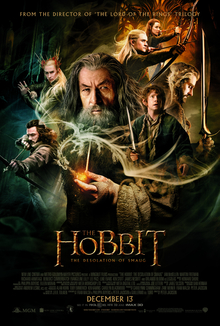

 Back in October last year in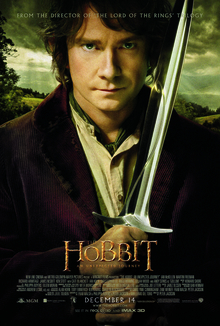
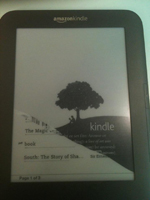 And finally, the big hardware bug. The e-ink screen is very good indeed. It's clear, high-contrast, and can be read easily under all lighting conditions that you could read a paper book. It is also fragile and unprotected. The fragile pixels of an LCD display are at least protected behind a sheet of glass or plastic, but the e-ink display is right on the surface with only the thinnest covering layer. This makes it very vulnerable to damage. I'm on my second Kindle already, the first breaking after just a couple of months. I have no idea how I managed to break the screen - I didn't bash it hard, or sit on it, I just carried it in my pocket like people do in Amazon's own adverts for the silly thing - but it broke anyway. This would seem to be a very common failure mode, by far the most common amongst Kindle users I've spoken to, and one with which Amazon's customer support staff are very familiar judging by how fast they said they'd send me a replacement. Given that incredibly quick replacement I don't actually fault them for this, I just think it's something you need to be aware of.
 Sir Mortimer, or, to give him his full name and titles, Brigadier Sir Robert Eric Mortimer Wheeler CH, CIE, MC, FBA, FSA, was clearly a splendid chap. He wore a handlebar moustache and smoked a pipe and was, back in the 1950s when this book was published, something of an archaeological celebrity, much like that hairy bloke with the funny accent off of Time Team. He published this through Penguin's Pelican imprint in 1954.


 This evening I went to a Nikka tasting at The Whisky Exchange in Vinopolis. Nikka being a Japanese whisky distillery company. I realise that some people will be horrified at the idea of me drinking whisky from anywhere but Scotland, but, I'll have you know, the Japanese make some crackers. As do the Irish, Welsh and Indians. I've heard good things about a Swedish whisky too, and am very much looking forward to trying something from the